Active and sharp at seventy,
eighty and beyond.
This site is about the good years — staying strong, mobile and sharp-minded for decades to come. Not managing decline. Getting more of the life worth having.
Over 50? This is the best possible time to start. The things that decide how good your seventies and eighties feel are still wide open at fifty — work on them now and you are setting up a genuinely positive future, not repairing a past.
It starts with a blood test, because that is where you find out where you actually stand. And it starts there for a reason: normal is not the same as optimal. The range that decided whether your result got a flag describes the middle 95% of the people your lab sampled — not the range where people go on to stay well.
Four steps to a really positive future.
You do not need to overhaul your life. You need to know where you stand, keep an eye on it, understand what the numbers mean, and act on the handful of things that matter for you. In that order.
- 1
Get a longevity blood test
One draw shows what is quietly rising or falling — cholesterol particles, blood sugar, inflammation. The free NHS check is the starting point; we compare what the UK providers add.
Which test to get - 2
Get a wearable
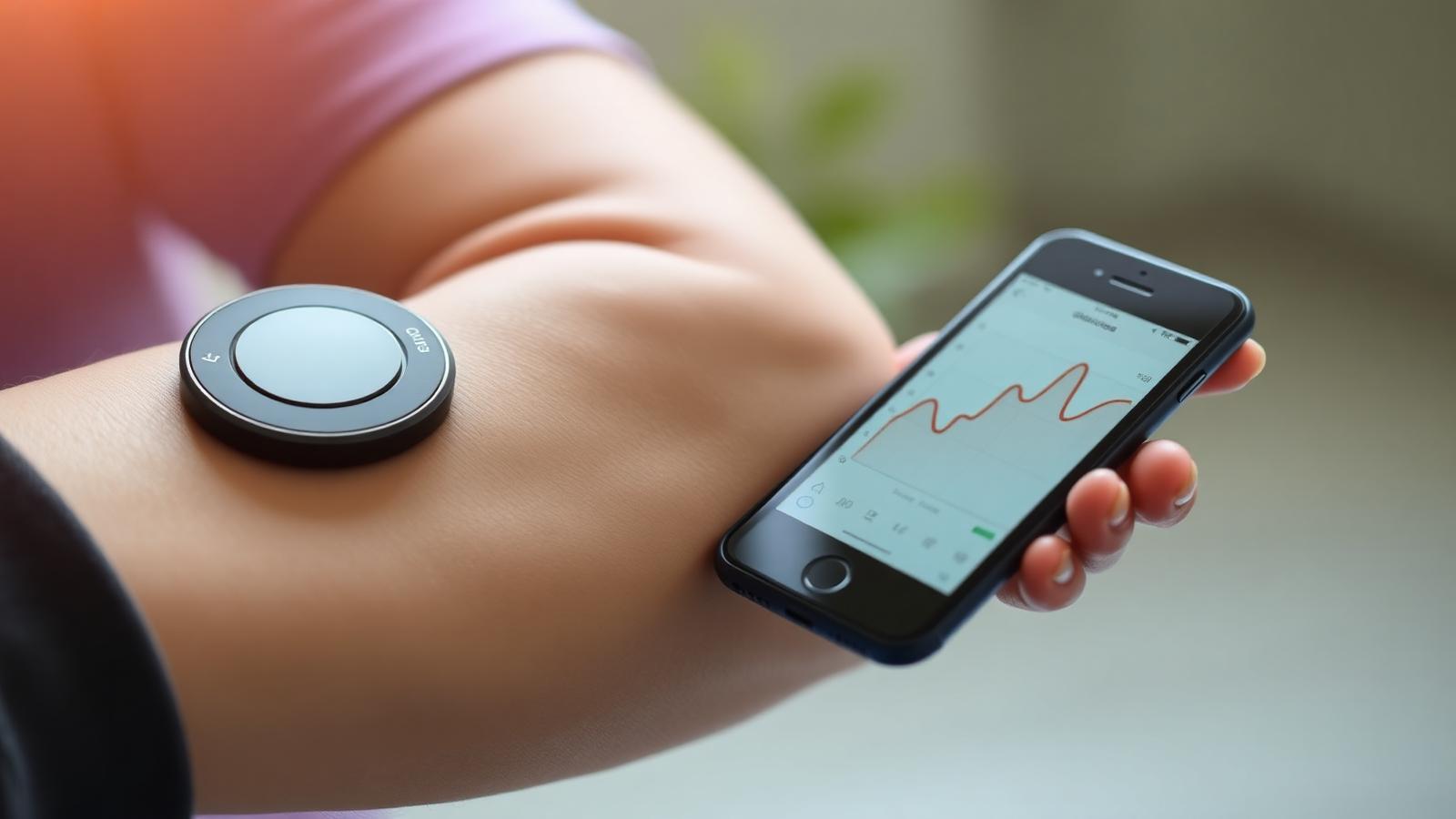
A ring or watch fills the gap between blood tests — sleep, steps, heart rate, recovery. Most people need exactly one, and we are honest about which data is worth having.
Which one is worth it - 3
Get the knowledge
Learn what your numbers actually mean — the difference between the range your lab calls normal and the range where people stay well. Plain English, sources shown.
What your numbers mean - 4
Build your stack and action plan
Turn it all into a plan: the supplements worth taking (checked against your medications), the routines that move your markers, and when to retest to prove it worked.
Build your plan


Whatever brought you here, start there.
Nobody wakes up thinking about apolipoproteins. They notice a knee, a bad night, a name that would not come. Each of these is a real, workable starting point — pick yours.
Stiff knees, aching joints
The strongest protection for ageing joints is the muscle around them. Strength work is the intervention with the best evidence — and it works at any starting point.
The strength plan for 50+Skin that's lost its bounce
Collagen production falls with age, and most creams can't reach it. A small number of approaches have real trial data — and we say plainly which ones don't.
What the evidence supportsEnergy that fades by mid-afternoon
The usual culprits are blood sugar swings and poor sleep, and both show up in numbers you can measure and move.
Steady your glucoseNames on the tip of your tongue
Some slowing is normal. But sleep, blood pressure, hearing and exercise all measurably affect how sharp you stay — and all of them respond to work.
Keep your edgeSleep that isn't what it was
Sleep changes with age, but broken sleep is not something to simply accept — the routine fixes have better evidence than any pill.
Rebuild deep sleepA family history that worries you
Heart disease builds silently for decades — and the markers that predict it (ApoB, Lp(a)) are cheap to test and largely missing from the NHS check.
The five tests that matterTwo ranges, built to answer two different questions.
A lab reference range describes the middle 95% of the people the lab sampled. It answers one question — do you look like most people? — and it answers it well. It was never designed to answer the question you are actually asking, which is where in that range people go on to stay healthy the longest.
Where normal comes from
A reference range is a description of whoever the lab sampled — the central 95% of them. It is a statement about a population, and changing the population changes the range.
Where optimal comes from
Cohort studies follow people for years, then look back at what their numbers were. That produces a target drawn from who actually stayed well, which is a different question entirely.
Why the gap matters
Arterial disease builds silently for decades before anything shows up as a diagnosis. Sitting inside the normal range for your age group is not evidence that nothing is accumulating.
What this is not
Optimal ranges come mostly from large observational studies, so they are targets rather than verdicts. Being outside one is a reason to look closer, not a diagnosis — and moving a number is not the same as changing an outcome.
Start doing, not just reading.
Every tool here answers a practical question about your own numbers — and none of them needs an account.
Blood Test Tracker
Your results against both ranges — the lab's and the optimal one. Stays in your browser.
Biological Age Calculator
Two minutes, no blood test, an honest number.
Longevity Score
One score across 11 domains — see what to work on first.
Stack Interaction Checker
Everything you take, checked against everything else you take.
Sleep Assistant
The changes that move deep sleep, matched to your pattern.
Cognition Planner
Evidence-based routines for memory, focus and clarity.
The deep dives, when you want them.
Biological Age Tests Compared
Compare epigenetic clocks, blood-based phenotypic age scores and face-age AI. Learn which biological age test best matches your goals, budget and access.
BPC-157 vs TB-500: Which Peptide Wins for Injury Recovery?
Head-to-head comparison of BPC-157 and TB-500 for soft-tissue repair, tendon recovery and injury rehabilitation — mechanisms, evidence, dosing and synergy.
NMN vs NR: Which NAD+ Precursor Wins for Adult Restoration?
Head-to-head review of nicotinamide mononucleotide and nicotinamide riboside — pharmacokinetics, NAD+ uplift, human trial endpoints, and dosing strategy.
The library also covers supplements, protocols, wearables and, for readers who want it, an honest guide to peptides — everything graded by the strength of its human evidence.
For people who intend to be active at seventy.
What actually changed in the evidence this week, what it means for the markers you are tracking, and the occasional thing worth stopping. One email on Sundays.
No spam · Unsubscribe anytime