The Best NAD+ Precursor Stack for Over 40s in
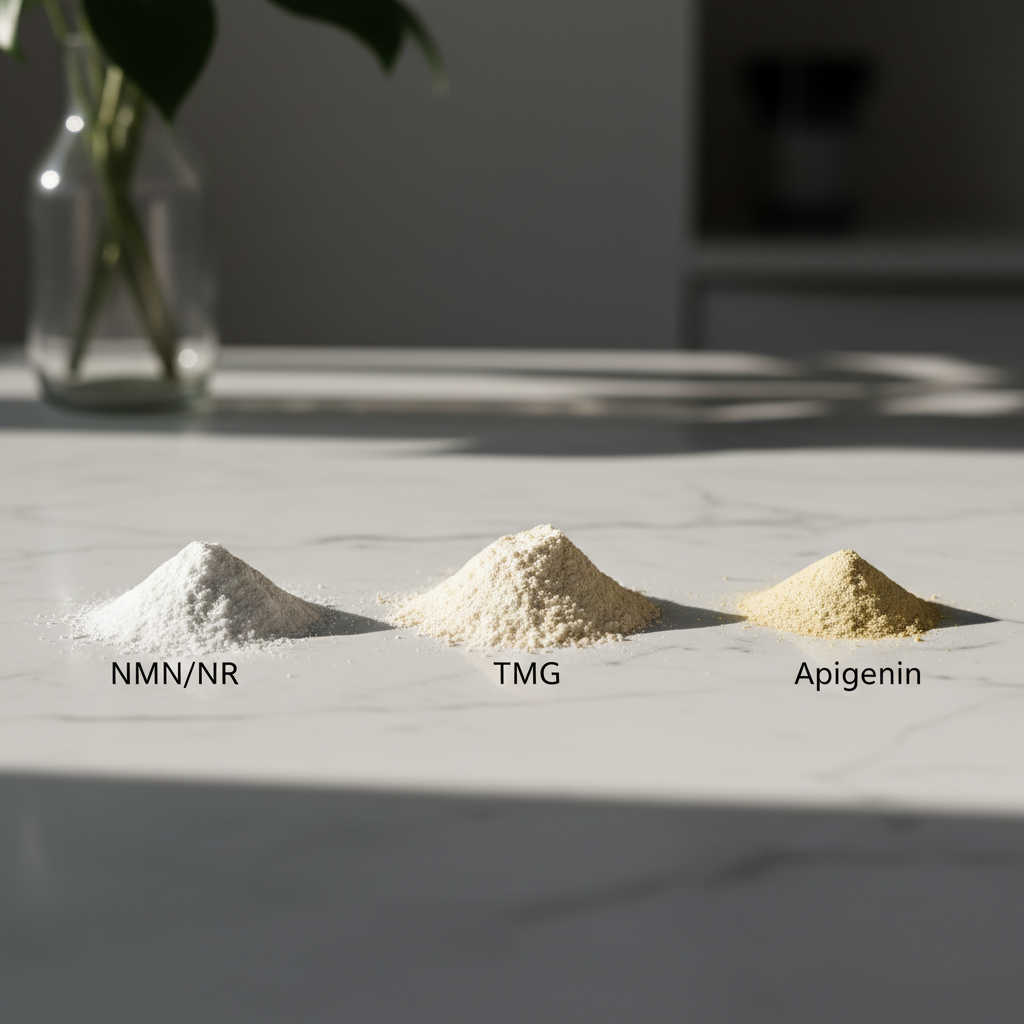
For those over 40, boosting declining NAD+ levels is key for healthspan. This guide breaks down the optimal supplement stack, comparing NMN vs NR and essential co-factors.
# The Best NAD+ Precursor Stack for Over 40s in 2026
If you're over 40 and interested in optimising your healthspan, you've almost certainly encountered the term NAD+. This vital coenzyme, Nicotinamide Adenine Dinucleotide, is central to cellular energy and repair. The problem? Its levels naturally plummet as we age, with some estimates suggesting a 50% decline between the ages of 40 and 60. This drop is implicated in many age-related conditions, from metabolic dysfunction to cognitive decline.
Restoring NAD+ levels through supplementation has become one of the most compelling strategies in longevity science. But the market is crowded with options, primarily nicotinamide mononucleotide (NMN) and nicotinamide riboside (NR). Which is better? And more importantly, is taking a precursor on its own enough? The evidence suggests that for maximum benefit, a strategic 'stack' approach is superior. This article will break down the science behind the ideal NAD+ precursor stack for the over-40s, looking beyond the headline ingredients to the crucial supporting players that make the entire system work.
What is NAD+ and Why Does it Decline After 40?
NAD+ is one of the most abundant molecules in the human body, found in every cell. It acts as a critical coenzyme in hundreds of metabolic reactions, fundamentally enabling your cells to convert food into energy. Think of it as the cellular currency for energy transfer. Its roles are vast, but two are particularly relevant for longevity:
- **Fuelling Sirtuins:** These are a class of seven proteins often called the 'guardians of the genome'. Sirtuins regulate cellular health, DNA repair, inflammation, and metabolic efficiency. Crucially, they are NAD+-dependent, meaning they simply cannot function without an adequate supply of NAD+.
- **DNA Repair:** NAD+ is used as a substrate by enzymes called PARPs (Poly(ADP-ribose) polymerases). When DNA damage occurs (a constant event from metabolic processes and external stressors), PARPs are activated to orchestrate repairs. This process consumes large amounts of NAD+. As we age, accumulated DNA damage leads to higher PARP activation, creating a significant drain on our NAD+ pools.
The decline after 40 is a double-edged sword. Not only does our body's natural production of NAD+ become less efficient, but its consumption increases due to chronic low-grade inflammation and accumulated cellular damage. An influential review in the journal *Cell Metabolism* details how this NAD+ scarcity is a central feature of the ageing process. It’s this dwindling supply that makes supplementation with NAD+ precursors an attractive strategy for supporting youthful cellular function.
The Main Contenders: NMN vs. NR
Your body cannot directly absorb NAD+ from supplements. Instead, we use precursors—smaller molecules that cells can absorb and convert into NAD+. The two most studied and commercially available precursors are Nicotinamide Riboside (NR) and Nicotinamide Mononucleotide (NMN).
**Nicotinamide Riboside (NR):** NR is a form of vitamin B3. Multiple human clinical trials have shown that oral supplementation with NR effectively and safely increases NAD+ levels in the body. A key study published in *Nature Communications* in 2017 demonstrated that NR supplementation boosted NAD+ metabolism in healthy middle-aged and older adults. Companies have heavily invested in safety and efficacy data, making NR a well-established precursor.
**Nicotinamide Mononucleotide (NMN):** NMN is one step further down the conversion pathway to NAD+. For a long time, a debate persisted about whether NMN could enter cells directly or if it needed to be converted to NR first. More recent research, however, has identified a specific NMN transporter protein (Slc12a8), suggesting it can indeed enter cells directly in some tissues. Human studies on NMN, while historically lagging behind NR, have caught up rapidly. A 2023 study showed NMN supplementation significantly increased blood NAD+ levels and improved physical performance in older adults. In the UK and Europe, NMN is readily available as a supplement. It's worth noting its regulatory status is more complex in the US, where the FDA has reclassified it, though this doesn't directly impact UK consumers.
**Which to choose?** Frankly, the debate over which is 'better' is largely academic for the end-user. Both have strong evidence for raising systemic NAD+ levels. Some individuals report subjective differences in how they feel on one versus the other, suggesting personal biological variance. The most sensible approach might be to try one for 2-3 months, assess how you feel, and then consider trying the other to compare. Both represent a valid foundation for your stack.
The Supporting Cast: Building a Smarter Stack
A common mistake is to take an NAD+ precursor in isolation. The biochemical pathways involved are complex, and providing only the primary precursor can create bottlenecks or deplete other essential nutrients. A truly effective stack addresses the entire NAD+ ecosystem.
- **Methyl Donors:** The breakdown of NAD+ precursors produces nicotinamide (NAM). To be cleared from the body, NAM needs to be 'methylated'—a process where a methyl group (a carbon atom with three hydrogen atoms) is attached. If you dramatically increase your intake of NMN or NR, you also increase the demand on your body's methyl pool. Depleting this pool can have negative downstream effects, including raising levels of homocysteine, a marker for cardiovascular risk. To counteract this, your stack should include a methyl donor. The most common and cost-effective is Trimethylglycine (TMG), also known as betaine. High-quality protein sources and other nutrients like glycine also support healthy methylation.
- **Sirtuin Activators:** Raising NAD+ levels provides the fuel for sirtuins, but what if you could also press the accelerator? Sirtuin-activating compounds (STACs) do just that. The most famous is resveratrol, found in grapes, but its bioavailability is poor. Pterostilbene, a similar compound found in blueberries, is a superior alternative with much better absorption and a longer half-life. Combining an NAD+ precursor with a STAC is a synergistic one-two punch: one provides the fuel, the other stimulates the engine.
- **CD38 Inhibitors:** Production is only one side of the equation; consumption is the other. A major consumer of NAD+ is an enzyme called CD38. Its expression increases significantly with age and inflammation, acting like a constant drain on your NAD+ reserves. Inhibiting CD38 can therefore preserve your existing NAD+ and make your precursor supplementation more effective. Promising research points to flavonoids like apigenin (found in parsley and chamomile) and quercetin as potent CD38 inhibitors. A 2018 study in *Redox Biology* highlighted apigenin's ability to combat age-related NAD+ decline by inhibiting CD38. Including one of these in your stack helps plug the leak in your NAD+ bucket.
Assembling Your Optimal NAD+ Stack Over 40
Now, let's put this into a practical framework. There's no single 'perfect' stack, as individual needs, budgets, and tolerance vary. However, we can outline a logical, tiered approach.
**The Foundation Stack (Beginner):** This is an excellent starting point for anyone new to NAD+ biology. - **NAD+ Precursor:** Choose either NMN (250-500mg) or NR (300-600mg) per day. - **Methyl Donor:** Add TMG (Trimethylglycine) at a 1:1 ratio with your precursor dose (e.g., 500mg of NMN with 500mg of TMG). This simple combination ensures you are effectively boosting NAD+ levels while simultaneously supporting the methylation processes required to clear by-products, mitigating potential side effects.
**The Comprehensive Stack (Advanced):** For those looking to maximise their investment and target the NAD+ ecosystem more holistically. - **NAD+ Precursor:** NMN (500mg - 1g) or NR (600mg - 1.2g) per day. - **Methyl Donor:** TMG at a 1:1 ratio with your precursor dose. - **CD38 Inhibitor:** Apigenin (50-100mg) or Quercetin (500mg). Take in the evening, as apigenin can have a mild sedative effect. - **Sirtuin Activator:** Pterostilbene (50-100mg).
This advanced stack doesn't just increase NAD+ production; it simultaneously stimulates the sirtuins that use it and reduces its degradation by CD38. You can use our AI supplement stack builder to further refine your choices based on your unique health goals and existing regimen. It's often best to introduce these compounds one at a time over several weeks to assess individual tolerance.
*Always consult your healthcare professional before beginning any new supplement regimen. The information provided here is for educational purposes only. For guidance on peptides, drugs or supplements please see our disclaimer.*
Don't Forget Lifestyle: The Free NAD+ Boosters
Supplements are powerful, but they are multipliers of good habits, not substitutes for them. Several lifestyle interventions have been scientifically shown to naturally increase NAD+ levels, and they should form the bedrock of any longevity strategy.
- **Exercise:** Both resistance training and high-intensity interval training (HIIT) are potent NAD+ boosters. A 2018 study published on PubMed Central found that exercise robustly increases skeletal muscle NAD+ levels by upregulating a key synthesis enzyme called NAMPT. This is perhaps the most powerful and cost-effective way to support your cellular energy.
- **Caloric Restriction and Fasting:** Both time-restricted eating and periodic longer fasts create a mild energetic stress that activates pro-longevity pathways, including NAD+ synthesis. By limiting your eating window to 8-10 hours per day, you give your body a break from constant digestion and nudge it into a state of repair and conservation, which has the downstream effect of boosting NAD+.
- **Heat and Cold Stress:** Acclimatising the body to thermal stress, such as through regular sauna sessions or cold plunges, activates heat-shock and cold-shock proteins. These cellular stress responses are intertwined with NAD+ metabolism and can help improve its efficiency and availability.
By integrating these protocols, you create an internal environment where your supplemental stack can be maximally effective.
Bottom Line
For those over 40, addressing the age-related decline in NAD+ is a high-impact strategy for enhancing healthspan and vitality. While a simple NMN or NR supplement is a good start, the evidence strongly supports a more sophisticated 'stack' approach. By combining a primary NAD+ precursor (NMN or NR) with a methyl donor (like TMG), you create a safe and effective foundation. To take it to the next level, adding a sirtuin activator (like pterostilbene) and a CD38 inhibitor (like apigenin) provides a comprehensive, synergistic effect that addresses the entire NAD+ ecosystem—boosting production, enhancing its use, and preventing its degradation.
Remember, this supplement strategy should complement, not replace, foundational lifestyle habits. Consistent exercise, sensible nutrition, and stress management are non-negotiable for long-term health. When combined, this multi-pronged approach offers a powerful toolkit for maintaining cellular function and rewriting the script of what it means to age well.