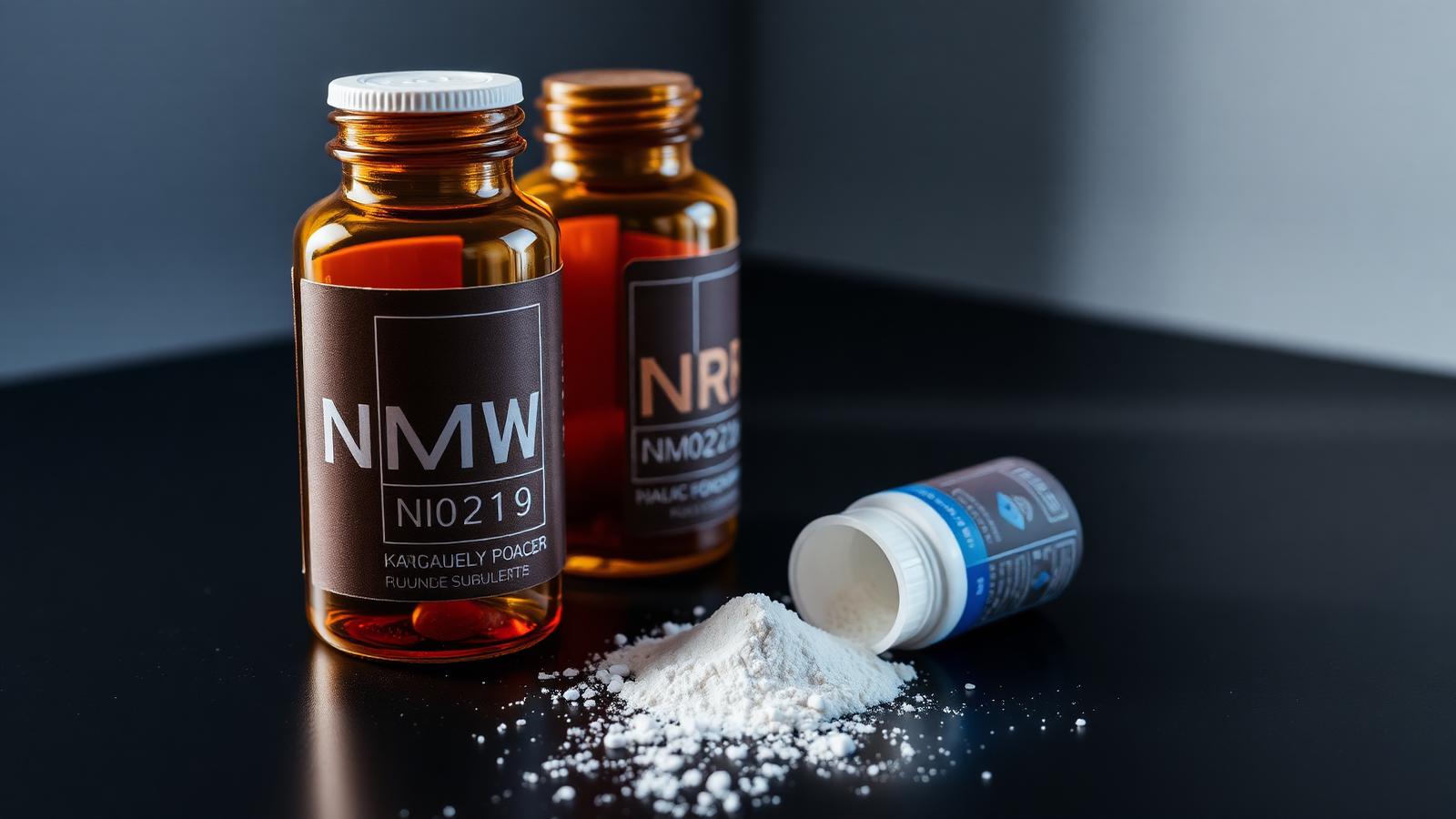
Both NMN and NR reliably raise NAD+, but the functional outcomes — energy, muscle, vascular health — depend heavily on dose, form and what you stack them with.
NAD+ declines roughly 50% between age 40 and 60, and this fall is now tightly linked to mitochondrial dysfunction, DNA repair failure and vascular ageing. Both NMN and NR raise NAD+ — but they are not interchangeable.
What NAD+ actually does
NAD+ powers sirtuins, PARPs and the electron transport chain. When it falls, cells lose the ability to repair DNA efficiently, mitochondria become less efficient, and inflammation rises.
NMN vs NR: the practical differences
- **NR (nicotinamide riboside)**: longest human safety record, well-absorbed, typical dose 300–600 mg.
- **NMN (nicotinamide mononucleotide)**: stronger human data on vascular function and muscle endurance, typical dose 500–1000 mg, often sublingual or liposomal.
- Both raise blood and tissue NAD+ reliably. Head-to-head functional comparisons remain limited.
How to stack for real-world results
NAD+ precursors work best alongside: [resveratrol or pterostilbene](/supplements), regular zone 2 cardio, and adequate sleep. For users focused on muscle and mitochondrial output, pairing with [urolithin A](/supplements/urolithin-a) and creatine is now the most evidence-supported stack.
What we still do not know
Whether raising NAD+ extends human lifespan is unanswered. What is clear is that low NAD+ correlates with worse healthspan markers, and restoring it improves several measurable functions. See our [NAD+ research deep-dive](/research) for the full evidence map.
Bottom line
Pick one (NR if you want the deepest safety record, NMN if you want the more aggressive vascular and muscle data), dose it consistently, and judge it on 90-day biomarker and functional changes — not marketing claims.