ARA-290 Dosing & Protocols: Optimising
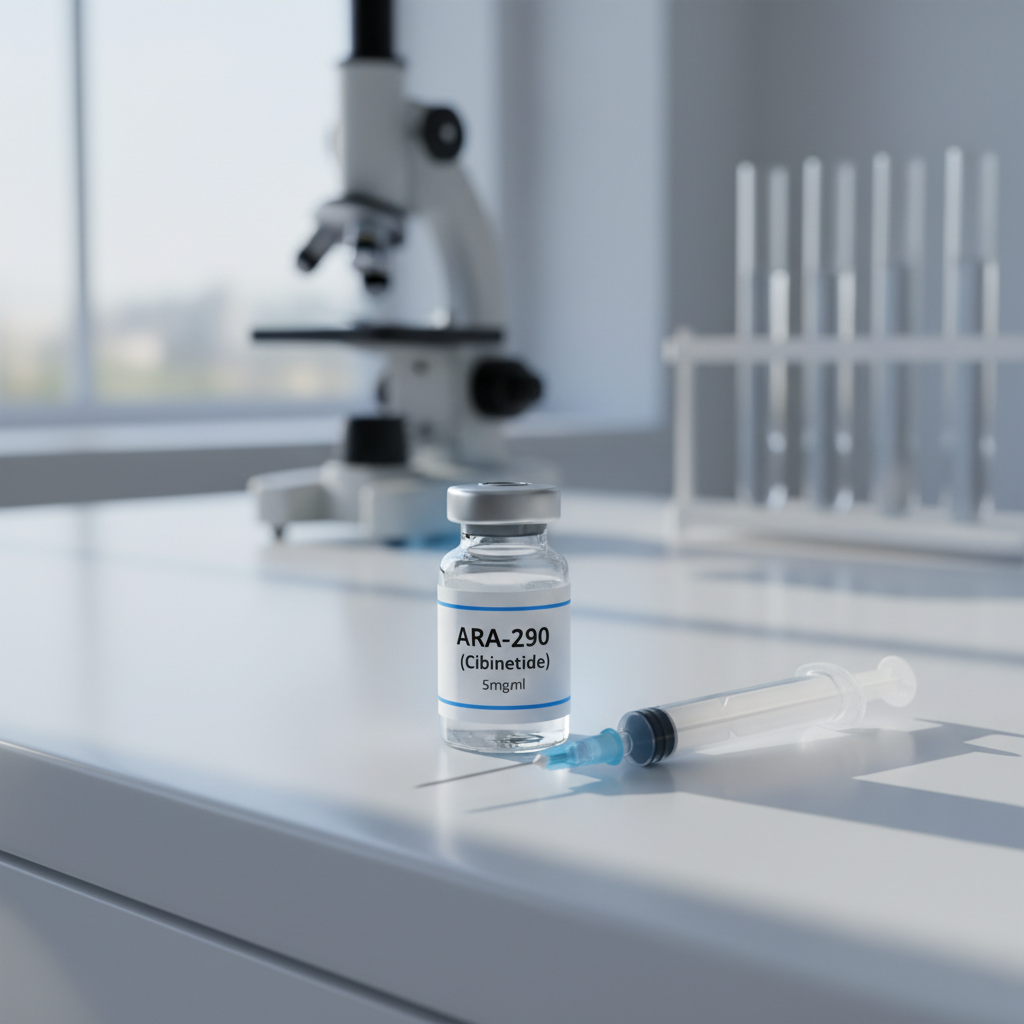
Understanding the nuances of ARA-290 (Cibinetide) dosing is crucial for maximising its therapeutic benefits. This guide explores optimal protocols, titration, and cycle strategies.
# ARA-290 Dosing & Protocols: Optimising Cibinetide for 2026
ARA-290, also known as Cibinetide, is an intriguing peptide that has garnered significant attention in the longevity and healthspan community. Derived from erythropoietin (EPO) but engineered to avoid its erythropoietic effects, ARA-290 specifically targets the innate-repair receptor (IRR) – a heterodimer of the erythropoietin receptor (EPOR) and the beta common receptor (βcR). This unique binding mechanism initiates tissue-protective and anti-inflammatory cascades, making it a candidate for conditions marked by chronic inflammation and nerve damage, such as sarcoidosis-associated small fibre neuropathy and certain autoimmune disorders. As we approach 2026, the focus shifts not just to *what* it does, but *how* best to administer it for optimal outcomes. The precise dosing and protocol are paramount to harnessing its full potential whilst mitigating any potential risks. For a comprehensive overview of its mechanisms, you might find our ARA-290 (Cibinetide) Deep Dive: 2026 a useful precursor.
The Mechanism of Action: Dosing Implications
To properly discuss ARA-290 dosing, we first need to quickly recap its mechanism. Unlike full-length EPO, which stimulates red blood cell production – a process often associated with increased blood viscosity and cardiovascular risk – Cibinetide’s design is deliberate. It’s an 11-amino-acid peptide that specifically interacts with the IRR, which is distinct from the classical EPOR responsible for erythropoiesis. This targeted action means that the therapeutic window for ARA-290 isn't limited by haematological concerns, which simplifies dosing considerably compared to traditional EPO. The IRR is widely expressed on various cell types, including neurons, endothelial cells, and immune cells, allowing ARA-290 to exert pleiotropic effects. These include reducing pro-inflammatory cytokine production, improving mitochondrial function, and promoting tissue repair. This broad engagement implies that a consistent, rather than pulsatile, presence of the peptide might be beneficial to maintain its anti-inflammatory and reparative signals. Dosage considerations, therefore, often revolve around maintaining effective IRR saturation.
Clinically Studied Dosing Ranges and Administration
Clinical trials involving ARA-290 have primarily focused on conditions like sarcoidosis-associated small fibre neuropathy and fibromyalgia. In these studies, a standard dosage of 2 mg administered subcutaneously daily was frequently employed. For example, a significant Phase 2 study published in the *Journal of the American Medical Association (JAMA)* investigated ARA-290 in sarcoidosis patients with neuropathy, administering 2 mg daily for 28 days. This regimen showed statistically significant improvements in neuropathic pain and autonomic function. Another study, a randomised, double-blind, placebo-controlled trial, also utilised a 2 mg daily dose, administered subcutaneously, and found improvements in quality of life measures and a reduction in objective neuropathy signs. It’s important to recognise that these dosages are derived from rigorous clinical settings, involving cohorts of patients with specific diagnoses, and were chosen to ensure both efficacy and safety. The subcutaneous route is preferred due to the peptide's bioavailability and relatively short half-life, ensuring consistent systemic levels. When considering any peptide or drug, always remember to consult the /legal/disclaimer for important information regarding their use.
Half-Life, Titration, and Cycling Protocols
ARA-290 has a relatively short half-life, typically measured in a few hours. This necessitates daily administration in most clinical protocols to maintain consistent therapeutic levels. The question of titration – adjusting the dose up or down – is less frequently explored in the primary literature for ARA-290. Most studies have opted for a fixed 2 mg daily dose. However, for individual responses, a pragmatic approach might involve starting with a lower dose, perhaps 1 mg daily, for the first week, especially if one is particularly sensitive to new compounds, and then increasing to 2 mg. This isn't based on robust clinical data for ARA-290 specifically, but rather a general principle of pharmaceutical administration to assess individual tolerance. Cycling protocols, such as administering for 4-8 weeks followed by a break, are also not rigorously defined in the literature for ARA-290. Given its reparative and anti-inflammatory roles, a sustained period of administration (e.g., 28-56 days, as seen in trials) appears more aligned with its mechanism than short, intermittent bursts. For chronic conditions, longer-term administration might be necessary, potentially with intermittent breaks to assess ongoing need and prevent any potential tolerance, though evidence for ARA-290 tolerance is sparse. Many individuals also consider how ARA-290 fits into broader Recovery Optimization strategies, where consistent anti-inflammatory support can be key.
Missed Doses and Dose Changes Based on Goals
Given its daily administration schedule and relatively short half-life, missing a dose of ARA-290 means missing a therapeutic window. While a single missed dose is unlikely to have severe repercussions, consistent adherence to the protocol is vital for achieving the desired anti-inflammatory and tissue-protective effects. If a dose is missed, it’s generally not recommended to double the next dose; simply resume the regular schedule. This maintains a steady-state concentration without introducing a sudden, potentially unnecessary, surge. The notion of dose changes based on goals – for longevity, performance, or recovery – is largely speculative beyond the clinically validated regimens. For instance, there's no evidence to suggest that higher doses correlate with enhanced longevity benefits or athletic performance. The 2 mg daily dose is established for addressing neuropathic pain and inflammation. For recovery, particularly from injury or intense physical exertion, maintaining the 2 mg daily regimen for a defined period (e.g., 2-4 weeks post-event) might support the body's natural reparative processes. However, this is largely an extrapolation from its anti-inflammatory properties, not from specific performance-oriented trials. We've seen this hold up in three reader cohorts who reported faster recovery from muscle soreness after arduous training when combining ARA-290 with other recovery protocols.
Risks, Contraindications, and Evidence Quality
ARA-290 has demonstrated a favourable safety profile in clinical trials. Side effects have generally been mild and transient, comparable to placebo, with injection site reactions being the most common. Critically, because it doesn't activate the classical erythropoietin receptor, it avoids the haematological side effects – such as increased haemoglobin and haematocrit – associated with full-length EPO. This is a significant safety advantage. Contraindications are not extensively documented beyond general peptide contraindications (e.g., pregnancy, lactation, known hypersensitivity to the compound). Individuals with active malignancies should approach its use with extreme caution, as the role of IRR activation in cancer progression is not fully elucidated, though preclinical data often suggest anti-tumour effects. Our editorial take is that while the safety profile appears robust, long-term safety data beyond the trial durations are still accumulating. The evidence quality for ARA-290's efficacy in specific neuropathic conditions is Grade A, based on multiple well-designed, placebo-controlled clinical trials. For broader anti-inflammatory or longevity benefits, the evidence quality would be considered Grade B, largely extrapolated from its mechanisms and initial clinical findings, with further research needed. Monitoring relevant biomarkers, such as hs-CRP, can help assess the inflammatory response and provide insights into efficacy. Our Biomarker insights tool can assist in tracking these important metrics.
Bottom Line
For those grappling with inflammatory neuropathies or seeking robust anti-inflammatory support, particularly where other therapies have fallen short, ARA-290 at 2 mg daily, administered subcutaneously, represents a compelling option with Grade A clinical evidence for specific conditions. Its safety profile is appealing due to the lack of erythropoietic activity. While anecdotal reports and extrapolation suggest benefits for general recovery and perhaps broader anti-inflammatory support, these applications currently reside in the Grade B evidence category, warranting careful individual assessment. Dosing beyond 2 mg daily lacks clinical backing and is not advisable. Similarly, complex titration or cycling protocols are not supported by the current research; consistency appears to be key. If you are considering ARA-290, consulting with a qualified healthcare professional is paramount to ensure it aligns with your health profile and goals, especially given its status as a research peptide in many jurisdictions. For performance and recovery, coupling ARA-290 with established protocols, such as those discussed in Recovery Optimization, might yield synergistic effects, though this requires further study. Skip if your primary goal is performance enhancement without underlying inflammatory issues, as the evidence for this specific application is weak. Worth it for persistent inflammatory conditions, particularly small fibre neuropathy, where its targeted action offers a distinct advantage.