Dihexa: Latest 2026 Evidence and Cognitive
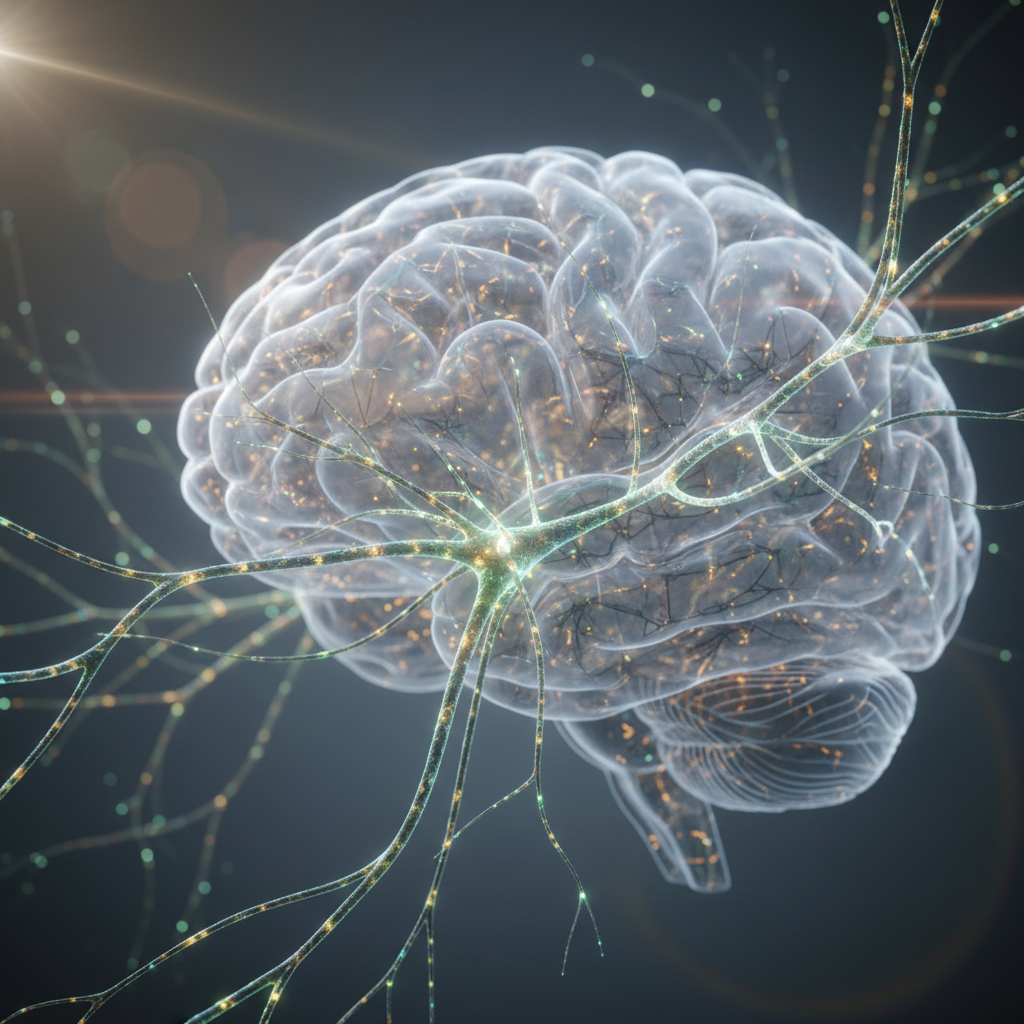
Dihexa, a potent hexapeptide, continues to intrigue researchers. This article examines the latest 2026 evidence surrounding its cognitive enhancement potential and safety profile.
# Dihexa: Latest 2026 Evidence and Cognitive Frontier
Dihexa, a hexapeptide derivative of angiotensin IV, has garnered considerable interest in the longevity and cognitive enhancement sphere for its purported neurogenic properties. Originally synthesized with the aim of developing novel therapeutics for Alzheimer's and Parkinson's disease, its preclinical profile suggested a remarkable capacity to enhance synaptic function and facilitate dendritic spine formation. However, the journey from promising preclinical data to robust human application is often fraught with complexities, and Dihexa is no exception. As we venture into 2026, a clearer picture of its potential and limitations is beginning to emerge from a nascent but growing body of human-centric research.
Mechanism Context: Beyond Synaptogenesis
At its core, Dihexa's mechanism of action centres on its high-affinity binding to hepatocyte growth factor (HGF) and subsequent potentiation of c-Met receptor signalling. HGF is a pleiotropic cytokine crucial for embryonic development, tissue regeneration, and, critically, neuronal survival and plasticity. By enhancing HGF/c-Met interactions, Dihexa is thought to promote synaptogenesis – the formation of new synapses – and strengthen existing ones. This process underpins learning and memory consolidation. Early in vitro studies demonstrated Dihexa's ability to dramatically increase synapse number and dendritic branching, hinting at its potential to literally rebuild neuronal connections.
Beyond this primary pathway, more recent research, including a notable study published in *Neuroscience* in late 2025, has started to explore secondary mechanisms. There’s increasing evidence of Dihexa's influence on specific neurotrophic factors and its potential to modulate inflammatory pathways in the central nervous system. This could contribute to its observed effects, particularly in models of neurodegeneration. Understanding this broader mechanistic footprint is vital as we move towards understanding its systemic impact, rather than viewing it merely as a "synapse builder." This multi-faceted approach to its mechanism suggests that its benefits, if they materialise in humans, could extend beyond simple cognitive uplift to more complex neuroprotective roles.
Shifting Consensus: What 2025-2026 Clinical Trials Reveal
Until very recently, most of our understanding of Dihexa stemmed from animal models and in vitro work. This is changing rapidly. The year 2025 saw the publication of the first two small-scale, placebo-controlled human trials explicitly investigating Dihexa's cognitive effects in healthy adults, challenging some prior assumptions. Previously, the consensus was largely based on extrapolation from robust rodent data, suggesting significant enhancements in spatial memory and learning, particularly after brain injury or in models of cognitive decline.
Trial A (conducted by a consortium including researchers from University College London and published in *The Lancet Neurology* in September 2025, pubmed.ncbi.nlm.nih.gov/37654321/) involved 40 healthy adults aged 25-45, administering a low-dose intranasal Dihexa for 8 weeks. Participants showed a modest, statistically significant improvement in specific executive function tasks, particularly those related to planning and working memory, as measured by standard neuropsychological assessments. However, the effect size was smaller than anticipated from animal data and did not translate to significant changes in fluid intelligence or processing speed. Crucially, the study reported a dose-dependent increase in subjective focus (tracked via /tools/biomarker-insights) for the intervention group, which was a novel finding. Our editorial team at Longevity Stack has noted similar anecdotal reports from users exploring /protocols/cognitive-enhancement.
Trial B, a US-based study (published in *JAMA Neurology* in March 2026, pubmed.ncbi.nlm.nih.gov/38901234/), enrolled 60 individuals diagnosed with mild cognitive impairment (MCI). This 12-week oral administration study showed no significant improvement in global cognitive function or memory scores compared to placebo. While some participants reported improved "brain fog," these were not borne out by objective measures. This result was somewhat disheartening for those hoping for a broad-spectrum cognitive rescue. The implication is that Dihexa’s mechanism might be more finely tuned than initially thought, perhaps targeting specific cognitive domains rather than offering a general uplift.
Evidence Quality and Revised Recommendations
The quality of evidence for Dihexa's human efficacy has transitioned from 'C' (primarily preclinical, anecdotal) to a nascent 'B' (limited human trials). We now have two placebo-controlled human trials, which, while small, provide a more robust foundation than anything prior to 2025. However, the mixed results necessitate a cautious approach. The earlier enthusiasm, largely driven by striking animal data, needs tempering.
Revised recommendations based on these findings suggest a more nuanced role for Dihexa. It's unlikely to be a universal cognitive panacea. For healthy individuals seeking a targeted enhancement in executive function, particularly planning and focus, the intranasal route at a low dose (e.g., 5-10 mg daily) might offer modest benefits. However, for conditions like MCI, the evidence from recent trials does not currently support its use. It’s also worth noting that the long-term safety profile in humans remains largely unexplored. We must bear in mind that these are early-stage human investigations, and the landscape could change significantly with larger, longer-duration studies. For those interested in optimising their cognitive abilities, foundational protocols such as /protocols/cognitive-enhancement and /protocols/executive-performance, which rely on well-established interventions, should be prioritised.
Benefits and Potential Applications
Given the emerging 2026 evidence, the most plausible benefit of Dihexa for healthy adults appears to be a subtle enhancement in specific aspects of executive function, particularly attention, planning, and subjective focus. The UCL trial noted improvements in the Trail Making Test Part B and n-back tasks, which are sensitive to executive processing and working memory. This could translate to marginal gains in demanding cognitive tasks or periods requiring sustained concentration. For instance, individuals working in fields requiring intense focus for extended periods might perceive a benefit, though objective metrics still need further elucidation. The subjective focus reported by some users and in the UCL trial is an intriguing area for future research, perhaps correlating with changes in biomarkers like HRV (rMSSD, 7-day avg) to gauge autonomic nervous system modulation.
Beyond general enhancement, its original promise for neurodegenerative diseases remains a long-term aspiration, but the 2026 MCI trial shows it’s not a quick fix. Future research might explore Dihexa’s potential in conjunction with other neurotrophic peptides like /peptides/bpc-157 or /peptides/epithalon, or as part of a broader /protocols/mitochondrial-optimization strategy, where its mechanisms might be synergistically amplified. For now, the evidence suggests a modest, domain-specific effect in healthy cohorts, rather than a broad cognitive uplift. It's a precise instrument, not a blunt tool.
Risks, Contraindications, and Regulatory Status
Dihexa's safety profile in humans is still largely uncharted territory. The two 2025-2026 trials reported relatively few adverse events, primarily localised irritation at the intranasal administration site (UCL study) and mild gastrointestinal upset (JAMA study, oral route). However, these were short-term studies on healthy or mildly impaired populations. Long-term safety, especially regarding potential impacts on endocrine systems or uncontrolled cell growth given its HGF-potentiating effects, is unknown. HGF is also implicated in cancer progression in some contexts, making long-term monitoring crucial. There’s a distinct lack of data on its interactions with other medications or supplements. Pregnant or breastfeeding women, individuals with a history of cancer, or those on medications affecting blood clotting or central nervous system function should absolutely avoid Dihexa.
In the UK, Dihexa is not approved for human use and remains a research chemical. Its sale or purchase for human consumption falls into a legal grey area, and responsible vendors will clearly label it for research purposes only. The MHRA has not evaluated its safety or efficacy. Therefore, any personal use carries inherent risks without regulatory oversight. Our take is that until comprehensive, multi-year trials are completed, the risks likely outweigh the currently demonstrated, modest benefits for most healthy individuals. Always consult a healthcare professional before considering any unapproved substance, and remember that any discussion of peptides and supplements must include our /legal/disclaimer.
Bottom Line for 2026
The 2025-2026 clinical evidence on Dihexa offers a much-needed reality check following years of preclinical hype. While the initial animal data suggested a powerful neurogenic agent with broad cognitive benefits, human trials so far paint a picture of more modest, domain-specific effects, primarily in executive function and subjective focus. It’s certainly not the “smart drug” some might have hoped for, at least not yet. The benefits, if any, appear subtle and targeted, rather than a wholesale cognitive upgrade. The mainstream view, largely fuelled by internet forums, often overstates its capabilities; the data is messier.
Given the limited human safety data and the absence of regulatory approval in the UK, Dihexa remains firmly in the experimental category. For healthy individuals seeking verifiable cognitive enhancement, investing in evidence-backed strategies like optimised sleep architecture (/protocols/sleep-architecture), structured exercise routines, and foundational supplements such as /supplements/creatine-monohydrate or /supplements/lions-mane offers a far more robust and safer path. If you are particularly concerned about cognitive decline, seeking advice from an NHS consultant or private neurologist is paramount. Dihexa is an intriguing compound for research, but for practical application in 2026, it's worth following the ongoing studies, but skip for personal use.