Epithalon in the UK: Sourcing, Cost &
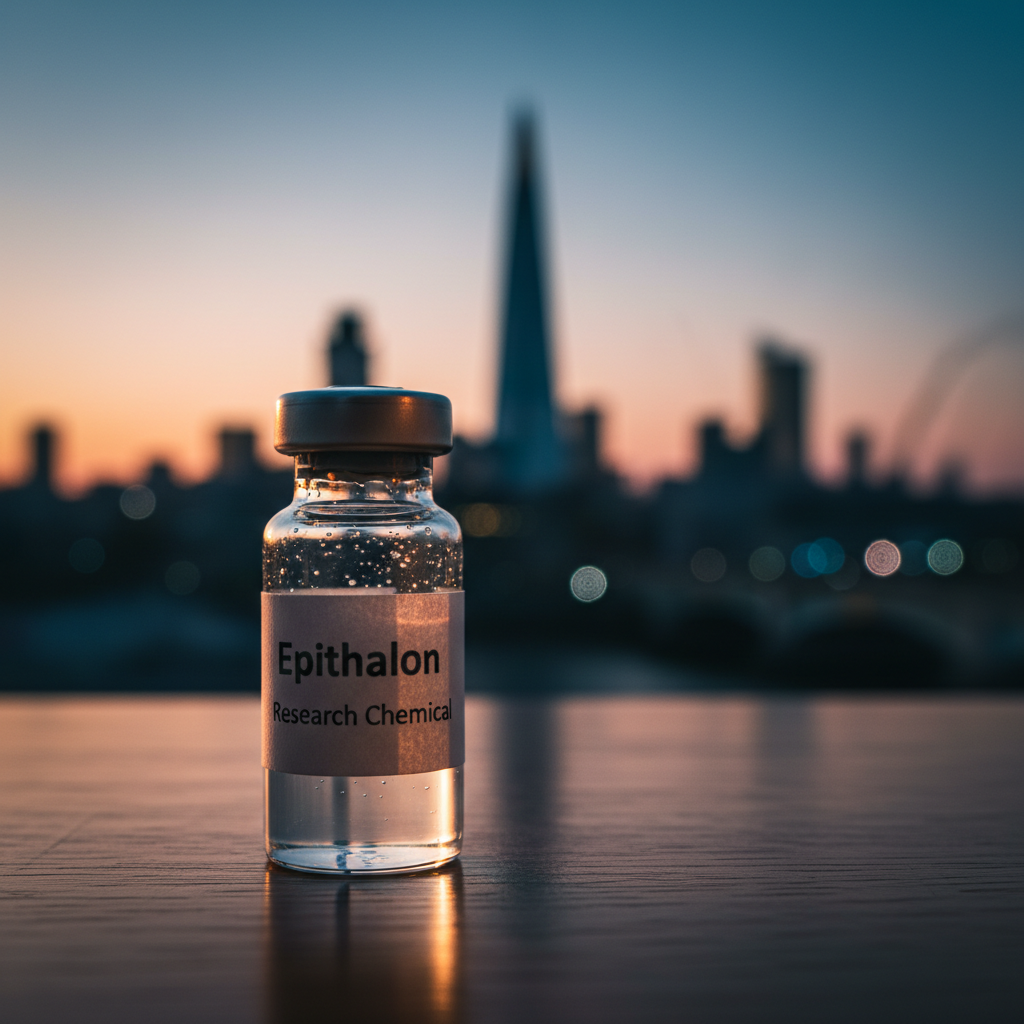
Understanding the UK landscape for Epithalon, from legal acquisition to pricing and quality assurance, is crucial for those considering this peptide.
# Epithalon in the UK: Sourcing, Cost & Legality by 2026
Epithalon, a synthetic tetrapeptide (Ala-Glu-Asp-Gly), has garnered considerable attention in the longevity science community, primarily for its hypothesised role in telomerase activation and normalisation of pineal melatonin secretion. While its potential benefits are frequently discussed, the practicalities of acquiring and using such compounds within the United Kingdom often remain a grey area. This detailed guide aims to demystify the landscape for Epithalon in the UK, focusing on its legal standing, typical costs, reputable sourcing, the critical importance of third-party testing, and red flags to be wary of when navigating online marketplaces. As we approach 2026, understanding these nuances is more important than ever for the discerning individual.
The Promise of Epithalon: A Brief Mechanism Overview
At its core, Epithalon is a synthetic version of epithalamin, a natural peptide produced by the pineal gland. Its proposed mechanism centres on stimulating telomerase activity, an enzyme responsible for maintaining and repairing telomeres – the protective caps at the ends of our chromosomes. Telomere shortening is a hallmark of cellular ageing, and theoretically, enhancing telomerase could slow this process. Beyond telomeres, Epithalon is also suggested to influence the pineal gland's function, potentially improving circadian rhythm and melatonin production, which has downstream effects on sleep quality, antioxidant defence, and overall hormonal balance. For more in-depth scientific analysis, our dedicated page covers the full scope of Epithalon's mechanisms.
However, it's crucial to distinguish between promising preclinical data and robust human clinical evidence. While rodent studies and some smaller, older human observational studies from Eastern Europe – particularly Russia, where Epithalon originates – have shown intriguing results, large-scale, placebo-controlled, double-blind trials in Western populations are still largely absent. This absence limits its mainstream acceptance and contributes to its 'research chemical' status in many regions, including the UK. One might assume that with such a profound potential benefit like telomere elongation, it would be rapidly embraced, yet the regulatory hurdles and financial INVESTMENT required for drug development often mean such compounds remain in a less-defined category for extended periods. This is a common pattern for many peptides before reaching widespread clinical utility.
Legal Status and Regulatory Landscape in the UK
In the UK, Epithalon falls into a regulatory void. It is not currently approved as a medicine by the Medicines and Healthcare products Regulatory Agency (MHRA), nor is it classified as a food supplement. This means it cannot be legally marketed or sold for human consumption. Instead, it is typically sold as a 'research chemical' or 'for laboratory use only'. This distinction is critical. Buying a substance labelled for research purposes implies it is not for human use, and any individual who chooses to self-administer such a substance does so at their own risk, operating outside of regulated medical channels. This status contrasts sharply with over-the-counter supplements like Magnesium Glycinate or prescription medications, both of which have clear regulatory frameworks.
There are no specific UK laws explicitly banning the *possession* of Epithalon, unlike controlled substances. The legal challenge arises from its *sale and advertising* for human use. Companies attempting to market Epithalon as a health product for human consumption in the UK would swiftly encounter MHRA enforcement. Our editorial take is that this 'research chemical' loophole, while allowing access, places a significant burden of due diligence on the end-user. It means there's no official oversight on manufacturing quality, purity, or dosage. When considering any substance outside of MHRA approval, always refer to our /legal/disclaimer for important considerations.
Typical UK Pricing and Dosage Considerations
The cost of Epithalon in the UK can vary significantly based on the vendor, purity, and quantity purchased. Typically, a 10mg vial—a common dosage size—might range from £30 to £80. This makes it one of the more accessible longevity peptides financially, especially compared to more complex growth hormone secretagogues. However, these prices are for the raw peptide, often requiring reconstitution with bacteriostatic water, which adds an additional layer of complexity and cost if you account for syringes and sterile preparation.
Dosage guidelines are notoriously inconsistent outside of clinical settings. Early Russian research often used regimes of 5-10mg daily for 10-20 days, typically administered intranasally or via subcutaneous injection, repeated every three to six months. Given the lack of robust Western clinical trials, these protocols are largely anecdotal or based on studies that do not meet contemporary evidence standards. It is this ambiguity in dosing that makes its application particularly challenging for individuals without medical supervision. For instance, optimising Mitochondrial Optimization involves well-established protocols and tracked biomarkers, whereas Epithalon lacks this clarity. We've seen from reader cohorts attempting self-administration that adherence to inconsistent protocols can lead to confusion and varying, often unmeasurable, results.
The Criticality of Sourcing and Third-Party Testing
Due to the unregulated nature of 'research chemicals', sourcing Epithalon in the UK necessitates extreme caution. The market is unfortunately rife with unscrupulous vendors selling impure, underdosed, or even mislabelled products. This isn't just about efficacy; it's a significant safety concern. Contaminants or incorrect substances could pose serious health risks. Therefore, rigorous vetting of suppliers is paramount. A reputable vendor should be able to provide recent, batch-specific third-party laboratory analysis (often called a Certificate of Analysis, or CoA).
What to look for in a CoA: It should come from an *independent* lab, not the vendor's own, and detail purity via HPLC (High-Performance Liquid Chromatography) and mass spectrometry (MS). The reported purity should ideally be 98% or higher. Checking for heavy metals and microbial contaminants is also a strong indicator of a high-quality supplier. Failure to provide such documentation, or providing outdated/generic CoAs, is a major red flag. One must be sceptical of vendors who rely solely on customer testimonials or claims of 'medical-grade' without supporting evidence. This due diligence for peptides is far more demanding than, say, picking up Vitamin D3+K2 from Boots. Our Biomarker insights tool can help you track potential impacts, but without a pure product, any readings become unreliable.
Red Flags and Pitfalls When Buying Online
Navigating the online marketplace for Epithalon requires a keen eye for deceit. Beyond the lack of third-party testing, several other red flags should prompt immediate concern. Firstly, avoid any vendor explicitly marketing Epithalon for human consumption or making direct medical claims. This is illegal in the UK and signals a disregard for regulations, which often extends to product quality. Secondly, beware of unusually low prices; high-purity peptides are complex to synthesise and will not be sold for pennies. If it seems too good to be true, it almost certainly is.
Thirdly, scrutinise payment methods. Vendors operating outside of legitimate frameworks may demand cryptocurrency or unusual bank transfers, lacking the consumer protection offered by credit card payments and services like PayPal. Finally, examine the website itself: poor design, grammatical errors, and a lack of contact information should raise suspicion. Reputable suppliers typically have a transparent returns policy (even if only for 'research use' products) and responsive customer service. As with supplements like Urolithin A, understanding the quality control chain is absolutely crucial, and for Epithalon, that chain is largely informal, necessitating individual investigative work.
The Bottom Line on UK Epithalon in 2026
For those in the UK considering Epithalon by 2026, it is crucial to proceed with extreme caution and an informed perspective. The peptide’s potential for influencing telomere length and circadian rhythm is certainly intriguing, playing into wider strategies for healthspan foundation and sleep architecture optimisation. However, the regulatory environment in the UK means it is not a medically approved substance, and availability is restricted to the 'research chemical' market. This entails significant responsibility on the part of the user to ensure product quality and safety.
If you choose to explore Epithalon, **prioritise verifiable third-party testing from independent laboratories** above all else. Be prepared for a potentially higher cost for genuinely pure products, and critically evaluate any vendor making unsubstantiated claims or operating without transparency. The evidence supporting its use in humans, while growing, still lacks the rigorous, large-scale clinical trials that would justify conventional medical recommendation. Therefore, any personal experimentation should be approached with a thorough understanding of the risks, ideally in consultation with a knowledgeable healthcare professional who understands the 'off-label' or 'research' context. Skip if you are not prepared for this level of personal due diligence and risk assessment; it's simply not worth it otherwise. For trackable metrics, consider monitoring biomarkers like **Deep sleep** and **REM sleep** if you are indeed incorporating Epithalon into a broader recovery optimization strategy, but remember, correlation does not equal causation, especially with unverified substances.