Mastering Grip Strength: Your Longevity
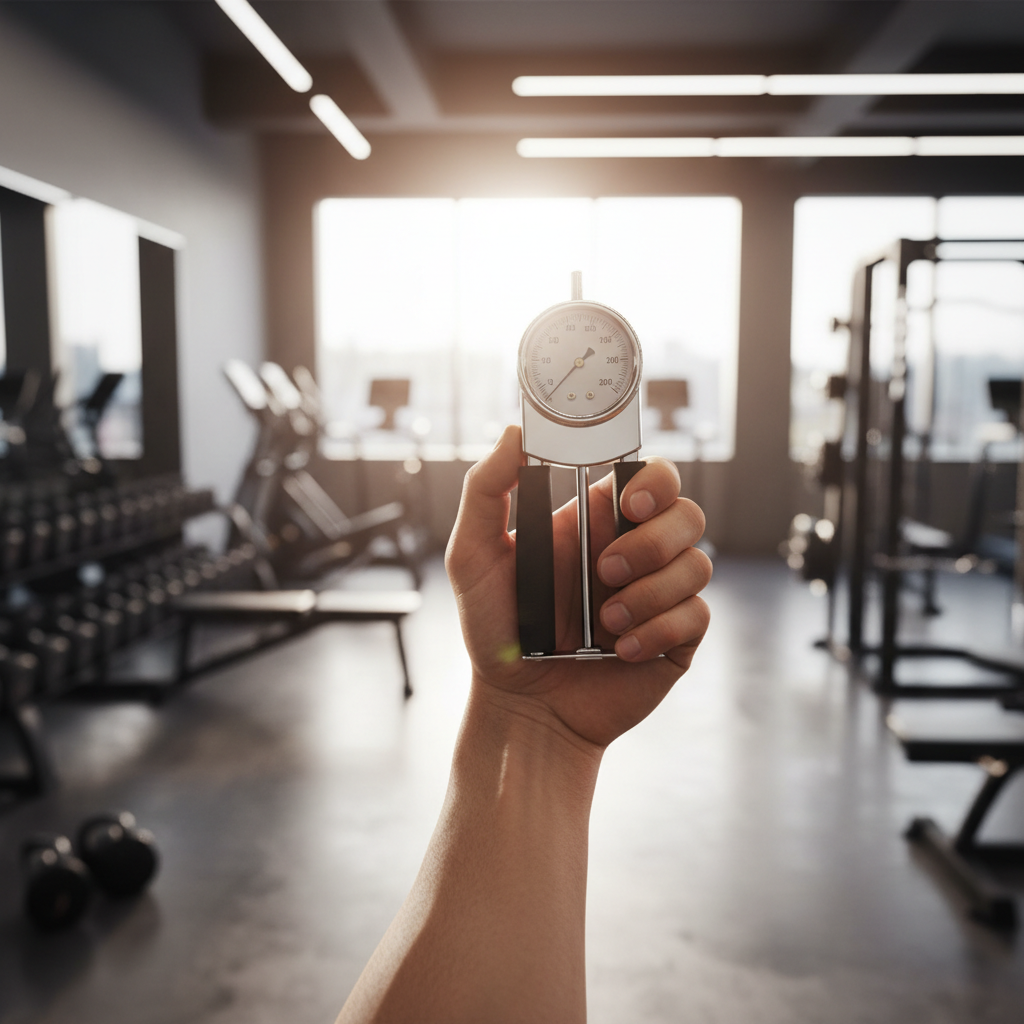
Grip strength is a powerful biomarker for longevity. This guide explores the science and provides a practical training plan to enhance yours.
# Mastering Grip Strength: Your Longevity Training Plan Blueprint
In the pursuit of a longer, healthier life, many individuals focus on complex diets, exotic supplements, or arduous endurance regimes. While these certainly have their place, a growing body of scientific evidence points to a far simpler, yet profoundly impactful, biomarker for longevity: grip strength. Far from being merely a measure of physical might, robust grip strength is emerging as a powerful predictor of healthspan, all-cause mortality, and even cognitive function. For us at Longevity Stack, this isn't just about lifting heavy; it's about a foundational aspect of vitality that deserves its own dedicated training plan.
Indeed, numerous studies have consistently demonstrated an inverse relationship between grip strength and mortality. We're not talking about marginal correlations; the evidence is compelling. A 2015 meta-analysis published in *The Lancet* found that for every 5 kg decrement in grip strength, there was a 17% increased risk of all-cause mortality. This isn't just about the elderly, either; the predictive power of grip strength spans across all adult age groups, making it a critical metric to monitor and improve at any stage of life. The mechanisms behind this strong link are multifaceted, extending beyond mere physical capacity. Grip strength often reflects overall muscle mass, functional capacity, bone mineral density, and even neurological integrity. It's a proxy for systemic health, indicating the body's ability to withstand physiological stress and recover effectively.
Why Grip Strength is a Longevity Super-Indicator
To understand why grip strength holds such sway over our longevity prospects, we need to look beyond the superficial. It's not simply the strength of your hand muscles; it's a window into your entire physiological system. Think of it as a low-cost, non-invasive barometer for your general health and vitality.
- **Muscle Mass and Sarcopenia:** Low grip strength is a key diagnostic criterion for sarcopenia, the age-related loss of muscle mass and function. Sarcopenia is strongly linked to frailty, falls, metabolic disorders, and increased mortality. By maintaining or improving grip strength, you are often simultaneously combating this critical aspect of ageing.
- **Bone Mineral Density:** Studies show a correlation between grip strength and bone mineral density, particularly in the forearm. This suggests that individuals with stronger grips may have better skeletal health, reducing the risk of osteoporosis and fractures, which are significant causes of morbidity and mortality in older adults.
- **Cardiovascular Health:** Research indicates that lower grip strength is associated with an increased risk of cardiovascular diseases, including heart attack and stroke. The exact mechanisms are still being elucidated, but it's hypothesised that poor grip strength may reflect a more generalised decline in vascular health and physical activity levels.
- **Cognitive Function:** Intriguingly, grip strength has been linked to cognitive performance. Some studies suggest that stronger individuals tend to exhibit better cognitive scores, and a decline in grip strength can precede or coincide with cognitive decline. This may be due to shared physiological pathways, such as improved vascular health benefiting both muscle and brain tissue.
- **Inflammation and Chronic Disease:** Grip strength can also serve as an indicator of chronic low-grade inflammation, a driver of many age-related diseases. Individuals with lower grip strength often exhibit higher inflammatory markers. Addressing grip strength can therefore be an indirect strategy for modulating systemic inflammation.
Assessing Your Grip Strength: Baseline and Benchmarks
Before embarking on any training plan, it's crucial to establish a baseline. This allows you to track progress and objectively assess the efficacy of your interventions. The most common and scientifically validated method for measuring grip strength is using a hand dynamometer. These devices are readily available and provide a precise, repeatable measurement in kilograms (kg) or pounds (lbs).
### How to Measure Your Grip Strength:
1. **Positioning:** Stand or sit with your elbow bent at a 90-degree angle, forearm neutral, and the dynamometer handle resting comfortably in your hand. 2. **Execution:** Squeeze the dynamometer as hard as you can for 3-5 seconds, ensuring no body movement or swinging. Your thumb should be on one side, and your fingers on the other. 3. **Repetitions:** Perform three trials with each hand, resting for 15-30 seconds between trials. Record the maximum reading for each hand. 4. **Reporting:** Use the average of the highest two readings from your dominant hand for comparison, or the sum of both hands for a comprehensive score.
### Grip Strength Normative Data (Illustrative, consult specific age- and sex-matched data for precision):
| Age Group (Years) | Men (kg) | Women (kg) | | :---------------- | :------- | :--------- | | 20-29 | 46-56 | 29-36 | | 30-39 | 44-55 | 28-35 | | 40-49 | 42-52 | 27-34 | | 50-59 | 38-48 | 24-30 | | 60-69 | 34-44 | 21-27 | | 70+ | 28-38 | 18-24 |
*Note: These are general ranges. Aiming for the higher end of your age and sex bracket is generally desirable for longevity benefits. Consistent monitoring, perhaps quarterly, can help identify trends.*
The Longevity Grip Strength Training Plan: Principles and Practices
Improving grip strength doesn't require a bespoke gym or complex equipment. It primarily involves engaging the muscles of the forearm, hand, and fingers through various types of contraction: crushing, pinching, and supporting. The key is consistency and progressive overload, just like any other resistance training protocol.
### Core Principles:
* **Specificity:** Train the specific actions involved in gripping. * **Progression:** Gradually increase resistance, repetitions, or duration over time. * **Variety:** Incorporate different types of grip exercises to target all relevant muscles. * **Consistency:** Integrate grip training into your routine 2-3 times per week, with adequate rest between sessions. * **Integration:** Don't view grip training in isolation. Strong grip benefits and is benefited by overall strength training.
### Foundational Exercises:
1. **Crushing Grip:** This is what most people think of when they consider grip strength. It involves squeezing an object with all your fingers and thumb. * **Hand Grippers:** Adjustable hand grippers are excellent. Start with a resistance you can complete 8-12 repetitions with, for 2-3 sets per hand. Gradually increase resistance as you get stronger. * **Plate Pinches (Weight Plates):** Hold two or more weight plates together with your thumb on one side and fingers on the other, resisting gravity. Aim for time or a few repetitions. Start with lighter plates and increase weight or duration. * **Farmers Walks:** An incredibly effective full-body exercise that heavily taxes your grip. Hold heavy dumbbells or kettlebells in each hand and walk for a set distance or time. This also provides excellent zone 2 cardio benefits when performed for longer durations.
2. **Pinch Grip:** This involves gripping an object between your fingers and thumb, without the palm fully closing around it. It targets different muscles and is crucial for fine motor control and object manipulation. * **Plate Pinches (Single Plate):** Pinch a single weight plate (smooth side out) between your thumb and fingers. Lift and hold for time, or perform repetitions. Progress by adding more plates or increasing hold time. * **Hub Pinches:** If available, a 'hub' attachment allows you to pinch a barbell plate from its centre hole, providing a challenging pinch grip exercise.
3. **Support Grip (Static Hold):** This involves holding an object for an extended period, resisting it from slipping. It's about endurance and sustained power. * **Dead Hangs:** Hang from a pull-up bar for as long as possible. This is an outstanding exercise for both grip strength and shoulder health. Start with supported hangs if necessary, gradually increasing duration. You can progress by adding weight (wearing a weight vest or holding a dumbbell between your feet). * **Farmers Walks (Extended Duration):** As mentioned above, extended farmers walks are superb for support grip endurance. * **Thick Bar Training:** If you have access to a thick-grip attachment for barbells or dumbbells (or simply wrap a towel around the bar), this significantly increases the demand on your grip during exercises like rows, deadlifts, and pull-ups.
For those interested in exploring advanced tools, some wearables now offer basic grip strength tracking, allowing for more granular data collection over time, though a dynamometer remains the gold standard for precision.
Integrating Grip Training into Your Longevity Routine
The beauty of grip training is its versatility. It can be a standalone mini-session, or seamlessly woven into your existing workout structure.
* **Warm-up:** Start your workout with a few sets of hand gripper squeezes or light plate pinches to activate forearm and hand muscles. * **Workout Finisher:** Dedicate 10-15 minutes at the end of your resistance training session to focused grip work (e.g., dead hangs, farmers walks, gripper sets). * **Active Recovery Days:** On days off from heavy lifting, perform lighter grip exercises to promote blood flow and recovery. Think about how creatine supports overall muscle performance; grip training is simply targeting a specific muscle group with similar principles of progressive overload. * **Everyday Opportunities:** Squeeze a tennis ball, use thicker implements when carrying groceries, or simply practise hanging from a sturdy beam. Every little bit adds up.
### Sample Weekly Schedule:
* **Monday (Full Body A):** Include 2-3 sets of heavy farmers walks (15-30m walk) as part of your session. Finish with 2 sets to failure of dead hangs. * **Wednesday (Full Body B):** Integrate thick-grip variations into exercises like rows or pull-downs. Conclude with 3 sets of hand gripper squeezes (8-12 reps per hand). * **Friday (Full Body C):** Perform 3 sets of plate pinches to failure (holding for time) or 3 sets of hub pinches. Supplement with additional dead hangs if desired.
Remember, consistency is paramount. Just as you wouldn't expect to build significant muscle mass from sporadic gym visits, consistent, targeted grip training will yield the most profound and lasting longevity benefits. Consider how other foundational elements, such as optimising sleep, compound these physical improvements. A holistic approach is always best.
Advanced Strategies and Considerations
For those looking to take their grip strength to the next level, or who are finding plateaued progress, here are some advanced strategies:
* **Finger Training:** Specific exercises like finger curls (using a small dumbbell) or manipulating grippers with individual fingers can target intrinsic hand muscles more effectively. * **Resistance Bands for Extension:** While most grip training focuses on flexion (squeezing), it's important to also train extension (opening the hand) to maintain balance and prevent imbalances. Rubber bands wrapped around your fingers can provide resistance for this. * **Nutrition and Recovery:** Ensure adequate protein intake to support muscle repair and growth. Aim for at least 1.6g/kg body weight. Furthermore, adequate magnesium glycinate or other forms of magnesium can support muscle function and recovery, including that of the forearm and hand muscles. Proper rest between sessions is also critical. * **Avoid Overtraining:** The small muscles of the forearms and hands can be prone to overuse injuries if not properly managed. Listen to your body and ensure sufficient rest and recovery.
While grip strength itself isn't a drug or peptide, the overarching principles of enhancing physical function for longevity align with the goals of various longevity-focused interventions. For instance, maintaining healthy muscle mass, which grip strength indicates, is supported by protocols like time-restricted eating when combined with adequate protein and resistance training. The synergistic effects are often profound.
The Bottom Line
Grip strength is far more than a party trick; it's a scientifically validated biomarker for healthspan and longevity. By understanding its significance and implementing a consistent, progressive training plan, you can proactively enhance a critical aspect of your physical resilience and future health. Start by measuring your baseline, then consistently integrate a variety of crushing, pinching, and support grip exercises into your routine. Remember, a stronger grip often signals a healthier body, capable of thriving through the years.
While this article focuses on training, remember to consult with a healthcare professional before starting any new exercise regimen. For information on specific supplements or peptides mentioned in our content, please refer to our /legal/disclaimer.