Mouth Taping for Sleep Apnea: Benefits, Risks, &
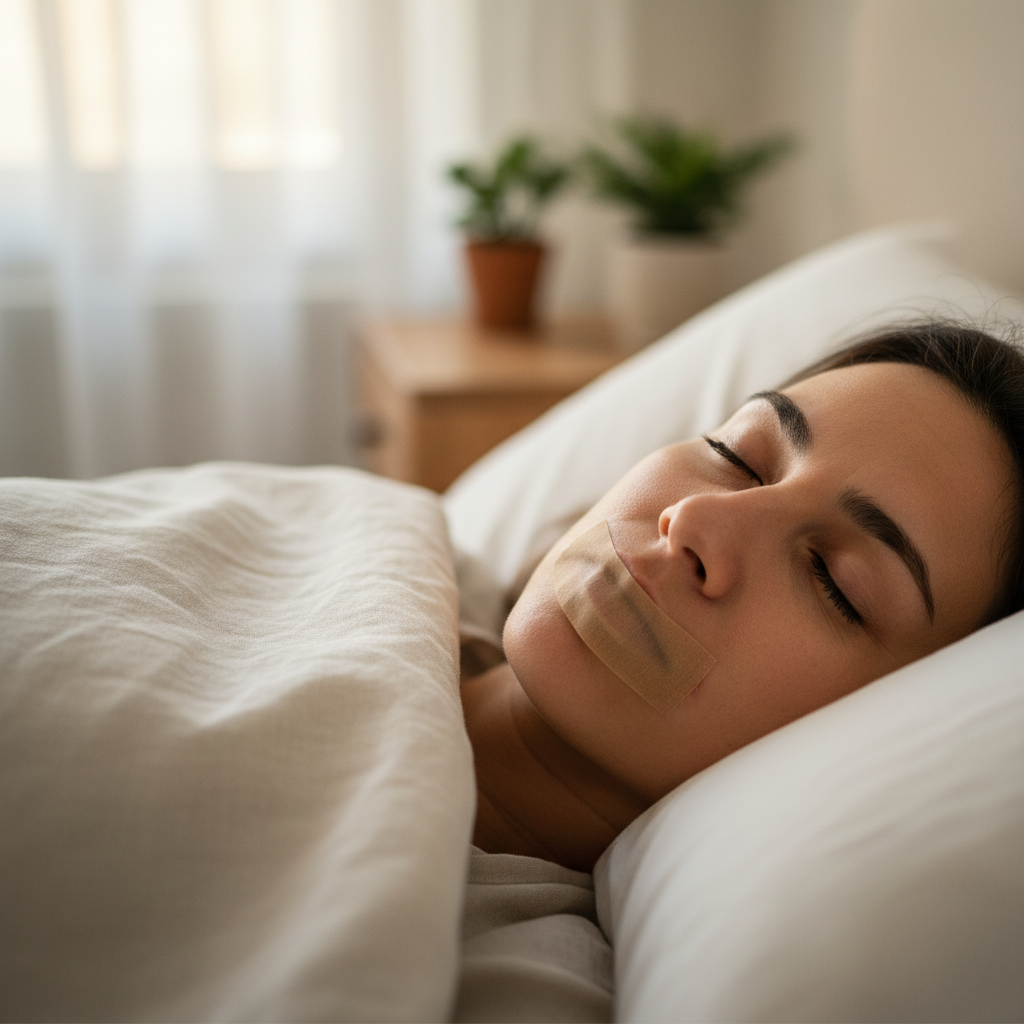
Exploring the science behind mouth taping for sleep apnea, we delve into its proposed benefits, potential risks, and efficacy based on current evidence.
# Mouth Taping for Sleep Apnea: Benefits, Risks, & What Science Says
In the ever-evolving landscape of health and wellness, new trends frequently emerge, promising simple solutions to complex problems. One such trend gaining traction, particularly in the realm of sleep optimisation, is mouth taping. Proponents suggest it can alleviate issues ranging from snoring to dry mouth, and even more significantly, improve conditions like sleep apnea. But what does the evidence say? Is this a genuine biohack backed by science, or another fleeting fad with potential pitfalls? At Longevity Stack, we delve beyond the hype to provide an evidence-first perspective on mouth taping, specifically examining its purported benefits and inherent risks for those with sleep apnea.
Sleep apnea, a common yet serious sleep disorder, is characterised by repeated interruptions in breathing during sleep. These pauses can last from a few seconds to minutes, occurring 5 to 30 times or more an hour. This leads to fragmented sleep, daytime fatigue, and a cascade of negative health consequences, including increased risk of cardiovascular disease, stroke, and metabolic dysfunction. The primary mechanism often involves the collapse of soft tissues in the throat (obstructive sleep apnea, OSA), although central sleep apnea (CSA) involves the brain failing to send proper signals to breathing muscles. Conventional treatments range from lifestyle modifications to continuous positive airway pressure (CPAP) machines, oral appliances, and in some cases, surgery. It’s against this backdrop that mouth taping has entered the conversation, offering a seemingly simple, non-invasive alternative.
The Rationale Behind Mouth Taping: Why Do People Do It?
The fundamental premise of mouth taping is to encourage nasal breathing during sleep. Many individuals, especially those who mouth-breathe during the day, tend to do so at night. Chronic mouth breathing has been linked to several issues: dry mouth, poor oral hygiene, changes in facial structure over time, and potentially exacerbating snoring and sleep apnea. The nasal passages, conversely, are designed to filter, warm, and humidify air, as well as produce nitric oxide, a vasodilator that helps open blood vessels and improve oxygen absorption in the lungs. Therefore, the theory goes, by gently taping the mouth shut, individuals are forced to breathe through their nose, thereby leveraging these physiological advantages.
For sleep apnea specifically, proponents suggest that nose breathing can stabilise the airway and reduce the likelihood of collapse. Mouth breathing, they argue, can lead to the jaw dropping back, further obstructing the airway. By keeping the mouth closed, the tongue might remain in a more forward, elevated position against the palate, preventing it from falling back and blocking the throat. This repositioning is theorised to create a more open and stable airway, reducing apneic events. However, it’s crucial to distinguish between anecdotal reports and robust scientific validation. While the *idea* has physiological plausibility, its direct application and efficacy for a complex condition like sleep apnea require rigorous investigation.
Potential Benefits of Nasal Breathing (and Indirectly, Mouth Taping)
Shifting from mouth to nasal breathing offers several well-documented physiological advantages that could indirectly benefit sleep quality and respiratory health. These benefits are the bedrock upon which the mouth taping hypothesis rests:
* **Improved Air Filtration and Humidification:** The nasal passages are equipped with cilia and mucus membranes that filter out allergens, dust, and pathogens, preventing them from reaching the lungs. They also warm and humidify inhaled air, which is less irritating to the respiratory tract compared to dry, cold mouth-breathed air. * **Nitric Oxide Production:** The paranasal sinuses produce nitric oxide (NO), a vital gas that plays a role in vasodilation, immune function, and neurotransmission. When inhaled through the nose, NO helps to open up blood vessels in the lungs, improving oxygen uptake and circulation throughout the body. This enhanced oxygenation can positively impact overall cellular function and energy. For more on optimising metabolic processes, consider exploring metabolic health resources. * **Better Lung Function:** Nasal breathing encourages diaphragmatic breathing, promoting fuller, deeper breaths that engage the diaphragm. This type of breathing is more efficient, improving gas exchange and promoting relaxation, which can be beneficial for the nervous system and sleep architecture. * **Reduced Snoring:** Snoring often occurs due to vibrations of soft tissues in the throat, which can be exacerbated by mouth breathing. By keeping the mouth closed, the airway may be more stable, potentially reducing the incidence and loudness of snoring. * **Oral Health:** Chronic mouth breathing can lead to dry mouth, which reduces saliva production. Saliva is crucial for neutralising acids, washing away food particles, and providing minerals that protect tooth enamel. Reduced saliva increases the risk of tooth decay, gum disease, and halitosis. Nasal breathing maintains oral moisture and promotes better oral hygiene.
While these benefits of nasal breathing are clear, directly extrapolating them to mouth taping as a definitive treatment for sleep apnea requires caution. The complexity of sleep apnea often involves anatomical factors that simple mouth closure may not adequately address.
Mouth Taping and Sleep Apnea: What the Science Says
The scientific literature specifically investigating mouth taping as a treatment for diagnosed sleep apnea is sparse and nascent. Most studies are small, pilot investigations, or focus on snoring rather than definitive apneic events. The general consensus among sleep specialists is that while nasal breathing is superior, mouth taping is *not* a primary or proven treatment for obstructive sleep apnea (OSA) and certainly not for central sleep apnea (CSA).
A 2022 study published in *Nature and Science of Sleep* investigated the effect of mouth taping on snoring and OSA in 30 patients with mild OSA. The study found that while mouth taping significantly reduced snoring intensity and frequency in some participants, it did not significantly alter the Apnea-Hypopnea Index (AHI), the primary measure of sleep apnea severity. It did, however, show a trend towards improved sleep quality and reduced daytime sleepiness in some individuals who responded positively to the intervention. This suggests a potential role for *some* individuals, particularly those with mild snoring or very mild OSA primarily driven by mouth breathing, but it is far from a universal solution or a substitute for established treatments. Reference: *Nature and Science of Sleep*, 2022; 14: 67–74.
Another review noted that while some individuals report subjective improvements, objective measures of sleep apnea severity (like AHI) often remain unchanged or only marginally affected. The primary mechanism of OSA—the physical collapse of the airway—is often multifactorial, involving tongue size, tonsil size, jaw structure, and muscle tone, which a piece of tape may not effectively counteract. For those exploring other avenues for sleep improvement, various protocols like time-restricted eating or cold exposure are also gaining attention, though their direct impact on sleep apnea is distinct.
The Risks and Potential Downsides of Mouth Taping
While mouth taping is generally considered low-risk for healthy individuals with no underlying respiratory issues, for those with sleep apnea, it carries several important considerations and potential dangers:
* **Exacerbation of Sleep Apnea:** If an individual has significant nasal congestion (due to allergies, a cold, deviated septum, or nasal polyps) and cannot breathe effectively through their nose, taping their mouth shut could lead to severe breathing difficulties, panic, and potentially worsen apneic events by creating an airway obstruction without an alternative route for breathing. This could lead to dangerous drops in blood oxygen levels. * **Skin Irritation and Allergic Reactions:** The adhesive from the tape can cause skin irritation, rashes, or allergic reactions, especially for those with sensitive skin. Prolonged use can lead to discomfort and damage around the mouth. * **Anxiety and Discomfort:** For some, the sensation of having their mouth taped shut can induce anxiety, claustrophobia, or panic, making sleep worse rather than better. The discomfort itself can disrupt sleep architecture. * **Ineffectiveness for Severe OSA:** For moderate to severe obstructive sleep apnea, mouth taping is highly unlikely to provide adequate airway support. Relying on it instead of prescribed treatments like CPAP can lead to unmanaged sleep apnea and its associated serious health risks. It's crucial not to self-treat severe conditions without medical guidance. * **Aspiration Risk:** Although rare, if an individual were to experience vomiting during sleep with their mouth taped, there is a theoretical risk of aspiration (inhaling vomit into the lungs) if the tape prevents them from opening their mouth quickly. * **Lack of Evidence for Long-Term Safety and Efficacy:** As a relatively new practice without extensive clinical trials, the long-term safety and efficacy of mouth taping, particularly for chronic conditions like sleep apnea, remain largely unstudied.
Before considering mouth taping, especially if you have a known sleep disorder, it is imperative to consult with a healthcare professional. They can assess your specific condition, rule out contraindications, and provide guidance on appropriate, evidence-based treatments. For instance, sometimes nasal strips or nasal dilators can improve nasal breathing without sealing the mouth. Other supplements like magnesium glycinate can support relaxation, but won't address structural airway issues.
When Might Mouth Taping Be Considered (Under Supervision)?
While not a primary treatment for sleep apnea, there might be very specific, limited circumstances where mouth taping *could* be explored, always under the guidance of a sleep specialist or ENT:
* **Primary Mouth Breathers without Significant OSA:** Individuals who predominantly mouth breathe during sleep, experience dry mouth or morning sore throats, and have *no diagnosed moderate-to-severe sleep apnea* could potentially benefit. In these cases, it's more about improving overall nasal breathing habits rather than treating apnea. * **Mild Snoring:** For individuals whose primary concern is mild snoring due to mouth breathing, and who have been cleared of significant sleep apnea, mouth taping *might* be a small adjunct to other strategies, provided nasal passages are clear. * **Adjunct to CPAP Therapy:** Some CPAP users who experience mouth leaks with nasal masks might consider mouth taping to encourage mouth closure, thereby improving the seal and efficacy of their CPAP. However, this should always be discussed with the prescribing physician or sleep technician, as it can sometimes mask underlying issues with mask fit or pressure settings.
It is critical to emphasise that these are highly specific scenarios. For anyone diagnosed with obstructive sleep apnea, particularly moderate to severe cases, established medical treatments such as CPAP, oral appliances, or lifestyle changes (like weight loss, avoiding alcohol before bed, or positional therapy) remain the gold standard. Ignoring a diagnosis or opting for unproven methods can have serious health consequences. Moreover, tools like wearables can provide valuable data on sleep patterns, but cannot diagnose or treat sleep apnea.
Bottom Line
Mouth taping for sleep apnea is a trend that garners significant attention in wellness circles, largely due to its simplicity and the established benefits of nasal breathing. While encouraging nasal breathing is physiologically sound, applying this directly as a definitive treatment for a complex medical condition like sleep apnea is fraught with oversimplification and potential risks. Current scientific evidence does not support mouth taping as a primary or standalone treatment for obstructive sleep apnea, especially for moderate to severe cases. It may offer some subjective improvements for certain individuals with mild snoring or mouth breathing habits, but objective improvements in the Apnea-Hypopnea Index (AHI) are generally lacking or minimal.
The potential risks, particularly for individuals with undiagnosed or severe nasal obstruction, outweigh any unproven benefits for managing sleep apnea. If you suspect you have sleep apnea, or have been diagnosed with it, the most responsible course of action is to consult with a sleep specialist. They can provide an accurate diagnosis and recommend evidence-based treatments tailored to your specific condition, ensuring your respiratory health and overall longevity are prioritised. Do not rely on mouth taping as a substitute for professional medical advice or prescribed therapies.
*Always consult with a qualified healthcare professional before starting any new supplement, peptide, or drug regimen. This information is not medical advice. See our full /legal/disclaimer for more.*