Mouth Taping for Sleep Apnoea: Unpacking Risks
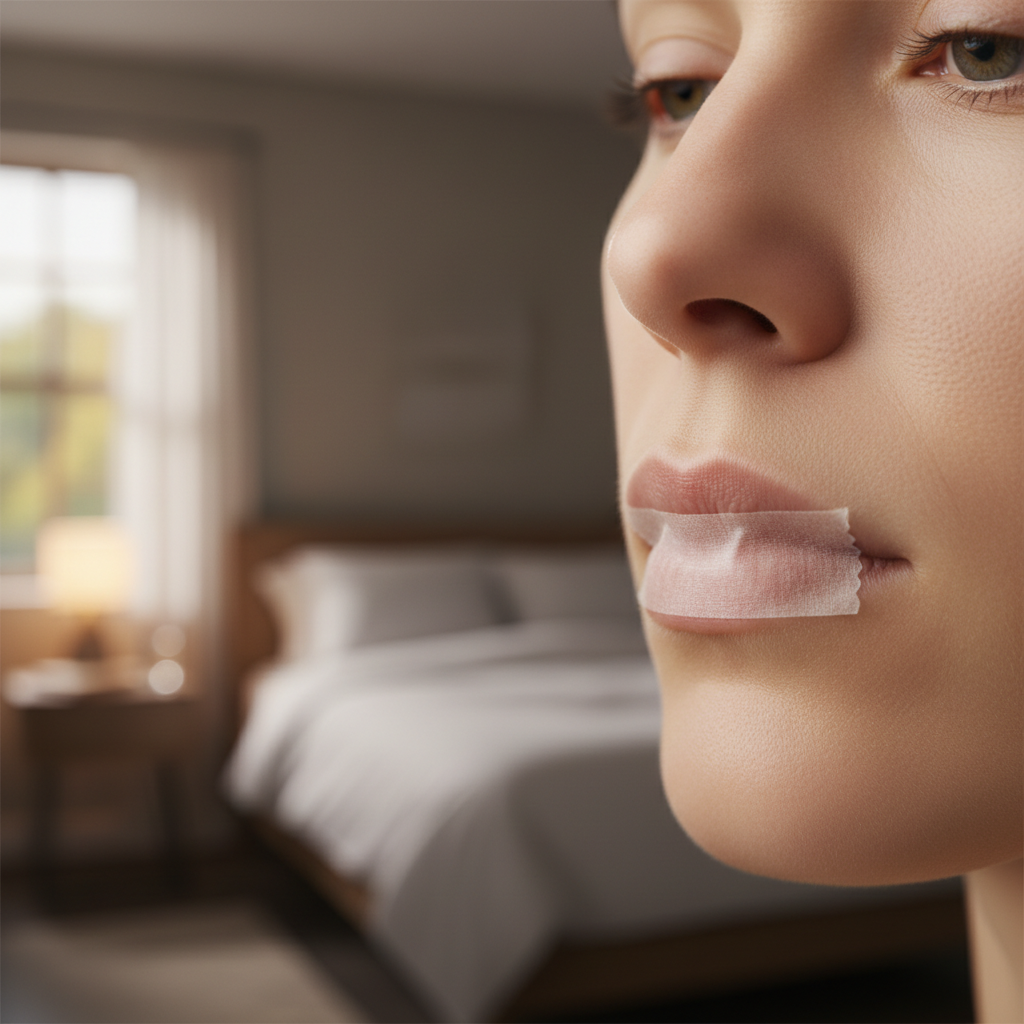
Explore the evidence behind mouth taping for sleep apnoea, weighing potential benefits against critical risks for improved sleep health.
# Mouth Taping for Sleep Apnoea: Unpacking Risks and Benefits
In the ever-evolving landscape of health and wellness, new trends frequently emerge, often promising simple solutions to complex problems. One such trend gaining traction in recent years is mouth taping – the practice of sealing one's lips shut with a specialised adhesive tape before sleep. Proponents suggest it encourages nasal breathing, which in turn could offer a multitude of health benefits, including improved sleep quality and, controversially, a potential adjunct treatment for sleep apnoea. As longevity science editors, it’s our duty to cut through the hype and examine the evidence critically.
Sleep apnoea, particularly Obstructive Sleep Apnoea (OSA), is a serious condition affecting millions worldwide. Characterised by repeated episodes of upper airway collapse during sleep, it leads to fragmented sleep, intermittent hypoxia, and a cascade of negative health consequences including increased risk of cardiovascular disease, stroke, diabetes, and cognitive impairment. Given its prevalence and impact, any intervention that promises relief warrants rigorous scrutiny. This comprehensive review will delve into the purported benefits and significant risks associated with mouth taping, especially in the context of sleep apnoea, providing an evidence-based perspective for our discerning readers.
The Rationale Behind Mouth Taping: Nasal Breathing and Airway Health
The fundamental premise of mouth taping is to promote nasal breathing over mouth breathing during sleep. Nasal breathing is widely recognised as the physiologically superior mode of respiration. The nose acts as a sophisticated air conditioner, filtering, humidifying, and warming inhaled air before it reaches the lungs. This process not only protects the respiratory system but also facilitates optimal gas exchange.
Crucially, nasal breathing promotes the release of nitric oxide (NO) in the paranasal sinuses. Nitric oxide is a potent vasodilator and bronchodilator, meaning it helps to widen blood vessels and airways, respectively. This can improve oxygen absorption and systemic oxygenation, which is vital for overall health and longevity. Mouth breathing, conversely, bypasses these benefits, often leading to dry mouth, poor oral hygiene, and potentially exacerbating snoring and sleep disturbances. For individuals experiencing issues with sleep, understanding the impact of proper breathing is a core component of optimising their Recovery & Sleep protocols.
Proponents argue that by forcing nasal breathing, mouth taping could reduce snoring, improve sleep quality, and even alleviate symptoms of mild sleep apnoea by maintaining better airway patency. The idea is that keeping the mouth closed prevents the tongue from falling back into the throat, a common contributor to airway obstruction in OSA. While this sounds plausible in theory, the human airway is a complex, dynamic structure, and interventions must be considered with extreme caution.
Potential Benefits and Limited Evidence for Sleep Apnoea
While anecdotal reports and social media trends might suggest widespread success with mouth taping, the scientific literature specifically linking mouth taping to significant improvements in *diagnosed sleep apnoea* is remarkably thin. Most of the evidence supporting mouth taping for sleep benefits, where it exists, focuses on snoring or very mild, undiagnosed breathing issues, rather than moderate to severe OSA. A 2022 study published in *Nature and Science of Sleep* investigated mouth taping for snoring and mild OSA, finding that it *might* reduce snoring intensity and frequency for some individuals by encouraging nasal breathing, but its impact on the Apnoea-Hypopnoea Index (AHI) – the primary diagnostic metric for sleep apnoea – was not consistently significant enough to recommend it as a standalone treatment. [Source: PubMed]
For mild habitual snorers or those who primarily mouth breathe without diagnosed sleep apnoea, mouth taping *might* offer some benefits related to nasal patency and reduced oral dryness. The premise is that if mouth breathing is the primary issue causing snoring or mild sleep disruption, then encouraging nasal breathing could be helpful. However, it's critical to differentiate between mild snoring and clinically diagnosed sleep apnoea. Sleep apnoea is a medical condition requiring medical diagnosis and treatment, and self-treating it with unproven methods carries substantial risks. Focusing on broader sleep hygiene and lifestyle factors such as time-restricted eating and regular resistance training can also significantly improve overall sleep architecture and reduce risk factors for sleep apnoea.
Significant Risks and Contraindications for Sleep Apnoea Patients
This is where the conversation turns serious. For individuals with diagnosed or suspected sleep apnoea, mouth taping carries significant, potentially dangerous risks. Sleep apnoea is characterised by recurrent episodes of breathing cessation or significant reduction, often accompanied by drops in blood oxygen levels. The body’s natural response to these events is to wake up briefly to reopen the airway, often through gasping or sudden movements. If the mouth is taped shut, this critical compensatory mechanism could be compromised.
Consider a scenario where an individual with severe OSA experiences an apnoeic event. Their body's natural reflex to open the airway might involve mouth breathing or gasping. If the mouth is taped, this vital reflex could be hindered, potentially leading to prolonged periods of oxygen desaturation (hypoxia). Chronic or severe hypoxia is extremely detrimental to health, increasing the risk of cardiovascular events, cognitive impairment, and even sudden cardiac death. Taping the mouth effectively removes a safety valve, which can have catastrophic consequences.
Furthermore, mouth taping is contraindicated for individuals with nasal congestion, allergies, asthma, or any condition that impairs nasal breathing. If nasal passages are obstructed, sealing the mouth can lead to suffocation risk and severe discomfort. Skin irritation, allergic reactions to adhesive, and anxiety related to feeling unable to breathe are also common side effects. While there's a growing interest in optimising health through various means, including specific supplements or even peptides, these should always be approached with caution and within the bounds of safety, particularly when dealing with serious medical conditions like sleep apnoea.
Expert Recommendations and Medical Alternatives
Given the substantial risks, medical professionals universally caution against using mouth taping as a treatment for sleep apnoea, particularly without prior consultation and diagnosis. If you suspect you have sleep apnoea, the first and most crucial step is to seek a professional medical diagnosis. A sleep study (polysomnography) is the gold standard for diagnosing sleep apnoea and determining its severity.
For diagnosed OSA, established and effective treatments include:
- **Continuous Positive Airway Pressure (CPAP):** This is the most common and effective treatment for moderate to severe OSA. CPAP machines deliver a continuous stream of air through a mask, keeping the airway open during sleep. While it requires adherence, its benefits in improving sleep quality and reducing long-term health risks are well-documented. [Source: National Heart, Lung, and Blood Institute (NIH)]
- **Oral Appliances:** Custom-fitted dental devices can help keep the airway open by repositioning the jaw or tongue. These are often suitable for mild to moderate OSA or for individuals who cannot tolerate CPAP.
- **Lifestyle Modifications:** Weight loss, avoiding alcohol and sedatives before bed, sleeping on your side, and addressing nasal congestion can significantly reduce OSA symptoms. Incorporating protocols like cold exposure and sauna might also contribute to overall metabolic health, indirectly supporting better sleep.
- **Surgery:** In some cases, surgical procedures to remove enlarged tonsils or adenoids, or to modify jaw structure, may be considered.
For those primarily concerned with mouth breathing or snoring *without* diagnosed sleep apnoea, improving nasal patency through saline rinses, nasal strips, or addressing underlying allergies can be beneficial. Learning breathing exercises, such as those popularised by the Buteyko method, can also help train the body for nasal breathing. It’s also worth exploring if improving factors such as sleep optimization through other means, including wearable tech, might be more effective.
The Longevity Stack Perspective: Prioritising Evidence and Safety
At Longevity Stack, our ethos is evidence-first. When it comes to health interventions, especially those touching on critical physiological functions like breathing and sleep, safety and scientific backing are paramount. While the allure of a simple, inexpensive solution like mouth taping is understandable, the risks, particularly for individuals with sleep apnoea, far outweigh any speculative benefits. The human body's intricate design for survival, including its protective reflexes during sleep, should not be casually circumvented.
For those seeking to optimise their sleep for longevity, we advocate for proven strategies. This includes a comprehensive approach: ensuring adequate magnesium glycinate intake, maintaining optimal vitamin D levels, exploring spermidine for cellular health, and adhering to strict sleep hygiene. Furthermore, regular physical activity, managing stress, and addressing underlying medical conditions are fundamental. If sleep apnoea is suspected, please consult a healthcare professional immediately. Do not rely on unproven or potentially dangerous home remedies.
Bottom line
Mouth taping, while popularised by anecdotal accounts and social media, lacks robust scientific evidence to support its use as a treatment for sleep apnoea. For individuals with diagnosed or suspected sleep apnoea, it poses significant and potentially life-threatening risks by impeding the body's natural compensatory mechanisms during airway obstruction. The primary concern is the potential for prolonged oxygen desaturation, which can lead to severe cardiovascular and neurological consequences.
Instead, individuals concerned about sleep apnoea should prioritise consulting a medical professional for proper diagnosis and follow evidence-based treatments such as CPAP, oral appliances, or lifestyle modifications. While encouraging nasal breathing can be beneficial for general health, using mouth tape for a serious medical condition like sleep apnoea is not recommended and can be dangerous. Always put safety and medical evidence first when addressing critical health conditions.
*Disclaimer: Please consult with a healthcare professional before starting any new health regimen or supplement, especially when dealing with pre-existing medical conditions or medications. The information provided is for educational purposes only and not a substitute for professional medical advice. [/legal/disclaimer]*