Boosting Bone Density After 40: The Power of
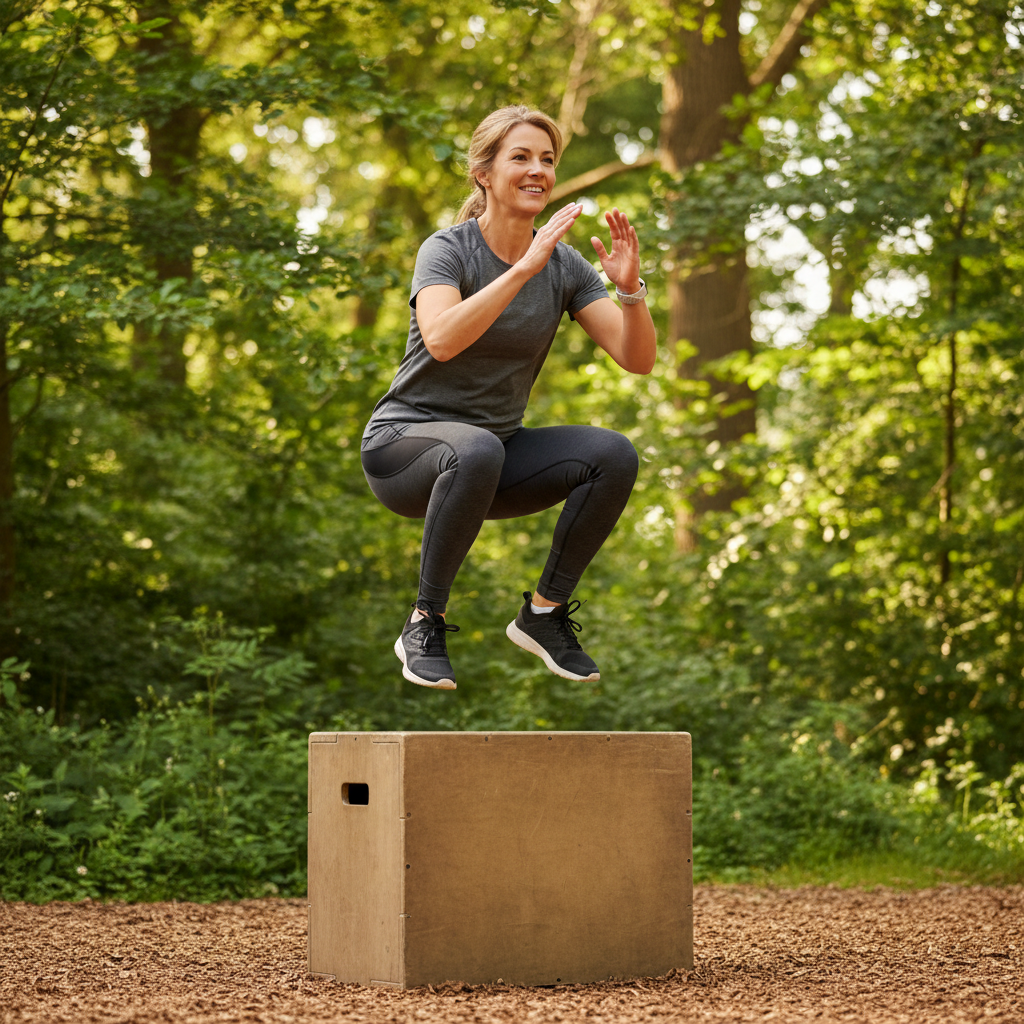
Learn how plyometrics can be a powerful tool for improving bone density and strength after 40, reducing your risk of osteoporosis and fractures.
# Boosting Bone Density After 40: The Power of Plyometrics
As we navigate the landscape of life after 40, the conversation around bone health often shifts from a distant concern to a pressing priority. The natural ageing process, hormonal changes, and lifestyle factors can all contribute to a gradual decline in bone mineral density (BMD), increasing the risk of osteoporosis and debilitating fractures. While calcium and vitamin D supplementation are often the first recommendations, the role of specific, impactful exercise is frequently underestimated. Enter plyometrics: a dynamic, high-impact training method that offers a potent stimulus for bone remodelling and strengthening, even in later life.
For many, the term 'plyometrics' conjures images of elite athletes performing explosive box jumps and depth leaps. And whilst these advanced movements are indeed plyometric, the underlying principles can be safely and effectively adapted for individuals over 40 seeking to fortify their skeletal structure. This guide will delve into the science behind plyometrics for bone density, discuss its specific benefits for the over-40 demographic, and provide a practical, progressive framework for incorporating these powerful movements into your longevity training regimen.
The Ageing Skeleton: Why Bone Density Matters After 40
Bone is a living, dynamic tissue that undergoes continuous remodelling – a process of old bone being reabsorbed and new bone being formed. This intricate balance is influenced by genetics, nutrition, hormones, and mechanical stress. Until our late 20s or early 30s, bone formation typically outpaces resorption, leading to peak bone mass. However, after this point, the balance often shifts, and we begin to lose bone mass gradually. For women, this decline accelerates significantly during menopause due to falling oestrogen levels, which play a crucial role in maintaining bone density. Men also experience age-related bone loss, albeit at a slower rate.
Reduced bone density, or osteopenia, can progress to osteoporosis, a condition characterised by porous and fragile bones, making them highly susceptible to fractures from minor falls or even everyday stresses. Hip, spine, and wrist fractures are particularly common and can lead to chronic pain, disability, and a significant reduction in quality of life. The good news is that bone is remarkably adaptive. Just like muscle, it responds to stress by becoming stronger. Weight-bearing and resistance training are well-established methods for stimulating bone growth, but plyometrics offers a unique and often superior stimulus due to its high-impact, rapid-loading nature.
The Science of Impact: How Plyometrics Builds Stronger Bones
The fundamental principle behind plyometrics' effectiveness for bone density lies in Wolff's Law, which states that bone adapts to the loads placed upon it. When bone experiences high, rapid, and unaccustomed mechanical stress, it signals osteoblasts (bone-forming cells) to lay down new bone tissue, thereby increasing bone mineral density. Unlike continuous, low-impact activities like walking or cycling, plyometrics involve short, sharp bursts of force that create a potent mechanical signal for bone adaptation.
Specifically, plyometric exercises generate high ground reaction forces and rapid changes in joint angles. These forces create micro-strains within the bone matrix, which are essential for stimulating bone remodelling. Research indicates that the magnitude and rate of strain are more critical for bone adaptation than the total volume of strain. This is why a few minutes of jumping can be more effective for bone density than hours of lower-impact exercise. A meta-analysis published in the *Journal of Bone and Mineral Research* highlighted the positive effects of jumping exercise on BMD, particularly at the hip and lumbar spine [pubmed.ncbi.nlm.nih.gov/27891632/].
Moreover, plyometrics aren't just about bone density. They also improve muscle power, balance, coordination, and proprioception – all factors that reduce the risk of falls, which are a primary cause of fractures in older adults. By improving both bone strength and fall prevention, plyometrics offers a dual protective mechanism.
Adapting Plyometrics for Over-40 Longevity
When considering plyometrics for bone density after 40, it's crucial to approach it progressively and safely. The key is to start with low-impact, controlled movements and gradually increase intensity and complexity as your body adapts. This isn't about replicating Olympic-level feats, but rather introducing controlled, impactful stress.
### Foundational Principles for Safe Plyometric Training:
* **Warm-up thoroughly:** Begin with 5-10 minutes of light cardio (e.g., jogging, cycling) followed by dynamic stretches to prepare muscles and joints. Focus on mobilising ankles, knees, and hips. * **Focus on landing mechanics:** Proper landing is paramount. Always land softly, with knees slightly bent and tracking over your toes, absorbing the impact through your entire leg. Avoid locking your knees or landing stiffly. * **Start with low volume and intensity:** Begin with just 1-2 sets of 5-10 repetitions for each exercise, 1-2 times per week. Gradually increase as tolerated. * **Prioritise recovery:** Allow adequate rest between sets and between sessions. Plyometrics place significant stress on the musculoskeletal system, so recovery is crucial to prevent injury and allow for adaptation. This aligns well with broader longevity principles around recovery & sleep. * **Listen to your body:** Any sharp pain is a signal to stop. Modify exercises or consult a healthcare professional if discomfort persists. * **Consider footwear and surface:** Perform plyometrics on a forgiving surface (e.g., grass, sprung floor, exercise mat) rather than hard concrete. Wear supportive athletic shoes. * **Strength Base:** Before embarking on plyometrics, ensure you have a solid foundation of resistance training. Strong muscles support strong bones and provide the stability needed for dynamic movements.
Progressive Plyometric Exercises for Bone Health
Here's a progressive guide to incorporating plyometric exercises into your routine, starting with lower-impact options and moving towards more challenging movements:
### Level 1: Low-Impact Foundations
These exercises introduce controlled impact and prepare your body for more intense movements.
* **Calf Raises with a Drop:** Stand on the balls of your feet on a step. Lower your heels below the step, then quickly push up onto your toes. On the way down, allow your heels to drop slightly to generate a small impact. Repeat 10-15 times. * **Pogo Jumps (small bounces):** Stand with feet hip-width apart, knees slightly bent. Perform small, quick bounces, keeping your knees mostly straight and focusing on pushing off the balls of your feet. Aim for minimal ground contact time. Start with 10-15 seconds. * **Skipping:** A fantastic full-body, low-impact plyometric. Start with basic skipping, focusing on light landings and rhythm. 1-2 minutes. * **Box Step-Ups/Step-Downs:** Step up onto a low box (6-12 inches) one foot at a time, then step back down, focusing on a controlled descent. The impact comes from the controlled stepping down. Repeat 8-12 times per leg.
### Level 2: Moderate Impact and Explosiveness
Once comfortable with Level 1, gradually introduce these movements. Remember to focus on soft landings.
* **Squat Jumps (shallow):** Start in a shallow squat. Explode upwards, lifting your feet off the ground a few inches. Land softly back into the shallow squat. Repeat 6-10 times. * **Broad Jumps (short distance):** Stand with feet hip-width apart. Swing your arms back, bend your knees, and jump forward a short distance. Land softly with bent knees. Walk back to the start. Repeat 5-8 times. * **Lateral Jumps:** Stand on one leg. Jump sideways to land on the other leg, absorbing the impact. Then jump back. Repeat 6-8 jumps per side. * **Hopping (single leg):** Stand on one leg and perform small hops forward or in place. Focus on balance and controlled landing. 5-8 hops per leg.
### Level 3: Higher Impact and Power (Advanced)
These movements are for individuals with excellent strength, mobility, and experience with plyometrics. They deliver a stronger stimulus but also carry a higher risk if performed incorrectly. Consult a coach or physiotherapist if unsure.
* **Box Jumps (low box):** Stand in front of a sturdy box (start with 12-18 inches). Jump onto the box, landing softly with both feet. Step down rather than jumping down to minimise impact on descent. Repeat 4-6 times. * **Depth Drops (from low height):** Stand on a low step (4-6 inches). Step off the step and immediately absorb the impact by bending your knees and hips. This teaches reactive landing. Do *not* jump up immediately after landing; focus purely on the controlled absorption. Repeat 3-5 times. * **Bounding:** An exaggerated running stride where you push off forcefully, covering more ground with each step and spending more time airborne. Focus on powerful hip extension. Perform for 20-30 metres.
Remember, consistency and proper form outweigh high intensity. Over time, as your body adapts, you can gradually increase the height of boxes, the distance of jumps, and the number of repetitions. Always err on the side of caution.
Integrating Plyometrics into Your Longevity Routine
For optimal bone density benefits, plyometrics should be a component of a well-rounded exercise programme. Here's how to integrate them effectively:
* **Frequency:** Start with 1-2 sessions per week on non-consecutive days, allowing for adequate recovery. As you advance, 2-3 sessions may be appropriate. * **Placement:** Perform plyometrics after your warm-up and before your main resistance training session, when you are fresh and energised. This ensures you can maintain proper form and maximise the power output. * **Periodisation:** Vary your plyometric exercises and intensity over time to continue challenging your bones and muscles. Avoid doing the same routine indefinitely. * **Complementary Exercises:** Continue with other forms of weight-bearing exercise such as strength training, brisk walking, jogging, or dancing. Ensure adequate protein intake to support muscle and bone health, and consider supplements like Vitamin D and Magnesium Glycinate for bone health. * **Nutrition:** A diet rich in calcium, vitamin D, magnesium, and protein is fundamental for bone health. Consult a nutritionist if you have concerns about your intake.
While plyometrics offer significant benefits, it's crucial to understand they may not be suitable for everyone. Individuals with severe osteoporosis, acute joint pain, recent fractures, or certain cardiovascular conditions should consult their doctor or a physiotherapist before starting. Always prioritise safety over intensity. For those interested in a comprehensive approach to health, integrating other practices like time-restricted eating or exploring advanced AI tools for health tracking can further enhance longevity efforts.
Beyond Bone Density: Broader Longevity Benefits
The advantages of incorporating plyometrics extend beyond just bone health, contributing to an overall more robust and functional body as we age:
* **Improved Muscular Power:** Plyometrics trains fast-twitch muscle fibres, which are crucial for explosive movements and tend to decline rapidly with age. This translates to better ability to react quickly, climb stairs, or lift heavy objects. * **Enhanced Balance and Coordination:** The dynamic nature of plyometric exercises significantly improves proprioception (your body's sense of position in space) and neuromuscular control, reducing the risk of falls. * **Increased Metabolic Rate:** High-intensity plyometric bursts can temporarily elevate your metabolic rate, contributing to better body composition and metabolic health, an important aspect of longevity science that we frequently cover (e.g. berberine for metabolic health). * **Functional Fitness:** These movements mimic real-life actions like jumping over obstacles, quickly changing direction, or recovering from a stumble. This enhances your ability to perform daily activities with greater ease and confidence.
Consistent engagement with a progressive plyometric programme, combined with a holistic approach to nutrition and other forms of exercise like zone 2 cardio, can significantly empower you to maintain vitality and independence well into your later years. Remember, it's never too late to start investing in your bone health. A study published in *Nature Communications* highlighted the effectiveness of targeted exercise in improving bone density even in older adults [nature.com/articles/s41467-020-17682-3].
Bottom line
Maintaining and even improving bone density after 40 is not only achievable but essential for a vibrant, independent future. Plyometrics, when approached thoughtfully and progressively, offers a uniquely potent stimulus for bone remodelling. By safely integrating these dynamic, high-impact movements into your training regimen, you can actively combat age-related bone loss, significantly reduce your risk of fractures, and enhance overall functional fitness. Start slow, focus on proper form, and build gradually to unlock the profound longevity benefits of stronger bones.
*Disclaimer: Always consult with a healthcare professional before starting any new exercise programme, especially if you have pre-existing health conditions or concerns about bone density. This article is for informational purposes only and does not constitute medical advice. Please read our full /legal/disclaimer.*