Boosting Bone Density After 40: The Power of
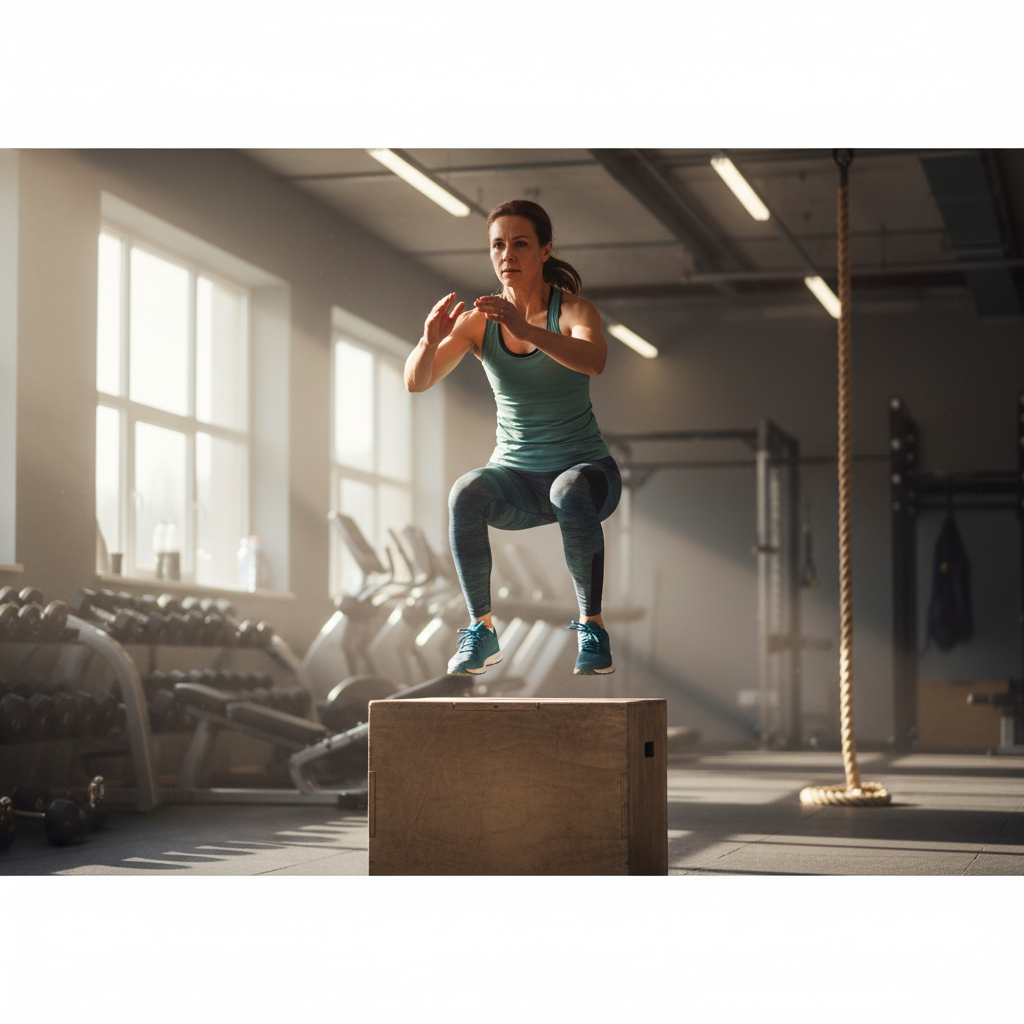
Plyometrics, often associated with athletes, offer significant bone density benefits for adults over 40. This guide explains how to safely incorporate them into your fitness regimen.
# Boosting Bone Density After 40: The Power of Plyometrics
As we navigate the journey of ageing, one critical aspect of health that often receives insufficient attention until it’s too late is bone density. After the age of 40, both men and women begin to experience a gradual decline in bone mineral density (BMD), a process that accelerates significantly in women post-menopause. This loss increases the risk of osteopenia and, subsequently, osteoporosis, conditions that can lead to debilitating fractures and a substantial reduction in quality of life. While calcium and vitamin D are foundational, exercise, particularly specific types of impact loading, is a powerful and often underutilised strategy to maintain and even improve bone health. Enter plyometrics.
Often associated with explosive athletic performance – think Olympic sprinters and basketball players – plyometrics involve exercises where muscles exert maximum force in short intervals. This type of training is characterised by rapid stretching (eccentric phase) followed by rapid shortening (concentric phase) of muscles, known as the stretch-shortening cycle. The key benefit for bone density lies in the high-impact forces generated, which act as a potent stimulus for bone remodelling. Unlike low-impact activities, plyometrics create mechanical stress on the bone in multiple directions, signalling osteoblasts (bone-building cells) to lay down new bone tissue. This mechanism is crucial for counteracting age-related bone loss and enhancing bone strength, making plyometrics an incredibly effective tool for those looking to preserve their skeletal integrity after 40.
Understanding Age-Related Bone Loss and the Role of Impact
Bone is a dynamic tissue, constantly undergoing a process of remodelling where old bone is reabsorbed and new bone is formed. This balance is critical for maintaining bone strength. However, from around the fourth decade of life, the rate of bone reabsorption often begins to outpace bone formation. Factors contributing to this decline include hormonal changes (especially oestrogen depletion in women), decreased physical activity, nutritional deficiencies, and certain medical conditions or medications. The consequences of this imbalance are stark: increased fragility and a higher susceptibility to fractures, particularly of the hip, spine, and wrist.
Traditional advice for bone health often focuses on weight-bearing exercises such as walking, jogging, and resistance training. While these are undoubtedly beneficial – and indeed, resistance training is non-negotiable for overall longevity – they may not always provide the optimal level of impact for maximal bone stimulation, especially for those with already declining BMD. The principle of mechanotransduction dictates that bone adapts to the mechanical stresses placed upon it. Higher impact, short-duration loads are more effective at stimulating bone formation than lower-impact, longer-duration activities, even if the total energy expenditure is similar. This is where plyometrics shine: they deliver precisely the kind of high-magnitude, brief loading that triggers a robust osteogenic response.
For instance, jumping activities, a cornerstone of plyometric training, create ground reaction forces several times an individual's body weight. This intermittent, high-intensity loading has been shown to be superior to continuous, lower-intensity loading for enhancing bone mineral density. A systematic review published in *Osteoporosis International* highlighted that high-impact exercise, including jumping, was particularly effective in improving BMD at critical sites like the femoral neck and lumbar spine in postmenopausal women. pubmed.ncbi.nlm.nih.gov/28551737/
Key Benefits of Plyometrics for Bone Density After 40
The advantages of incorporating plyometric training extend beyond merely slowing bone loss; they actively contribute to enhanced bone health and functional capacity:
* **Increased Bone Mineral Density (BMD):** As discussed, the high-impact nature of plyometrics provides a potent stimulus for osteogenesis, leading to measurable improvements in BMD, particularly in weight-bearing bones. * **Improved Bone Architecture:** Plyometrics don't just increase bone mass; they can also positively influence the internal structure and strength of bone, making it more resilient to stress. * **Reduced Fracture Risk:** Stronger bones are inherently less prone to fractures. By improving BMD and bone quality, plyometric training acts as a preventative measure against fragility fractures, which are a major cause of disability and mortality in older adults. * **Enhanced Muscle Power and Balance:** Plyometrics inherently improve muscle power, which is critical for maintaining functional independence and preventing falls – another major risk factor for fractures. Better balance, also a direct outcome, further reduces fall risk. * **Improved Proprioception:** The dynamic and rapid nature of plyometric movements enhances proprioception (the body's sense of its position in space), contributing to better coordination and stability. * **Metabolic Health Benefits:** Like other forms of intense exercise, plyometrics can contribute to improved metabolic health by enhancing insulin sensitivity and promoting healthy body composition, indirectly supporting bone health.
It's important to note that while plyometrics are effective, they must be approached with caution, especially for individuals over 40 who may have pre-existing conditions or lower baseline fitness levels. The key is progressive overload and proper technique.
Safe and Effective Plyometric Exercises for Over 40s
Before embarking on any plyometric programme, it is crucial to consult with a healthcare professional, especially if you have a history of bone density issues, joint problems, or other medical conditions. A comprehensive assessment can help determine your suitability and guide intensity levels. For most otherwise healthy individuals over 40, a gradual introduction is paramount.
Start with lower-impact options and fewer repetitions, focusing on impeccable form. As your strength and confidence improve, you can progressively increase the intensity, volume, and complexity of the exercises. Always perform plyometrics on a forgiving surface, such as grass, a sprung floor, or a rubber mat, to minimise impact on joints.
**Beginner-Friendly Plyometric Exercises:**
* **Calf Raises with a Small Hop:** Stand tall, push up onto the balls of your feet, and add a tiny hop at the peak. Land softly and immediately repeat. This introduces vertical impact gently. * **Box Step-Ups/Step-Downs:** Step up onto a low sturdy box (6-12 inches) and then step down, focusing on absorbing the impact softly. Progress to stepping down and immediately stepping up. This is a controlled way to introduce eccentric loading. * **Ankle Hops:** Stand with feet hip-width apart, keep knees slightly bent, and perform small, quick hops, primarily using your ankles and calves. Focus on staying light on your feet. * **Jumping Jacks:** A classic, full-body exercise that provides moderate impact. Ensure controlled landings. * **Skipping:** A fantastic low-impact plyometric exercise. Vary the height of your skips as you progress. * **Heel Drops:** Stand on a small step with your heels hanging off. Push up onto your toes, then let your heels drop quickly below the step level, absorbing the impact through your calves and ankles. This is excellent for stimulating the heel bone.
**Intermediate Plyometric Exercises (Once a solid foundation is built):**
* **Box Jumps (Low Box):** Jump onto a low sturdy box (6-12 inches), landing softly with bent knees. Step back down rather than jumping down initially to reduce impact. Progress to jumping down carefully. Always ensure the box is stable. * **Standing Long Jumps:** Jump forward as far as you can, landing softly with both feet. Step back to the starting point. * **Squat Jumps:** Perform a regular squat, then explode upwards into a jump, landing softly back into a squat position. * **Bounding:** Exaggerated, long strides with a momentary 'flight phase' where both feet are off the ground.
**Important Considerations:**
* **Warm-up:** Always perform a dynamic warm-up (e.g., light cardio, dynamic stretches) before plyometrics to prepare muscles and joints. * **Cool-down:** Follow with static stretches to improve flexibility. * **Frequency:** Start with 1-2 sessions per week, allowing ample recovery time. As you adapt, you might increase to 2-3 sessions. * **Volume:** Begin with 2-3 sets of 5-10 repetitions for each exercise. Gradually increase reps or sets. For example, for box jumps, focus on quality, not quantity. * **Rest:** Adequate rest between sets (60-120 seconds) is crucial for optimal power output and injury prevention. * **Listen to Your Body:** Any sharp pain is a sign to stop. Distinguish between muscle fatigue and joint pain.
Integrating Plyometrics into Your Longevity Programme
Plyometrics should be viewed as one component of a holistic longevity strategy, not a standalone solution. They complement other crucial aspects of health and fitness:
* **Resistance Training:** This is foundational for building and maintaining muscle mass, which in turn supports bone health. Stronger muscles exert greater force on bones during movement, further stimulating bone remodelling. Combine plyometrics with a comprehensive resistance training programme for best results. * **Nutrition:** Adequate intake of calcium, vitamin D, magnesium, and protein is non-negotiable for bone health. Consider dietary sources and, if necessary, high-quality supplements. Vitamin D is particularly vital for calcium absorption and bone mineralisation. pubmed.ncbi.nlm.nih.gov/30867015/ * **Recovery and Sleep:** Intense training like plyometrics demands robust recovery. Prioritise sleep and consider active recovery strategies. Over-training can be detrimental to bone density and overall health. Adequate recovery allows bones to adapt and rebuild stronger. * **Balance and Flexibility:** Incorporate exercises that improve balance and flexibility to further reduce fall risk and improve overall movement quality. Tai Chi or yoga are excellent complements. * **Progressive Overload:** Just as with resistance training, for plyometrics to continue stimulating bone growth, the intensity or volume must gradually increase over time. This could mean higher jumps, more repetitions, or shorter rest periods.
For those interested in optimising their longevity from a multi-faceted perspective, exploring tools such as a biological age assessment can provide insights into overall health markers, including those that indirectly impact bone health. Similarly, using biomarker insights can help track nutritional status and inflammatory markers relevant to bone density.
The Science Behind High-Impact Loading and Bone Remodelling
The phenomenon of bone adaptation to mechanical stress, often called Wolff's Law, states that bone in a healthy person or animal will adapt to the loads it is placed under. If loading on a particular bone increases, the bone will remodel itself over time to become stronger to resist that sort of loading. The reverse is also true: if loading decreases, the bone will become weaker. This principle is exquisitely demonstrated in astronauts, who experience rapid bone loss in the microgravity environment of space due to the absence of weight-bearing forces.
Plyometric exercises induce high-magnitude, short-duration loading events. These events create micro-strains within the bone matrix, which are sensed by osteocytes – the 'master regulators' of bone. Upon sensing these strains, osteocytes initiate a cascade of signalling pathways that recruit osteoblasts to the site, leading to the formation of new bone. The key is the *rate* and *magnitude* of the loading. Slow, continuous loading, while better than none, is less effective than rapid, high-impact loading at stimulating this osteogenic response. Research suggests that a few high-impact jumps a day can be more osteogenic than prolonged low-impact activities. nature.com/articles/s41598-020-77983-2
However, it's a fine line. Too much impact, too soon, or with poor form, can lead to stress fractures or joint injuries. This underscores the need for a careful, progressive approach, especially as we age and our connective tissues may be less resilient. For those concerned about joint integrity, focusing on exercises that minimise shearing forces and maximise vertical loading, such as controlled box jumps onto a soft surface, can be beneficial.
For any discussion of exercise or supplement use, particularly those impacting physiological systems, always consult a qualified healthcare professional. This information is for educational purposes only and not medical advice. /legal/disclaimer
Bottom Line
Maintaining and improving bone density after 40 is a critical component of healthy ageing, and plyometric training offers a uniquely effective strategy. By incorporating safe, progressive high-impact movements, individuals can stimulate bone remodelling, increase bone mineral density, and significantly reduce their risk of debilitating fractures. While often overlooked for older adults, the scientific evidence robustly supports the osteogenic benefits of plyometrics when performed correctly and consistently.
As with any powerful intervention, a thoughtful and measured approach is essential. Start gently, prioritise proper form, listen to your body, and integrate plyometrics within a broader longevity programme that includes resistance training, optimal nutrition, and adequate recovery. Taking these steps can empower you to build stronger bones, enhance physical resilience, and safeguard your independence for decades to come.