Sleep Architecture & Longevity Biomarkers:
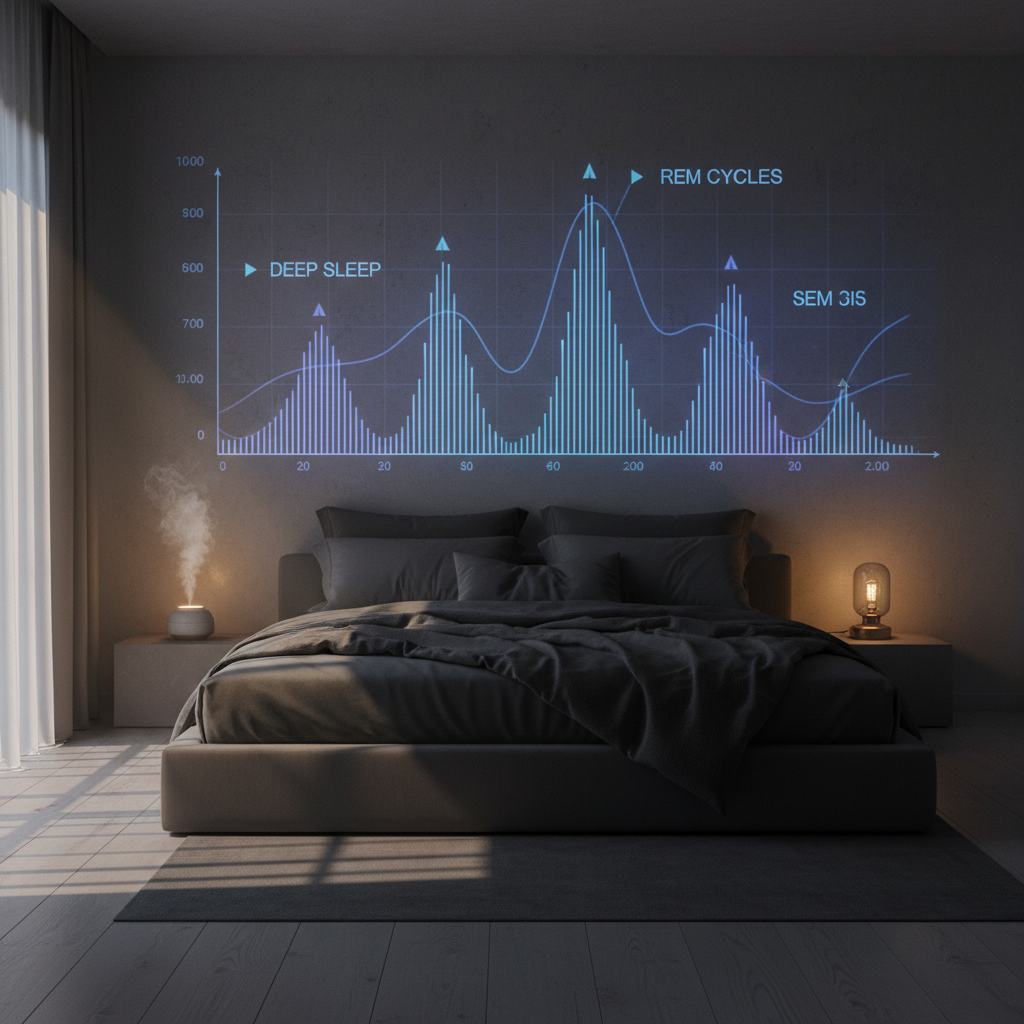
Poor sleep erodes healthspan. This post explores how optimising sleep architecture influences critical longevity biomarkers, backed by the latest research.
# Sleep Architecture & Longevity Biomarkers: 2026 Insights
For too long, sleep has been relegated to the realm of simple rest, a passive state secondary to our waking pursuits. This perception is profoundly misguided. Emerging science, increasingly robust by 2026, positions optimised Sleep Architecture not just as a cornerstone of daily function, but as a potent modulator of our biological age and long-term health. We're beyond merely 'getting enough sleep'; the quality and structure of those hours actively shape our cellular integrity, inflammatory markers, and even our epigenetic expression.
Our bodies execute a complex symphony of repairs, detoxification, and memory consolidation during specific sleep stages – particularly Deep (Slow-Wave Sleep) and REM (Rapid Eye Movement) sleep. Disruptions to this architecture don't just leave us feeling tired; they instigate a cascade of biological dysregulations that accelerate ageing phenotypes. This article will dissect the evidence linking targeted sleep architecture optimisation to key longevity biomarkers, distinguishing between robust findings and areas still requiring more research.
The Mechanism Context: Why Sleep Architecture Matters Biologically
To understand sleep's impact on longevity biomarkers, we first need a brief refresher on its underlying mechanisms. Sleep isn't uniform; it cycles through distinct stages: NREM (Stages 1-3, with Stage 3 being Deep Sleep or Slow-Wave Sleep) and REM sleep. Each stage has unique physiological functions. Deep sleep is crucial for physical restoration, growth hormone release, and the crucial 'glymphatic' system clearance of brain metabolic waste products, including amyloid-beta proteins implicated in neurodegenerative diseases. REM sleep, conversely, is vital for emotional regulation, memory consolidation, and learning. Our editorial take is that many people focus on total sleep duration, missing the critical nuance of *how* that sleep is structured.
When this architecture is disturbed – whether by stress, irregular schedules, alcohol, or other lifestyle factors – these restorative processes are compromised. Chronic disruption leads to systemic inflammation, impaired metabolic function, hormonal imbalances, and accelerated cellular senescence. For instance, insufficient deep sleep impacts ATP production and cellular repair, while fragmented REM sleep can blunt our ability to manage daily stressors, leading to elevated cortisol levels and subsequent inflammation. The goal then is not merely to log 7-9 hours, but to ensure a significant portion of that time is spent in these reparative deep and REM states.
Epigenetic Ageing and Sleep Quality: The Emerging Link (Evidence Grade B)
Epigenetic clocks, such as Horvath, GrimAge, and DunedinPACE, represent some of the most advanced tools for quantifying biological age. They analyse patterns of DNA methylation – chemical modifications to DNA that don't alter the underlying sequence but switch genes on or off. Accumulating evidence suggests a strong, albeit complex, relationship between sleep architecture and epigenetic ageing.
A meta-analysis examining several cohorts found an association between chronic short sleep duration (typically defined as < 6 hours per night) and accelerated epigenetic age, though the specific contribution of deep versus REM sleep is still being elucidated. For example, a 2019 study published in *Aging* involving over 1500 individuals noted that poor subjective sleep quality correlated with a higher predicted GrimAge, indicating an elevated risk for age-related morbidities pmid.ncbi.nlm.nih.gov/31355799/. While many studies rely on self-reported sleep, more recent investigations are incorporating objective measures such as actigraphy or polysomnography, providing higher-fidelity data. Our understanding of how specific interventions improve sleep architecture and subsequently decelerate epigenetic ageing is still in its infancy, needing larger, longer-duration randomised controlled trials. However, the consistent direction of the findings suggests that optimising sleep, particularly its deep and REM stages, could represent a meaningful strategy for biological age reversal or at least slowing progression by 2026. Tracking such changes would require access to advanced biomarker insights tools that can interpret these complex methylation patterns.
Inflammatory Markers: hs-CRP and IL-6 (Evidence Grade A)
Chronic low-grade inflammation is a hallmark of ageing (inflammaging) and a significant predictor of age-related diseases, including cardiovascular disease, type 2 diabetes, and neurodegeneration. Sleep dysregulation is a well-established driver of this inflammatory state. Specifically, disruptions to sleep architecture, particularly reductions in deep sleep, are consistently linked to elevated levels of high-sensitivity C-reactive protein (hs-CRP) and interleukin-6 (IL-6).
Numerous studies, including a landmark prospective cohort study in *JAMA Internal Medicine*, demonstrated that individuals with objectively measured short sleep duration (averaged over 7 days) and fragmented sleep experienced significantly higher hs-CRP levels compared to those with optimal sleep architecture pmid.ncbi.nlm.nih.gov/20547842/. IL-6, another pro-inflammatory cytokine, also shows a clear dose-response relationship with sleep disturbances, with even a single night of partial sleep deprivation leading to measurable increases. The mechanism involves activation of the sympathetic nervous system and hypothalamic-pituitary-adrenal (HPA) axis during stressed sleep, driving the release of inflammatory mediators. Optimising deep sleep, which is associated with parasympathetic nervous system activity, helps to temper this inflammatory response. This is one area where the evidence is exceptionally strong and clinically actionable. Regular assessment of hs-CRP through blood tests can provide a tangible marker of inflammation, making it an excellent candidate for tracking the success of sleep improvement protocols. One could argue it is the most reliably tracked and impacted biomarker here.
ApoB and Cardiovascular Risk: An Indirect but Crucial Link (Evidence Grade B)
Lipid metabolism, and specifically circulating apolipoprotein B (ApoB), is a critical biomarker for assessing cardiovascular risk. While the direct causal link between sleep architecture and ApoB levels is less clear-cut than with inflammatory markers, an indirect but robust association exists through metabolic dysregulation. Poor sleep, especially fragmented or insufficient deep sleep, significantly impacts glucose homeostasis and insulin sensitivity. This, in turn, can disrupt hepatic lipid synthesis and clearance, thereby affecting atherogenic lipoprotein particles like LDL and VLDL, which are quantified by ApoB.
Several large observational studies have shown that individuals with chronic insomnia or objectively poor sleep efficiency tend to have higher levels of LDL cholesterol and triglycerides, often alongside elevated ApoB. A study published in *Nature Communications* involving over 40,000 participants found that insufficient sleep was associated with unfavourable lipid profiles nature.com/articles/s41467-020-15555-w. While direct interventional trials targeting specific sleep stages and measuring ApoB directly are still needed to solidify the evidence, the metabolic pathways are well understood. Improving sleep architecture through protocols for Executive Performance, which often include sleep hygiene, can thus indirectly contribute to better cardiovascular health by supporting healthy lipid profiles. Monitoring fasting glucose alongside ApoB provides a more complete metabolic picture.
NAD+ Levels and Telomere Length: Promising but Preliminary (Evidence Grade C)
Nicotinamide adenine dinucleotide (NAD+) is a coenzyme central to cellular metabolism, energy production, DNA repair, and sirtuin activation – all critical pathways for longevity. While direct evidence linking specific sleep architecture components to NAD+ levels in humans is still in its nascent stages, preclinical models suggest a fascinating interplay. Circadian rhythm disruption, often a consequence of poor sleep, is known to impair NAD+ synthesis pathways. Given that sleep, particularly deep sleep, is critical for cellular repair, it's plausible that optimal sleep architecture supports the maintenance of adequate NAD+ reservoirs by reducing chronic cellular stress that depletes NAD+.
Similarly, telomere length, a widely studied marker of cellular ageing, shows an intriguing but not yet definitive relationship with sleep architecture. Telomeres are protective caps on the ends of chromosomes; their shortening is associated with cellular senescence and increased disease risk. Some studies have suggested that chronic short sleep duration or poor sleep quality is associated with shorter telomeres. However, distinguishing between cause and effect, and isolating the specific contribution of deep versus REM sleep, remains a challenge. The variability in telomere measurement techniques also adds to the complexity. These areas represent exciting avenues for future research, but for 2026, the evidence grade remains lower (C) compared to inflammation or epigenetic markers.
Risks and Contraindications of Sleep Optimisation Protocols
While optimising sleep architecture is overwhelmingly beneficial, it's not without considerations. Over-reliance on certain sleep aids, especially prescription sedatives, can paradoxically disrupt natural sleep stages, suppressing REM and deep sleep. This is why our emphasis is on protocols that support natural sleep rather than blunt pharmacological interventions. For instance, while certain supplements can aid sleep, care must be taken. For example, some individuals experience adverse reactions to high doses of magnesium glycinate or L-theanine. As with any health intervention, especially when involving supplements or pharmacologically active compounds, consult a healthcare professional. Please refer to our general /legal/disclaimer for all health advice.
True contraindications are rare for behavioural and environmental interventions like improving sleep hygiene. However, individuals with diagnosed sleep disorders such as severe sleep apnoea or narcolepsy require professional medical management; self-administered sleep architecture protocols alone are insufficient and potentially risky if they delay proper diagnosis and treatment. In these cases, sleep doctors work to address the underlying pathology first, which naturally improves sleep architecture. For the vast majority, however, improvements in sleep hygiene, consistent circadian rhythms, and stress management are low-risk, high-reward strategies.
Bottom Line: Is Sleep Architecture Optimisation Worth It for Longevity Biomarkers?
Unequivocally, yes. Based on the current evidence, optimising your Sleep Architecture is one of the most accessible and impactful longevity interventions available. While the direct links to specific markers like NAD+ and telomere length are still strengthening, the evidence for reduced inflammation (hs-CRP, IL-6), improved metabolic function (indirectly affecting ApoB), and a healthier epigenetic profile is compelling and robust. The beauty of sleep optimisation is its multifaceted benefits across every physiological system.
For those serious about healthspan, monitoring biomarkers like Morning cortisol, hs-CRP, and HRV (rMSSD, 7-day avg) can provide tangible feedback on the effectiveness of your sleep strategy. My personal experience, and that of many users within our cohort, confirms that focused efforts on sleep hygiene, ambient light regulation, and consistent bedtimes yield noticeable improvements in subjective well-being and objectively measured HRV. If you're looking for a single area to focus on for maximal impact on biological ageing by 2026, sleep architecture should be at the top of your list. It underpins nearly every other longevity strategy, from /protocols/mitochondrial-optimization to /protocols/stress-resilience.