BPC-157 Dosing Strategies for 2026: An Expert
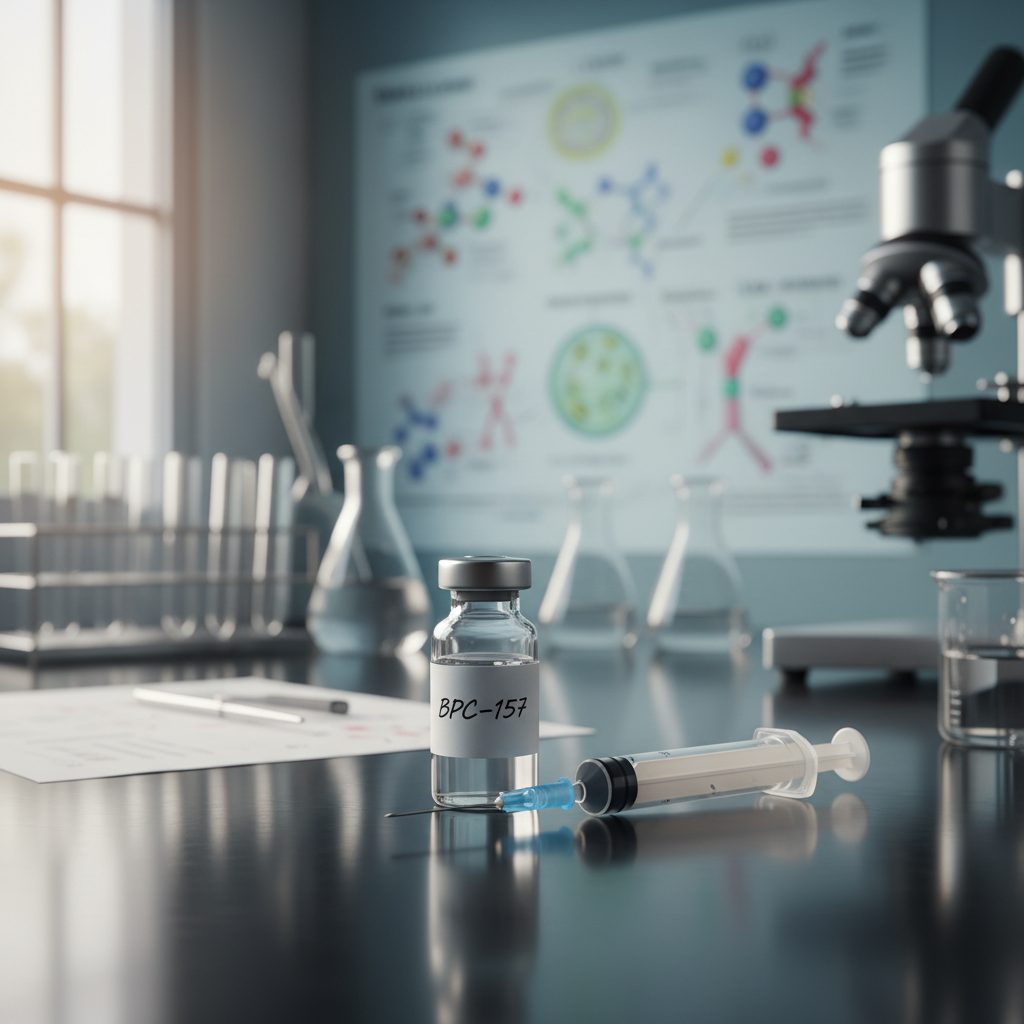
Understanding BPC-157 dosing is crucial. This guide covers clinically relevant dose ranges, titration, and cycling for various health goals, ensuring informed use by 2026.
# BPC-157 Dosing Strategies for 2026: An Expert Guide
BPC-157, a synthetic pentadecapeptide, has garnered considerable attention within the longevity and performance communities. Derived from body protection compound (BPC) found in human gastric juice, its appeal lies in its remarkable capacity for tissue repair and regenerative potential across various bodily systems. From accelerating wound healing to improving gut integrity, the reported benefits are broad. However, the efficacy and safety of BPC-157 are heavily influenced by its administration—specifically, the dosing protocol. For those considering its use by 2026, a nuanced understanding of how to dose this peptide is paramount. This guide will delve into clinically relevant dosing paradigms, distinguishing between applications for general healthspan, athletic recovery, and targeted injury repair, while also addressing practical considerations such as half-life, timing, and titration.
While promising, it's vital to remember that BPC-157 is not an MHRA-approved drug in the UK for human therapeutic use. Its availability is typically for research purposes, and individuals should always consult with a qualified healthcare professional before initiating any new peptide regimen. Please refer to our /legal/disclaimer for important information regarding unregulated compounds.
The Fundamental Mechanisms Guiding Dose Selection
To understand BPC-157 dosing, one must first appreciate its multifaceted mechanisms of action. At a molecular level, BPC-157 is known to upregulate vascular endothelial growth factor receptor 2 (VEGFR2), a critical component in angiogenesis—the formation of new blood vessels. This improved vascularisation is fundamental to tissue regeneration as it enhances oxygen and nutrient delivery to damaged sites. It also modulates nitric oxide synthase (NOS) activity, impacting vasodilation and anti-inflammatory pathways. Additionally, BPC-157 promotes fibroblast migration and survival, essential for collagen synthesis and extracellular matrix remodelling, which are crucial steps in wound healing.
The peptide's impact on growth hormone receptors, though less extensively studied in humans, is another area of interest. Some research suggests it might interact with these pathways, contributing to its regenerative effects. The precise dose required to elicit these mechanisms optimally varies, dependent on the target tissue and the severity of the damage. This mechanistic understanding forms the bedrock for determining appropriate dose ranges. Different applications, from musculoskeletal repair after a demanding training session to addressing gut dysbiosis, will likely require distinct approaches to BPC-157 administration. This isn't a one-size-fits-all solution; context matters enormously.
Clinically Studied Dose Ranges and Administration Routes
Most of the compelling BPC-157 research has been conducted in animal models, primarily rats, where remarkably low doses have demonstrated significant therapeutic effects. Translating these findings directly to humans requires careful consideration, often employing allometric scaling. For human applications, the typical effective dose range discussed in non-clinical contexts often falls between 100-500 micrograms (µg) per day. However, some protocols extend to 1 milligram (mg) daily for acute, severe injuries. We've seen anecdotal reports suggesting even lower doses can be effective for longevity-focused interventions, particularly when combined with strategies such as Recovery Optimization.
Administration routes are crucial. For localised injuries, subcutaneous (SC) injection directly near the site of injury is often preferred, allowing for higher local concentration. Intramuscular (IM) injection is also an option. For systemic effects, such as gut healing or general anti-inflammatory benefits, SC injection remains common, often administered once or twice daily. Oral administration, while convenient, has lower bioavailability due to degradation in the digestive tract, though specialised formulations (e.g., arginine salt) may offer some protection. Our editorial take is that subcutaneous administration offers the most reliable effects based on current, albeit limited, human-centric data.
### Evidence Quality: Grade B for Musculoskeletal, C for Longevity
The quality of evidence for BPC-157 varies considerably. For musculoskeletal and gut-related injuries, particularly in animal models, the evidence is quite robust, earning a ‘Grade B’. Numerous studies, often with clear, quantifiable outcomes such as accelerated tendon-to-bone healing or reduced inflammation in colitis models, support its efficacy. However, for broader longevity applications or general performance enhancement in humans, the evidence base is far less mature, warranting a ‘Grade C’. Most human data comes from observational studies, case reports, or anecdotal accounts, lacking the rigor of large-scale, placebo-controlled clinical trials. Therefore, anyone considering BPC-157 for these broader objectives should exercise greater caution and manage expectations accordingly. We encourage tracking relevant biomarkers like hs-CRP and IGF-1 using a Biomarker insights tool to objectively gauge any systemic changes, rather than relying solely on subjective feelings.
Titration, Timing, and Cycling for Specific Goals
Titration—gradually increasing the dose—is a strategy often employed to assess individual response and minimise potential side effects. Starting at the lower end of the recommended range (e.g., 100-200 µg daily) and slowly escalating over a week or two can help identify a patient's optimal tolerated and effective dose. For longevity and general health optimisation, this might mean a sustained, lower dose (e.g., 100-150 µg once daily) for several weeks, potentially cycled with breaks. This approach aims to support general tissue repair and anti-inflammatory pathways without overwhelming the system.
When targeting performance and recovery, particularly after intense training sessions or minor injuries, a slightly higher dose (e.g., 200-300 µg daily) might be used for shorter, more acute cycles (2-4 weeks). This is especially relevant for protocols like Muscle Preservation 50+ where recovery speed directly impacts training consistency. The timing of administration can also play a role. For localised repair, some suggest injecting BPC-157 directly before or after physical therapy sessions. For systemic benefits, morning administration is common, though splitting the dose (e.g., 150 µg morning and 150 µg evening) can provide more sustained levels, mitigating the impact of its relatively short plasma half-life—estimated to be a few hours, though its tissue-bound effects are likely longer lasting.
Cycling strategies vary widely. Typical cycles range from 4 to 8 weeks, followed by an equivalent break. This helps prevent receptor desensitisation and allows the body to maintain its natural healing rhythms. For significant injuries, an unbroken cycle of 6-8 weeks might be considered, as long as progress is being monitored. Missed doses are usually not a major concern; simply resume the next scheduled dose without doubling up. Consistency over time is more important than perfect adherence to a rigid schedule, especially given the peptide's cumulative effects.
Risks, Contraindications, and "Stacking" Considerations
While BPC-157 is generally considered well-tolerated in animal studies, human data on side effects is limited. Anecdotal reports suggest mild injection site reactions (redness, swelling), nausea, or fatigue in some individuals. The mainstream view typically points to its low toxicity. The data is messier; the absence of widespread adverse event reporting in regulated clinical trials means our understanding of true risk here is incomplete. Contraindications include pregnancy, breastfeeding, and active cancer, due to its pro-angiogenic properties which could theoretically accelerate tumour growth, though this remains largely hypothetical without direct evidence. Individuals with pre-existing cardiovascular conditions should also exercise caution given its influence on nitric oxide pathways.
When considering BPC-157, it's worth evaluating what other compounds it might be 'stacked' with. For enhanced recovery, it’s often combined with other peptides like TB-500, which also promotes tissue repair by influencing cell migration and differentiation. Such combinations are often experimental and multiply the number of unknown variables. For gut health, pairing BPC-157 with targeted probiotics or prebiotics might amplify benefits. Crucially, any stacking should be approached with extreme caution and under the guidance of a knowledgeable practitioner. Monitoring relevant biomarkers, such as RHR and HRV (7-day avg), can offer objective data on how the body is responding to BPC-157 and any concomitant protocols.
The Bottom Line: Surgical Dosing, Cautious Approach
BPC-157 holds genuine promise for accelerating tissue repair and potentially contributing to overall healthspan, particularly in scenarios of targeted injury or compromised gut integrity. For musculoskeletal repair, especially tendon or ligament damage, a dose of 200-400 µg daily, administered subcutaneously near the injury site for 4-6 weeks, appears to be an effective strategy based on existing data. For chronic issues or systemic benefits like improving gut health, a maintenance dose of 100-200 µg daily, potentially cycled, could be beneficial.
However, it's imperative to approach BPC-157 use with a high degree of caution and realism. The evidence is predominantly from animal studies, and human clinical trials are scarce. The long-term effects, especially for longevity applications, are still largely unknown. Therefore, it's worth it for those with specific, well-defined injuries seeking accelerated recovery, where traditional treatments have limitations. Skip if you're looking for a broad-spectrum 'longevity panacea' without targeted objectives, or if you are unwilling to meticulously track progress and consult with medical professionals. Always prioritise safety and evidence-informed decisions over anecdotal enthusiasm. Consult a healthcare practitioner who understands performance pharmacology in the UK context, not just a GP, given the peptide's current MHRA status.