BPC-157 UK Availability & Cost in 2026: A
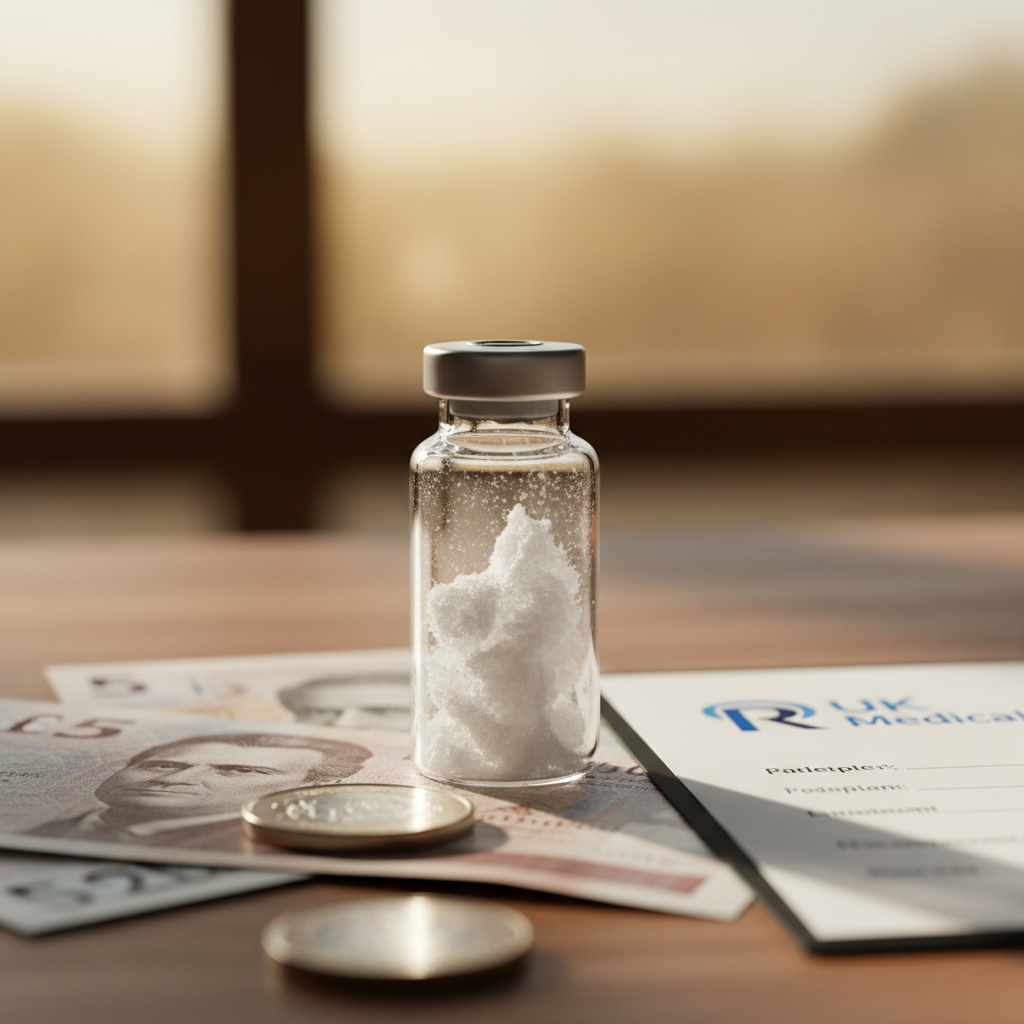
Understanding BPC-157's legal landscape, cost, and sourcing in the UK is crucial for those considering this regenerative peptide.
# BPC-157 UK Availability & Cost in 2026: A Buyer's Guide
BPC-157, a pentadecapeptide derived from human gastric juice protein, has garnered significant interest within the longevity and regenerative health communities. Its purported benefits, ranging from accelerated tissue repair to enhanced gut integrity, sound compelling. However, for those in the United Kingdom, acquiring and using BPC-157 isn't as straightforward as picking up a packet of paracetamol from Boots. This guide delves into the nuances of BPC-157's availability, legal standing, typical costs, and crucial considerations for safe sourcing in the UK as we look towards 2026.
The peptide's mechanism of action is complex and multifaceted. Research suggests BPC-157 upregulates vascular endothelial growth factor receptor 2 (VEGFR2), thereby promoting angiogenesis – the formation of new blood vessels. It also modulates nitric oxide synthesis, which plays a critical role in tissue repair and gastrointestinal homeostasis. Furthermore, studies indicate it accelerates fibroblast migration, essential for wound healing. These properties contribute to its reputation as a potent regenerative agent, particularly relevant for protocols like Recovery Optimization and even Muscle Preservation 50+, where rapid recovery and tissue integrity are paramount.
The Legal Landscape: MHRA and Unlicensed Status
In the UK, BPC-157 occupies a regulatory grey area that causes considerable confusion. The Medicines and Healthcare products Regulatory Agency (MHRA) is the executive agency of the Department of Health and Social Care responsible for ensuring that medicines and medical devices work and are acceptably safe. As of early 2026, BPC-157 is not a licensed medicine in the UK. This means it has not undergone the rigorous clinical trials required for approval, nor has it been evaluated by the MHRA for safety, quality, or efficacy for human use.
Crucially, its unlicensed status means it cannot be legally prescribed by an NHS doctor or purchased over-the-counter from a pharmacy. Any product marketed for human consumption or therapeutic use in the UK containing BPC-157 is operating outside conventional regulatory frameworks. This significantly impacts how it is sold and what claims can be made about it. While not explicitly illegal to possess for personal use, the sale, supply, or advertising of BPC-157 for therapeutic purposes without an MHRA license constitutes a breach of medicines law. This is a critical distinction that prospective users must understand.
Sourcing BPC-157 in the UK: A Minefield
Given its unlicensed status, obtaining BPC-157 in the UK requires navigating a market largely populated by research chemical suppliers. These companies typically market BPC-157 "for research purposes only" and explicitly state it is not for human consumption. This disclaimer is a legal shield to circumvent medicine regulations. However, the reality is that many individuals purchase these products for personal use. The lack of regulatory oversight means quality control can be highly variable, leading to significant risks.
Reputable sourcing is paramount. A key red flag is any supplier making explicit health claims for human use or offering medical advice. They are likely operating unlawfully. Instead, look for suppliers who clearly state the product is for research only. The best suppliers will provide comprehensive third-party lab testing results – a Certificate of Analysis (CoA) – for every batch. This CoA should detail purity (ideally 98% or higher) and verify the absence of contaminants like heavy metals or microbial agents. Without this, you're essentially gambling on what you're receiving. Our editorial take is that if a supplier cannot provide robust, current third-party testing, walk away. Period.
Typical UK Pricing and Formulations
The cost of BPC-157 in the UK can vary widely depending on the supplier, purity, and formulation. As of 2026, you can expect to pay anywhere from £30 to £80 for a 5mg vial of lyophilised (freeze-dried) BPC-157. This generally comes as a white powder that requires reconstitution with bacteriostatic water. Some suppliers offer pre-mixed solutions, but these often have a shorter shelf-life and can be less stable.
For a typical course of treatment – often lasting several weeks to a few months, with daily or every-other-day dosing – the overall cost can quickly escalate. For example, if a 5mg vial lasts roughly 5-10 days depending on dose, a month's supply could easily run to £100-£250. This doesn't include the cost of bacteriostatic water, sterile syringes, and alcohol wipes, which are additional expenses. Some suppliers also offer capsules, but the oral bioavailability of BPC-157 is a subject of ongoing debate and research. While some studies suggest oral forms can be effective, particularly for gut issues, many practitioners advocate for subcutaneous injection for systemic effects or localised tissue repair due to potentially superior absorption. Be wary of significantly cheaper prices; they often indicate lower purity or even mislabelled products.
Risks, Contraindications and Monitoring
Despite its promising research, BPC-157 is not without potential risks, especially considering its unlicensed status. The primary risk stems from unknown purity and dosage from unregulated sources. Contaminated products could lead to infection, allergic reactions, or adverse systemic effects. Furthermore, because it's still largely a research chemical, the full spectrum of long-term side effects in humans is not yet well-established. Some anecdotal reports mention mild side effects like fatigue, nausea, or injection site reactions. However, without controlled human trials, these remain anecdotal.
Contraindications are also important. Pregnant or breastfeeding women should absolutely avoid BPC-157 due to unknown effects on foetal development and infant health. Individuals with active cancer or a history of cancer should exercise extreme caution and likely avoid it altogether, as BPC-157's pro-angiogenic properties could theoretically accelerate tumour growth, although this is speculative and not definitively proven in humans. Anyone with a pre-existing medical condition should consult a healthcare professional before considering BPC-157, though finding one in the UK willing to endorse an unlicensed compound can be challenging. Regular monitoring of relevant biomarkers, which can be tracked using a Biomarker insights tool, such as hs-CRP for inflammation or IGF-1 (Insulin-like Growth Factor 1), might offer some insight into systemic responses, but these are not direct safety markers for BPC-157 itself.
Red Flags and Safe Practices
When looking for BPC-157 online in the UK, several red flags should prompt immediate caution. Firstly, any website that explicitly sells BPC-157 for human consumption or makes overt medical claims is likely breaching UK law and should be avoided. Secondly, a lack of clear contact information, poor website design, or generic product images are all signs of a potentially unreliable vendor. Thirdly, be highly suspicious of any vendor unwilling or unable to provide a recent (within the last 6-12 months) third-party Certificate of Analysis (CoA) for the *specific batch* you are buying. A generic CoA from years ago or one that doesn't match the batch number is insufficient.
For those who decide to proceed, even with the inherent risks, safe practices are crucial. Always use sterile equipment for reconstitution and injection. Follow proper dosing protocols, starting with the lowest effective dose. Keep a detailed log of your administration, noting any perceived effects or adverse reactions. Store lyophilised BPC-157 in a freezer and reconstituted peptide in a refrigerator to maintain stability. Remember that using unlicensed compounds carries inherent risks, and it is vital to understand that medical professionals in the UK cannot officially endorse or supervise such use. For more general information on peptides, our primary Peptides page offers a broader overview. Please also be aware of our full /legal/disclaimer regarding the information provided.
Bottom Line: Buyer Beware and Proceed with Caution
BPC-157 offers a fascinating glimpse into the potential of regenerative medicine, with a significant body of research pointing towards its therapeutic promise. However, its current status in the UK as an unlicensed research chemical means that acquiring and using it comes with considerable challenges and risks. The lack of MHRA oversight translates to variable product quality, uncertain dosages, and no established safety profile for human use outside of research settings. For those considering it, the financial outlay is significant, and the onus for ensuring purity and safety falls entirely on the individual.
Our advice is clear: if you cannot verify the purity and authenticity of the product through robust third-party testing, do not proceed. The mainstream view often downplays these sourcing difficulties, but the data is messier on the ground. Until BPC-157 undergoes formal clinical trials and gains regulatory approval in the UK, it remains firmly in the realm of experimental compounds. While the benefits could be substantial for some, the risks associated with an unregulated market are equally profound. Proceed with extreme caution, prioritise verifiable purity, and understand the legal and health implications fully. It's worth it for those who prioritise the potential benefits and are willing to meticulously manage the significant sourcing risks, but skip it if you are uncomfortable with regulatory grey areas or cannot commit to rigorous due diligence on product quality.