Continuous Glucose Monitors for Non-Diabetics: Worth It or Wearable Hype?
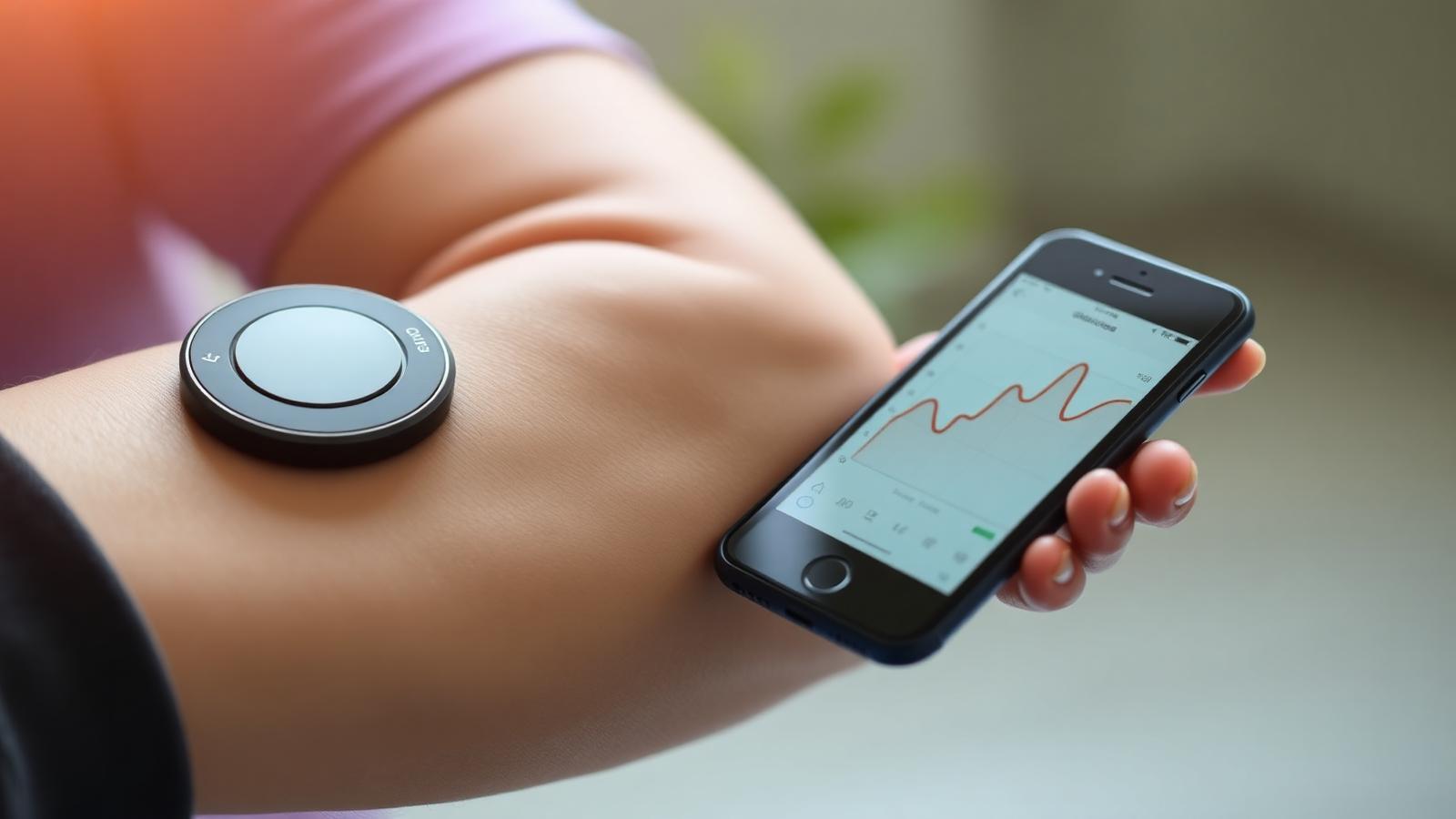
CGMs are now cheap, accurate and over-the-counter. For non-diabetics, they are a powerful 2-week experiment — not a permanent wearable. Here is what the evidence says and how to actually use one.
Continuous glucose monitors (CGMs) were a diabetes-only tool until about 2022. Since then, over-the-counter approvals in the US (Dexcom Stelo, Abbott Lingo, Libre Rio) and similar products in the UK and EU have put CGMs in the hands of millions of healthy adults. Most of them have no idea how to interpret the data.
This is the longevity-honest version: what a CGM can and cannot tell a non-diabetic, what to actually look for in your first two weeks of data, and when permanent CGM use is the wrong tool.
What a CGM actually measures A CGM is a small filament sitting in interstitial fluid (the fluid between cells), not blood. It measures glucose every 1–5 minutes and reports a trend. Two things to remember:
- Interstitial glucose lags blood glucose by 5–15 minutes, especially during rapid changes (post-meal, post-exercise).
- Accuracy in the normal range (70–140 mg/dL or 3.9–7.8 mmol/L) is good but not perfect — expect roughly ±10–15% error vs a finger-stick. This means a single 145 reading does not mean you "spiked" — three repeated readings in that range do.
The actionable metric for non-diabetics is not the absolute number, it is the **pattern**.
What the evidence says for healthy adults For people with normal HbA1c and no diabetes risk factors, the published evidence on CGM-guided lifestyle change is genuinely thin. The most cited paper — [Hall et al., PLoS Biology 2018](https://journals.plos.org/plosbiology/article?id=10.1371/journal.pbio.2005143) from Michael Snyder's Stanford lab — showed that healthy adults have substantial inter-individual variability in glucose response to identical meals, and that "glucotypes" cluster meaningfully. A diet personalised to glucose response (the PREDICT studies and the Israeli Personalised Nutrition Project, [Zeevi et al., Cell 2015](https://www.cell.com/cell/fulltext/S0092-8674(15)01481-6)) improves post-meal glucose more than generic dietary advice.
What is **not** established is that lowering glucose variability in healthy adults extends lifespan or prevents diabetes. The mechanistic argument is plausible — chronic post-meal hyperglycaemia drives oxidative stress, endothelial dysfunction and AGE formation — but the longevity evidence in the normal-glucose population is mostly extrapolation.
So treat CGM as a **2-week diagnostic experiment**, not a permanent biofeedback device.
What to actually look for in your first 14 days - **Fasting morning glucose.** A consistent fasted reading of 70–90 mg/dL (3.9–5.0 mmol/L) is excellent. Above 100 mg/dL (5.6 mmol/L) on multiple mornings suggests prediabetes patterns — confirm with a fasting blood test and HbA1c. - **Time in tight range.** Aim to spend ≥95% of the day between 70 and 140 mg/dL (3.9–7.8 mmol/L). The 5% outside is mostly post-meal. - **Post-meal peak height and width.** A healthy peak: <140 mg/dL, returning to baseline within 90 minutes. A worrying pattern: peaks >160 mg/dL or extended elevations of 2+ hours. - **The single foods that spike you the most.** Often surprising — for some people it is white rice, for others granola, for others "healthy" smoothies. Identify the top 3 and either reduce portion, change order, or pair with protein/fat/fibre. - **The effect of order and combination.** Eating vegetables and protein before carbs reduces the post-meal peak by 25–40% in most people. A 10-minute walk after a meal does similar. - **Sleep deprivation and stress responses.** A single short night raises fasting glucose noticeably. So does an acutely stressful meeting. This is normal; chronic patterns are the signal.
Things to ignore - **Single high readings without confirmation.** Pressure on the sensor, dehydration and rapid changes can produce false spikes. - **"Reactive hypoglycaemia" alarms in healthy people.** A dip to 60–70 mg/dL 2–3 hours post-meal is normal in a non-diabetic and does not mean you have a metabolic disorder. - **Exercise spikes.** High-intensity exercise raises glucose transiently via adrenaline-driven hepatic glucose output. This is a feature, not a problem. - **Comparing your numbers to influencers.** Glucose response is highly individual; your data is for your decisions, not for benchmarking.
How to act on the data The point of a CGM block is to find your 3–5 personal patterns and change them, then take the sensor off. Common outcomes:
- Replacing or restructuring 2–3 problem meals.
- Adding a post-meal walk to your largest meal of the day.
- Reordering food on the plate (fibre + protein first).
- Discovering a "healthy" food that is sabotaging you.
- Finding the dose of berberine or dietary protein that meaningfully blunts post-meal peaks.
For most healthy adults, that is the entire value proposition. Two weeks, three changes, then HbA1c and fasting insulin every 6–12 months to confirm the changes stuck. Our biomarker insights tool is built around exactly this loop.
When CGM is the wrong tool - **You already eat a low-glycaemic, high-protein, high-fibre diet and your HbA1c is below 5.4%.** The information yield is low. - **You have an eating disorder history.** Continuous glucose data can reinforce restrictive patterns. - **You want a permanent wearable.** Most of the signal is in the first 14 days. After that, you are paying $80–150/month for diminishing returns and decision fatigue.
A simpler and cheaper alternative is **a single fasting insulin + HbA1c + fasting glucose every 6 months**. This catches the metabolic patterns that matter for longevity at a fraction of the cost.
Where CGM fits in the wider longevity stack A short CGM block is most useful when combined with:
- **Lipid optimisation** — see our ApoB guide.
- **Zone 2 training** — better mitochondrial function flattens post-meal peaks (zone 2 deep dive).
- **Sleep architecture** — even one short night meaningfully worsens glucose tolerance (sleep guide).
- **GLP-1 or metabolic drugs** — if you are on or considering one, CGM data is genuinely useful to verify response (GLP-1 longevity write-up).
- **The broader wearables guide** for picking the right monitoring kit.