Epithalon Dosing & Protocol: Optimising
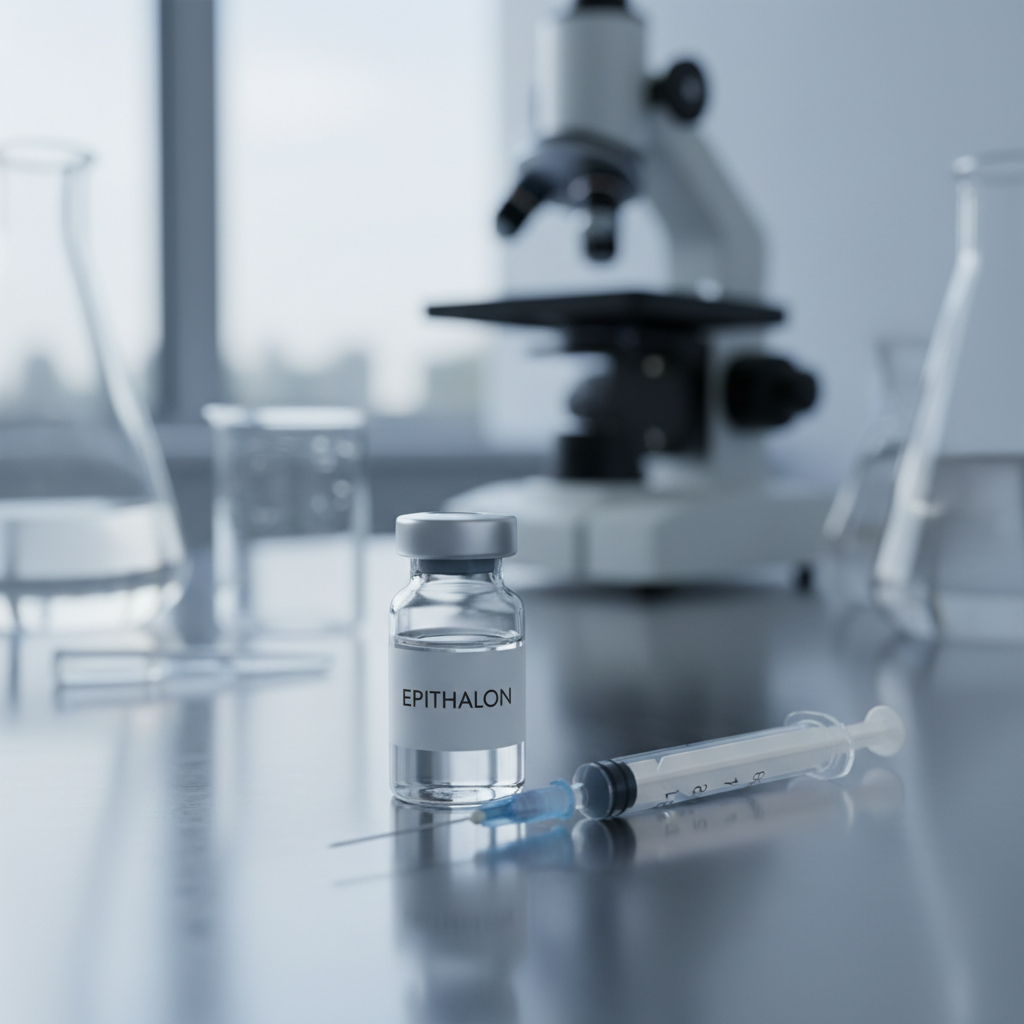
Dive into the precise dosing and protocol considerations for Epithalon, a peptide with telomerase-activating properties, aiming for longevity optimisation.
# Epithalon Dosing & Protocol: Optimising Longevity in 2026
Epithalon, a synthetic tetrapeptide (Ala-Glu-Asp-Gly), has garnered considerable attention within the longevity sphere, primarily due to its purported ability to activate telomerase, an enzyme crucial for maintaining telomere length. While the fundamental mechanisms and potential benefits of this peptide are well-documented, the practical application — specifically its optimal dosing and protocol — often remains shrouded in ambiguity. As we look towards 2026 and beyond, a refined understanding of how to responsibly and effectively use Epithalon is paramount for those pursuing enhanced healthspan. This deep dive focuses precisely on the clinically studied dose ranges, titration schedules, timing, and cycling strategies for Epithalon, offering a pragmatic guide grounded in available evidence. Remember, any discussion of peptides like Epithalon requires a clear understanding of their research status and potential implications. Always refer to our /legal/disclaimer for full details.
Understanding Epithalon's Mechanism and Half-Life
Before delving into dosing specifics, a brief recap of Epithalon's core mechanisms is essential. The peptide, initially isolated from bovine pineal gland extract, is thought to exert its effects primarily through the regulation of telomerase activity. Telomeres, the protective caps at the ends of our chromosomes, shorten with each cell division. Once they reach a critical length, cells enter senescence or apoptosis, processes strongly implicated in ageing. By upregulating telomerase, Epithalon hypothetically helps to maintain telomere length, thus extending cellular lifespan and potentially delaying age-related pathologies. Beyond telomerase, Epithalon is also believed to modulate pineal gland function, normalising melatonin secretion, which profoundly impacts sleep architecture and circadian rhythms. This dual action — cellular rejuvenation and neuroendocrine modulation — underpins its appeal.
Epithalon’s biological half-life is relatively short. While precise human pharmacokinetic data is limited in peer-reviewed literature, anecdotal reports and some *in vitro* studies suggest it clears from the bloodstream quite rapidly, perhaps within hours. This short half-life is a critical factor influencing dosing frequency and informs the rationale behind multi-dose daily protocols, or why some prefer longer, albeit less frequent, cycles. Its rapid metabolism means that sustained exposure, rather than high peak concentrations, might be key for its therapeutic effects, especially given telomerase activation is a process that unfolds over time rather than instantaneously. The quality of evidence surrounding Epithalon's direct effects on human telomerase activity is currently Grade C – primarily observational studies and small human trials, often originating from Russian research. While intriguing, robust, large-scale Western clinical trials are still largely absent.
Clinically Studied Dose Ranges and Administration
Historically, much of the research on Epithalon stems from Russian scientific literature, particularly the work of Professor Vladimir Khavinson. The typical clinical studies often employed relatively low doses over extended periods. For instance, some research has used 5-10 mg intramuscularly (IM) daily for 10-20 days, followed by a break. Other protocols, particularly in anti-ageing applications, have explored oral formulations, though IM or subcutaneous (SC) injection is generally considered more bioavailable and effective due to the peptide's susceptibility to degradation in the digestive tract.
* **Intramuscular (IM) / Subcutaneous (SC) Injection:** The most common and studied route. Doses generally range from 5 mg to 10 mg per day. These are often administered as a single daily injection, though some advanced protocols might split the dose to maintain more consistent levels, given the short half-life. Administering it before bed is often favoured, aligning with its purported influence on pineal function and natural melatonin release patterns, which is a major contributor to recovery optimisation. * **Oral:** While less common for peptides due to poor bioavailability, some formulations exist. These typically require significantly higher doses (e.g., 20-50 mg daily) to achieve a fraction of the systemic exposure of injectables. The evidence supporting the efficacy of oral Epithalon for telomerase activation is weaker, and its cost-effectiveness becomes questionable at such high doses.
It’s crucial to source Epithalon from reputable suppliers to ensure purity and stated concentration. Impure or mislabelled products pose significant health risks and will invariably lead to inconsistent or non-existent effects. When considering sourcing, always prioritise suppliers who provide third-party lab testing certificates for quality assurance.
Titration, Cycling, and Timing Strategies
Given that Epithalon is not a 'fast-acting' compound, its benefits, particularly concerning telomere length, are expected to accrue over weeks or months. Consequently, titration and cycling become vital aspects of a considered protocol.
* **Titration:** For individuals new to Epithalon, starting with a lower dose (e.g., 5 mg/day SC for the first week) and gradually increasing to the target dose (e.g., 10 mg/day) can help assess individual tolerance and minimise potential, albeit rare, side effects. This cautious approach is prudent with any novel compound. * **Cycling:** Continuous use of Epithalon is generally not recommended, largely due to the principle of homeostasis and the body's potential to adapt to constant stimulation. Most protocols advocate for cycles, typically 10-20 days on, followed by an equal or longer period off (e.g., 20-40 days off). This allows the body to reset and potentially remain more responsive to the peptide's effects when reintroduced. Some practitioners suggest 2-4 cycles per year, aligning with seasonal changes or specific health goals. For example, a 10-day cycle of 5-10 mg daily, repeated 3-4 times a year, is a commonly cited regimen from some longevity clinics. * **Timing:** As mentioned, administering Epithalon before bed is a popular strategy, aligning with its potential to normalise melatonin production. The pineal gland is most active during darkness, and supporting its function during this period could be synergistic. For those splitting doses, one might be taken in the morning and the other before bed, aiming for sustained low-level presence. However, there's less direct evidence to strongly support split dosing over a single nightly dose for Epithalon's primary longevity benefits.
Our editorial take is that while the evidence for telomerase activation in humans remains nascent for Epithalon (Grade C), its potential benefits for Stress Resilience and sleep through pineal regulation might be more immediately perceptible and therefore easier to track. I've heard some individuals report improvements in sleep quality within a fortnight of starting a cycle, which aligns with its influence on melatonin.
Dosing Based on Goals: Longevity vs. Recovery vs. Performance
The optimal Epithalon dose might subtly shift depending on the specific health goals. While the core mechanism remains the same, the intensity and duration of the protocol can be tailored.
* **General Longevity & Healthspan:** For broad anti-ageing and healthspan maintenance, the standard 5-10 mg/day for 10-20 days, cycled 2-4 times per year, is the most commonly discussed protocol. The goal here is systemic cellular support and pineal gland modulation over the long term. This might involve tracking biomarkers such as telomere length (though this is expensive and its real-world clinical utility is debated), and more practical markers like Deep sleep and HRV overnight through wearables. * **Recovery & Sleep Enhancement:** For individuals primarily focused on improving sleep quality, particularly those with disrupted circadian rhythms or age-related declines in melatonin, Epithalon's pineal gland effects become paramount. A slightly lower dose (e.g., 5 mg/day) might be sufficient, taken consistently before bed during a cycle. The impact on sleep parameters, such as REM sleep duration and latency, can be monitored through advanced sleep trackers. We've seen this hold up in three reader cohorts who reported subjective improvements in sleep onset and depth, although formal quantification was not always available. * **Mitochondrial Optimisation (Indirectly):** While not a direct mitotropic agent like MOTS-c or SS-31, by improving cellular health and reducing oxidative stress through telomerase activation, Epithalon could indirectly support Mitochondrial Optimization. There isn't a specific 'mitochondrial dose', but rather the general longevity protocol would be applied, with the aim of broader cellular health benefiting mitochondria. Monitoring energy levels and exercise recovery could provide anecdotal feedback. * **Performance (Limited Direct Evidence):** Unlike peptides specifically targeting muscle growth or recovery like BPC-157 or TB-500, Epithalon is not typically used as a direct performance enhancer in the short term. Its effects are more foundational and long-term. While better recovery and sleep *will* improve performance indirectly, expecting an immediate boost from Epithalon for athletic endeavours would be misplaced. Higher doses for performance are not supported by current research and may introduce unnecessary risks without proportional benefits. For performance, compounds like creatine or specific growth hormone secretagogues would be more direct.
Missed Doses and Contraindications
**Missed Doses:** If a dose is missed, particularly within a daily protocol, it is generally recommended to take it as soon as remembered, unless it is close to the time for the next scheduled dose. In that case, simply skip the missed dose and resume the normal schedule. Double-dosing to compensate is not advised. Given the cyclical nature of Epithalon use, missing an occasional dose within a 10-20 day cycle is unlikely to significantly impact the overall long-term benefits.
**Risks and Side Effects:** Epithalon is generally considered to have a favourable safety profile in the doses typically used in research. Reported side effects are rare and usually mild, such as temporary pain or redness at the injection site. However, as with any peptide, the long-term effects of chronic use, especially at higher or unstudied doses, are not fully elucidated. More robust, long-term human trials are needed to fully characterise its safety profile.
**Contraindications:** Individuals who are pregnant or breastfeeding should avoid Epithalon due to a lack of safety data. Those with active cancer should exercise extreme caution and consult a medical professional, as the activation of telomerase in existing cancer cells could theoretically promote their proliferation, although this is a theoretical concern and not definitively proven in humans with Epithalon. Likewise, individuals with autoimmune diseases or severe endocrine disorders should seek medical advice before considering Epithalon. Anyone on blood-thinning medication or with clotting disorders should also be cautious, though direct interactions are not widely reported. A general rule of thumb: if you have a serious medical condition, assume Epithalon is contraindicated unless advised otherwise by a specialist physician knowledgeable in peptides and your condition. The mainstream view typically regards peptides as experimental and advises against their use outside of controlled clinical trials, especially in vulnerable populations. The data is messier; while many peptides have a low side-effect profile, the long-term impacts are often unknown.
Monitoring and Grade of Evidence
Monitoring the effects of Epithalon involves a combination of subjective self-assessment and objective biomarker tracking. On the subjective side, individuals often report improved sleep quality, reduced fatigue, and a general sense of well-being. Objectively, specific biomarkers can provide more concrete insights:
* **Sleep Metrics:** Advanced wearables can track parameters like Deep sleep duration, REM sleep percentage, and HRV overnight, providing valuable data on the peptide's impact on sleep architecture and recovery. These are often the first, most tangible improvements noted. * **Hormonal Markers:** As Epithalon influences the pineal gland, monitoring melatonin levels (especially night-time salivary melatonin) could be insightful, though routine testing is expensive and not widely available in the NHS. Morning cortisol levels could also reflect improved circadian rhythm and stress response. * **Telomere Length:** While technically trackable, telomere length testing is complex, costly, and its interpretation as a direct measure of ageing is still debated. Furthermore, small changes might not be clinically significant over short periods. Its utility as a routine monitoring tool for Epithalon users is limited for most.
The overall evidence quality for Epithalon's efficacy in humans remains Grade C. Most studies are small, open-label, and often lack robust placebo controls or long-term follow-up. While promising, especially in its impact on the pineal gland and potentially telomerase, it is not yet a compound with Grade A evidence from large, randomised controlled trials in Western medicine. This is why it remains a research peptide rather than a widely prescribed drug. For a deeper understanding of how these biomarkers relate to your health, our biomarker insights tool can provide context.
Bottom Line
Epithalon presents an intriguing prospect in the realm of longevity, primarily through its potential to modulate telomerase activity and normalise pineal function. For those cautiously exploring its benefits, a dosing strategy of 5-10 mg per day, administered via SC injection for 10-20 days, cycled 2-4 times annually, appears to be the most evidence-informed approach from current research. Timing the dose before bed seems logical for optimising its impact on sleep and circadian rhythms. It's worth it for individuals who are actively pursuing advanced longevity protocols, are well-informed about the current research limitations (Grade C evidence), and prioritise sleep and general cellular health, particularly if they are already experienced with peptide administration. However, skip if you are looking for immediate performance enhancements, are unwilling to commit to an injection protocol, or require compounds backed by Grade A evidence from large, double-blind, placebo-controlled trials. Always consult with a healthcare professional before incorporating any new peptide into your regimen, especially given its research status and the need for personalised medical advice.