Optimising Grip Strength: A Longevity Training
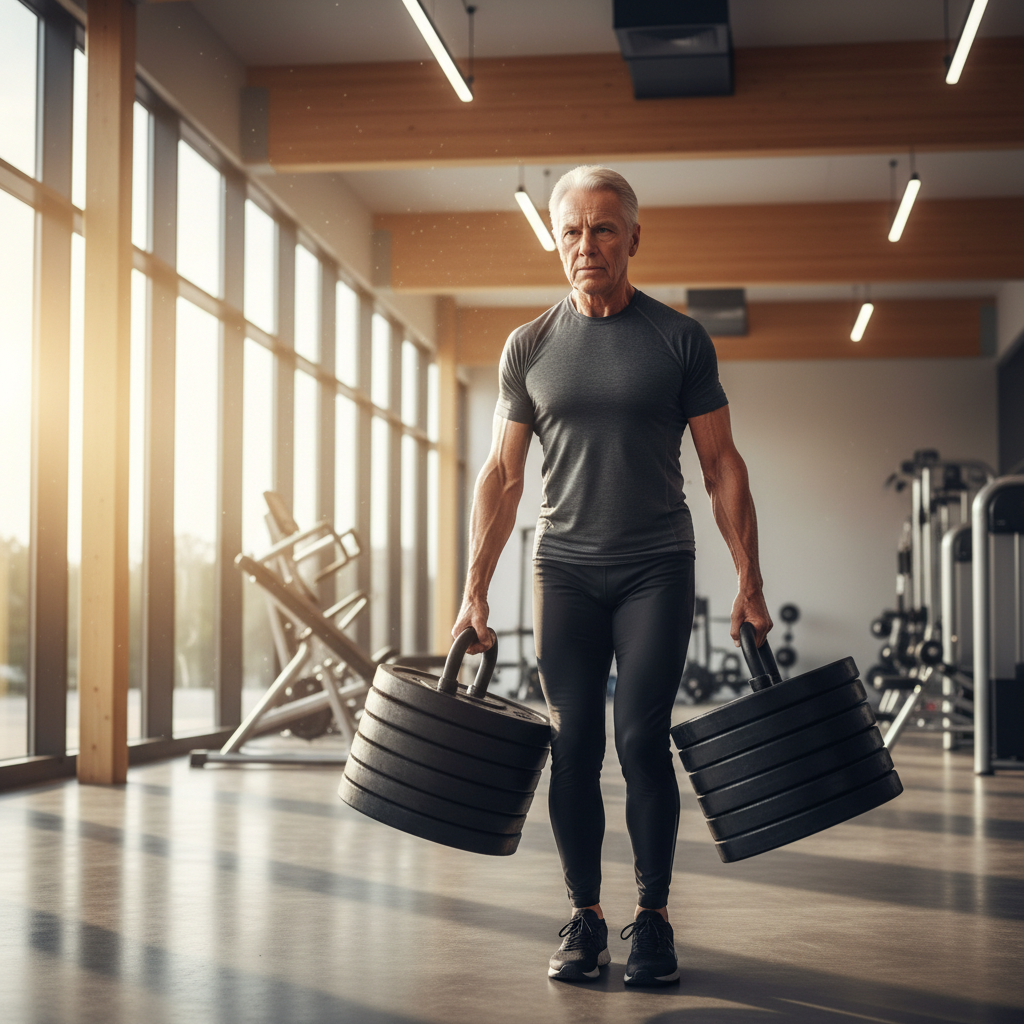
Grip strength is more than just a measure of physical power; it's a robust biomarker for healthspan and longevity. Learn how to train it effectively.
# Optimising Grip Strength: A Longevity Training Plan
In the ever-evolving landscape of longevity science, certain biomarkers stand out as exceptionally potent predictors of healthspan and all-cause mortality. Among these, grip strength has emerged as a surprisingly robust and readily measurable indicator. Far from being a mere measure of brute force, a strong grip reflects underlying physiological health, muscular integrity, and even cognitive function, all critical components of a long and vibrant life. For those committed to optimising their health and extending their healthspan, incorporating targeted grip strength training into their regimen is not just beneficial but, arguably, essential.
This comprehensive guide delves into the profound link between grip strength and longevity, dissecting the scientific evidence and, crucially, providing a practical, actionable training plan. We’ll explore why this seemingly simple metric holds such sway over our long-term health prospects and how you can systematically improve it, thereby enhancing your overall resilience and vitality.
The Unseen Power of Your Handshake: Why Grip Strength Matters for Longevity
For decades, medical professionals have utilised grip strength as a general indicator of health, but recent research has solidified its position as a powerful, independent predictor of future health outcomes. Studies consistently show an inverse relationship between grip strength and all-cause mortality, cardiovascular disease, cancer mortality, and even cognitive decline. A landmark study published in The Lancet, for instance, found that every 5 kg reduction in grip strength was associated with a 17% increased risk of all-cause mortality and a 9% increased risk of cardiovascular disease mortality. This isn't just about the elderly; these correlations hold true across various age groups, underscoring its utility as a broad health marker.
So, what makes grip strength such an effective proxy for overall health? It's multifactorial. Firstly, it reflects overall muscle mass and strength. As we age, sarcopenia (age-related muscle loss) becomes a significant concern, contributing to frailty, falls, and a diminished quality of life. Grip strength often mirrors the health of other muscle groups throughout the body. Secondly, it can indicate nutritional status and chronic disease burden. Individuals with chronic illnesses or poor nutritional intake often exhibit lower grip strength. Thirdly, some research suggests a link between grip strength and cardiovascular health, possibly due to shared biological pathways involving inflammation and endothelial function. Finally, neural integrity plays a role; a strong grip requires efficient communication between the brain and muscles, hinting at broader neurological health.
Decoding the Science: Grip Strength as a Biomarker
While the association between grip strength and longevity is well-established, the exact mechanisms are complex and continue to be elucidated. However, several compelling theories and observational data points provide strong support for its role as a key biomarker:
- **Muscle Mass and Function:** Grip strength is a direct measure of forearm and hand muscle mass and the efficiency of their contractile function. As mentioned, it often correlates with overall skeletal muscle mass, which is crucial for metabolic health, mobility, and preventing falls. Maintaining muscle mass is a cornerstone of any longevity strategy, and grip strength provides a simple assessment.
- **Systemic Inflammation:** Chronic low-grade inflammation is a hallmark of ageing (inflammaging) and a driver of numerous age-related diseases. Studies have shown that lower grip strength is associated with higher levels of inflammatory markers like C-reactive protein. Improving grip strength may reflect a reduction in systemic inflammation.
- **Cardiovascular Health:** The link here is particularly intriguing. Poor grip strength has been independently associated with increased risk of hypertension, heart attack, and stroke. While causality is not fully understood, it's hypothesised that grip strength might reflect the health of the microvasculature or overall arterial stiffness, both critical for cardiovascular longevity.
- **Cognitive Function:** Emerging research suggests a connection between physical strength, including grip strength, and cognitive performance. Stronger individuals often exhibit better memory, processing speed, and executive function. This could be due to shared mechanisms involving brain-derived neurotrophic factor (BDNF) or improved cerebrovascular health.
- **Metabolic Health:** Lower grip strength has been linked to insulin resistance and type 2 diabetes. Muscle tissue is a major site of glucose uptake, and healthier, stronger muscles contribute to better metabolic regulation. Incorporating strength training, including grip work, is a vital component of good metabolic health.
Understanding these connections underscores why training grip strength isn't just about lifting heavier objects; it's about addressing fundamental aspects of physiological health that collectively contribute to a longer, healthier life.
Designing Your Longevity Grip Strength Training Plan
Building a robust grip requires a multifaceted approach that targets different aspects of hand and forearm musculature: crushing strength, pinching strength, and supporting strength. Integrate these exercises into your existing resistance training routine 2-3 times per week, ensuring adequate recovery between sessions. Remember, consistency is key.
### 1. Crushing Strength (Squeeze) This involves closing your hand around an object. It's the most commonly tested form of grip strength.
- **Hand Grippers:** Invest in a set of adjustable or progressively challenging hand grippers. Start with a resistance level where you can perform 8-12 repetitions to failure. Aim for 3-4 sets.
- **Plate Pinches (Crush variation):** Hold a weight plate (or multiple plates, smooth sides facing each other) with your fingers and thumb, applying maximal pressure. Hold for 20-30 seconds, 3-4 sets per hand. Gradually increase plate weight or the number of plates.
- **Fat Grip Training:** Incorporate fat grips (thick bar adapters) into your dumbbell and barbell exercises (e.g., rows, deadlifts, bicep curls). The thicker bar forces greater hand activation. If you use a pull-up bar, use a towel over the bar to create a fatter grip for pull-ups.
### 2. Pinching Strength (Static Hold) This involves holding an object between your thumb and fingers without allowing it to touch your palm.
- **Plate Pinches (Pinch variation):** Use the smooth sides of weight plates, but this time, grip them purely with your thumb and fingers, not allowing them to touch your palm. Lift and hold for time (e.g., 10-20 seconds) for 3-4 sets. Increase weight as you progress.
- **Hub Pinches:** If your gym has a 'hub' (a thick-handled device for lifting plates by their centre hole), this is excellent. Otherwise, pinch a dumbbell by its end, lifting and holding. Start light and focus on technique.
### 3. Supporting Strength (Endurance/Dead Hang) This focuses on the ability to hold onto an object for an extended period, essential for activities like climbing or carrying groceries.
- **Dead Hangs:** Hang from a pull-up bar with an overhand grip for as long as possible. Aim for 3-4 sets. Once you can comfortably hang for 60 seconds, consider adding weight (e.g., with a weight belt) or using a thicker bar/towel for increased challenge.
- **Farmer's Carries:** Hold heavy dumbbells or kettlebells in each hand and walk for a set distance or time (e.g., 30-60 seconds, 30-50 metres). Keep your posture upright, shoulders back. This builds immense grip endurance and core stability. Progress by increasing weight or distance.
- **Barbell Holds:** Load a barbell with significant weight (more than you could lift for reps) and simply hold it in a deadlift position for time. This is a powerful way to build static grip strength. Ensure proper form to protect your back.
Advanced Strategies and Progressive Overload
To continuously improve, the principle of progressive overload is paramount. This means gradually increasing the demands placed on your muscles over time. Here’s how to apply it to grip training:
- **Increase Resistance:** Use heavier grippers, plates, or dumbbells.
- **Increase Volume:** Perform more sets or repetitions.
- **Increase Time Under Tension:** Hold static exercises (dead hangs, farmer’s carries, plate pinches) for longer durations.
- **Decrease Rest Intervals:** Reduce the time between sets to challenge endurance.
- **Vary Grip Type:** Continuously switch between overhand, underhand, and mixed grips where appropriate.
Don't forget the importance of recovery. Like any muscle group, your forearms and hands need time to repair and grow stronger. Ensure you're getting adequate sleep and nutrition. Consider incorporating forearm stretches and massage to maintain flexibility and reduce the risk of overuse injuries.
For a holistic approach to longevity, consider pairing your grip strength training with other proven protocols like Zone 2 Cardio for cardiovascular health and incorporating supplements like creatine to further support muscle mass and cognitive function. Wearable technology, such as smartwatches, can help track your progress and provide insights into your recovery, although specific grip strength trackers are also available.
Integrating Grip Training into Your Broader Longevity Strategy
While grip strength training is undeniably beneficial, it should be viewed as one vital component within a broader, integrated longevity strategy. Its powerful predictive capabilities mean that improvements here are likely mirrored by positive changes across various physiological systems. However, to truly maximise healthspan, it’s imperative to combine this focus with other evidence-backed interventions.
Consider your overall physical activity. Regular resistance training for major muscle groups, for instance, naturally contributes to grip strength as many exercises, such as deadlifts and rows, inherently challenge your grip. Incorporating diverse movement patterns, including those that involve hanging, carrying, and squeezing, will provide a more comprehensive stimulus than isolated grip exercises alone. Similarly, maintaining flexibility and mobility in your hands, wrists, and forearms is crucial for both performance and injury prevention.
Beyond physical training, lifestyle factors play a monumental role. A nutrient-dense diet rich in protein supports muscle repair and growth, while adequate hydration is essential for cellular function. Managing stress, ensuring sufficient, high-quality sleep, and avoiding harmful habits like smoking are foundational pillars for longevity that will indirectly support your physical capacity, including grip strength. For those interested in optimising their diet and supplement regimen, exploring options like taurine or urolithin-a may offer additional benefits for muscle health and mitochondrial function, although these should always be discussed with a healthcare professional.
Remember, the goal isn't just to have a strong grip for its own sake, but to cultivate a body that is resilient, functional, and capable of maintaining health and independence deep into old age. Grip strength is a powerful barometer of this success, and by actively training it, you are investing directly in your future vitality.
Measuring Progress and Setting Goals
Regularly assessing your grip strength is crucial for tracking progress and maintaining motivation. The most common and reliable method is using a hand dynamometer. Many gyms have one, or you can purchase an affordable one for home use. The standard protocol involves squeezing the dynamometer with maximum effort for 3-5 seconds, repeating 2-3 times with each hand, and recording your best score.
Set realistic, progressive goals. For example:
- **Baseline:** Measure your current grip strength.
- **Short-term (3 months):** Aim for a 5-10% increase.
- **Long-term (6-12 months):** Strive for a 15-25% improvement or to reach age and gender-specific norms that correlate with lower mortality risk. For men, achieving grip strength >50kg is often associated with better outcomes, while for women, >30kg is a good target. (Source: *P. A. M. H. P. van den Beld, et al., "Grip strength is an independent predictor for all-cause mortality in an elderly population in the Netherlands." The American Journal of Clinical Nutrition, 2017.* pubmed.ncbi.nlm.nih.gov/28659223/)
Keep a training log to record your exercises, sets, reps, and the weight or resistance used, as well as your dynamometer readings. This data will be invaluable for identifying what works best for you and making informed adjustments to your programme. For deeper insights into your physiological data, consider exploring AI tools that can help analyse your progress and provide personalised recommendations based on your unique biomarker insights.
Consistency, patience, and a commitment to progressive overload will yield significant results. Remember that recovery is just as important as training; overtraining can lead to injuries and hinder progress. Listen to your body and adjust your training volume and intensity as needed. While specific supplements are not essential for grip strength training, maintaining adequate protein intake is crucial for muscle repair and growth. For some, considering specific supplements like magnesium glycinate for muscle function and sleep, or omega-3 for overall health, may be beneficial.
Bottom line
Grip strength is a profoundly underrated yet powerful biomarker for longevity and overall health. Far from being a niche pursuit, training your grip is a direct investment in your long-term vitality, reflecting and influencing critical aspects of muscle health, cardiovascular function, and even cognitive resilience. By systematically incorporating a varied grip strength training plan into your routine, you are not merely building stronger hands but actively fortifying your body against the ravages of time.
Embrace the challenge, track your progress, and recognise that every squeeze, pinch, and hang contributes to a more robust and resilient you. This focused effort, combined with other evidence-based longevity strategies, offers a compelling pathway to extending your healthspan and enjoying a life of sustained strength and independence.
*Disclaimer: Please consult with a healthcare professional before starting any new training programme or supplement regimen, especially if you have pre-existing health conditions or concerns. This content is for informational purposes only and does not constitute medical advice. See our full disclaimer: [/legal/disclaimer]*