Boosting Bone Density After 40 with Plyometrics
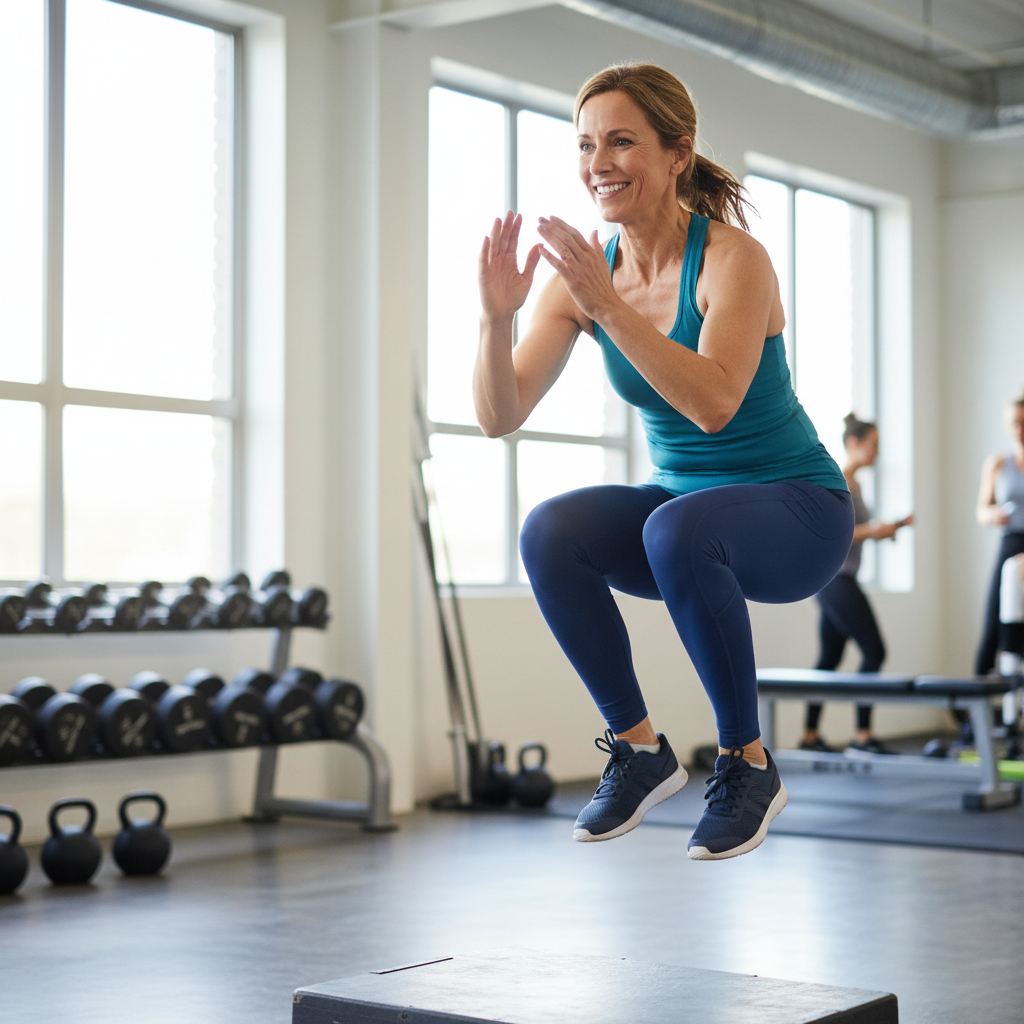
Plyometrics can be a game-changer for bone density after 40. This guide explains how to safely and effectively incorporate these powerful exercises.
# Boosting Bone Density After 40 with Plyometrics
As we navigate the fifth decade of life and beyond, a common concern for many is the gradual, often imperceptible, decline in bone mineral density (BMD). This physiological shift, known as osteopenia, can eventually progress to osteoporosis, a condition characterised by weakened bones and an increased risk of fractures. While often associated with ageing, particularly in women post-menopause, bone loss isn't an inevitable fate. Emerging research and practical application point towards specific types of exercise, notably plyometrics, as a potent strategy to not only mitigate this decline but actively improve bone health after 40.
Traditionally, resistance training has been lauded for its bone-building benefits. While undeniably effective, plyometrics – exercises that involve rapid and forceful stretching and contracting of muscles, like jumping and hopping – offer a unique mechanical stimulus that may be even more advantageous for bone remodelling. The key lies in the high-impact, short-duration forces generated, which signal osteocytes (bone cells) to increase bone formation. This article will delve into the science behind plyometrics for bone density, discuss why it’s particularly relevant for those over 40, and provide practical, evidence-based guidance on how to safely and effectively incorporate these powerful movements into your training regimen.
The Bone Remodelling Cycle and Mechanical Loading
To appreciate why plyometrics are so effective, it's crucial to understand the dynamic nature of bone. Bone is not a static structure; it's a living tissue constantly undergoing a process called remodelling, where old bone is reabsorbed and new bone is formed. This intricate process is influenced by various factors, including hormones, nutrition, and critically, mechanical loading.
When bone experiences mechanical stress – such as that from gravity or muscle contractions during exercise – it responds by becoming stronger and denser. This phenomenon is known as Wolff's Law. However, not all mechanical loads are created equal. Static loads (like standing still) provide minimal stimulus, while dynamic, high-impact loads appear to be the most potent drivers of bone adaptation. Think of the difference between walking and jumping; the latter generates significantly higher ground reaction forces.
For adults over 40, the challenge is that the rate of bone resorption often begins to outpace bone formation. This imbalance leads to a net loss of bone mass. Introducing high-magnitude, brief-duration loading, as found in plyometrics, can tip the scales back in favour of bone formation. Studies have consistently shown that exercises involving impacts, such as jumping, are superior to non-impact or low-impact activities (like cycling or swimming) for enhancing BMD, particularly in critical sites like the hip and spine, which are most vulnerable to osteoporotic fractures.
Why Plyometrics for Over 40s?
While the concept of high-impact exercise might evoke images of young athletes, its benefits for older adults are increasingly recognised. The primary reason plyometrics are so effective for this demographic stems from their ability to generate greater peak strain rates on bone compared to traditional resistance training. This rapid application of force is a powerful osteogenic (bone-forming) stimulus.
Furthermore, plyometric training can address other age-related declines that impact overall health and fracture risk. Beyond BMD, these exercises can improve:
* **Muscle Power:** Rapid, explosive movements help maintain and improve fast-twitch muscle fibre function, which typically declines with age. Enhanced muscle power contributes to better balance and agility, reducing fall risk. * **Balance and Proprioception:** The dynamic nature of plyometrics demands and refines balance, an essential component for preventing falls, which are a major cause of fractures in older adults. * **Neuromuscular Coordination:** The brain's ability to coordinate muscle movements efficiently improves, leading to more fluid and reactive motion.
It’s important to note that while plyometrics offer significant benefits, they must be approached judiciously, especially for individuals over 40. Pre-existing conditions, current fitness levels, and the presence of osteopenia or osteoporosis necessitate a careful and progressive approach. Consulting with a healthcare professional before starting any new exercise regimen, particularly one involving high impact, is always advisable. For more general training principles, consider exploring foundational articles on resistance training and its broader benefits for longevity.
Safe and Effective Plyometric Programming
The key to successful plyometric training for bone density after 40 is a focus on safety, proper technique, and progressive overload. Simply put, you cannot jump into high-intensity plyometrics without preparation. A gradual build-up is essential to allow muscles, tendons, ligaments, and bones to adapt.
**1. Foundational Strength:** Before attempting plyometrics, ensure a solid base of strength. You should be able to comfortably perform bodyweight squats, lunges, and calf raises with good form. This foundational strength helps absorb impact and control movement. Integrating regular resistance training is non-negotiable for overall physical resilience and bone health.
**2. Master Landing Mechanics:** This is perhaps the most crucial aspect. Proper landing technique minimises stress on joints and allows for efficient force absorption. Focus on landing softly, through the balls of your feet, letting your knees and hips bend to absorb the impact. Your knees should track over your toes, not collapse inwards. A good cue is to imagine landing like a cat.
**3. Start Low-Impact and Progress:** Begin with exercises that have lower impact and build up. Examples include:
* **Calf Raises:** Progress to dynamic calf raises (rising quickly onto toes, then lowering). * **Pogo Jumps:** Small, repetitive jumps, staying on the balls of your feet. * **Box Step-Downs:** Step down from a low box, focusing on soft landing. * **Squat Jumps (low height):** Jump a few inches off the ground, landing softly into a squat.
As your strength and technique improve, you can gradually introduce exercises with higher impact:
* **Box Jumps (low box):** Jump onto a low, stable box, stepping down. * **Broad Jumps:** Jumping forward for distance. * **Bounding:** Exaggerated running strides with a focus on powerful pushes off the ground. * **Hopping:** Single-leg jumps, starting with low intensity.
**4. Volume and Intensity:** For bone health, the focus should be on quality over quantity. High-magnitude impacts delivered with good form are more effective than numerous poorly executed repetitions. A typical session might involve 2-4 sets of 5-10 repetitions of 1-3 different exercises. Rest periods between sets should be sufficient (2-3 minutes) to ensure maximal effort and reduce fatigue-related injury risk. For further insights into optimising workout recovery, consider resources on recovery & sleep.
**5. Frequency:** 2-3 sessions per week on non-consecutive days is generally recommended to allow for adequate recovery and adaptation. Bone remodelling takes time, so consistency is key.
**6. Listen to Your Body:** Any sharp pain is a sign to stop. Soreness is normal, but pain is not. If you have any joint discomfort, scale back or consult a professional. If you have been diagnosed with osteopenia or osteoporosis, a physiotherapist or exercise physiologist experienced in bone health should supervise your programme.
Evidence Supporting Plyometrics for Bone Health
The scientific literature provides compelling evidence for the efficacy of plyometrics in improving BMD. A meta-analysis published in *Osteoporosis International* examined various exercise interventions and concluded that high-impact and odd-impact loading activities (like jumping and hopping) were among the most effective for increasing BMD, particularly at the hip and spine, in both pre- and post-menopausal women [pubmed.ncbi.nlm.nih.gov/24013493/].
Another study in the *Journal of Bone and Mineral Research* specifically looked at older adults, demonstrating that short, intense bouts of jumping exercises could significantly improve hip BMD over a 12-month period in postmenopausal women with low bone mass [pubmed.ncbi.nlm.nih.gov/25557201/]. These findings challenge the notion that significant bone improvement is impossible after a certain age, offering hope and a clear path forward for those concerned about bone health.
It's not just about stopping decline; it's about active improvement. The mechanical stimulus created by plyometrics is thought to activate pathways that lead to increased osteoblast (bone-forming cell) activity and suppressed osteoclast (bone-resorbing cell) activity. This favourable shift contributes to a net gain in bone mass, making the skeleton more resilient to fractures. While exercise forms the cornerstone, some individuals may explore adjunctive therapies like peptides, though these are still largely in the research phase for bone health.
Considerations and Precautions
While the benefits are clear, certain precautions must be observed when integrating plyometrics into your routine, especially if you're over 40.
* **Medical Clearance:** Always get clearance from your doctor, especially if you have a history of fractures, joint problems, heart conditions, or are on medications that affect bone metabolism. * **Osteoporosis Severity:** For individuals with severe osteoporosis, high-impact plyometrics might be contraindicated due to an elevated fracture risk. In such cases, lower-impact, progressive resistance training, possibly combined with balance and stability exercises, would be more appropriate initially, under expert supervision. * **Joint Health:** If you have significant knee, hip, or ankle arthritis, plyometrics may exacerbate symptoms. Consult a physiotherapist to determine if modifications or alternative exercises are necessary. Magnesium glycinate and omega-3 supplementation may support joint health and reduce inflammation, though they are not a substitute for medical advice. * **Footwear and Surface:** Wear supportive athletic shoes. Perform plyometrics on forgiving surfaces like grass, an athletic track, or a sprung gym floor rather than concrete. This helps cushion the impact. * **Warm-up and Cool-down:** A thorough warm-up prepares your muscles and joints for activity, while a cool-down aids recovery. This should include dynamic stretches and light cardiovascular work. * **Nutrition:** Adequate intake of calcium and vitamin D is crucial for bone health, alongside protein for muscle repair and growth. Consider evaluating your nutritional intake and potentially discussing supplementation with vitamin D with a healthcare provider if deficiencies are present.
Remember, the goal is long-term bone health and fracture prevention, not immediate performance gains. Patience, consistency, and a mindful approach will yield the best results.
Integrating Plyometrics into a Longevity Lifestyle
For those committed to a healthspan-focused lifestyle, plyometrics fit seamlessly into a comprehensive programme. Alongside zone 2 cardio for cardiovascular health and dedicated resistance training for muscle mass, plyometrics add that crucial high-impact stimulus for bone. Incorporating them can be as simple as adding a few sets of squat jumps or pogo jumps at the end of your warm-up or as a dedicated short session.
Beyond structured exercise, consider how you can introduce more dynamic movement into your daily life. Taking the stairs instead of the lift, incorporating short bursts of jumping (if appropriate for your fitness level) during walks, or engaging in activities like dancing can all contribute to cumulative bone-loading effects.
Combining physical activity with other longevity strategies, such as optimised sleep optimisation, nutrient-rich diets, and potentially selective supplementation (e.g., creatine for power and muscle mass), creates a holistic approach to maintaining vitality and preventing age-related decline. The synergy of these efforts amplifies their individual benefits, paving the way for a healthier, more active future.
Bottom Line
Maintaining and improving bone density after 40 is a critical component of healthy ageing and fracture prevention. While traditional approaches are valuable, plyometrics offer a unique and highly effective mechanical stimulus for bone remodelling. By safely and progressively incorporating exercises that involve rapid, high-impact movements, individuals over 40 can significantly bolster their bone health, enhance muscle power, and improve balance, thereby reducing the risk of osteoporosis and falls.
Start gradually, prioritise proper technique and landing mechanics, and listen to your body. With a mindful approach and consistency, plyometric training can be a game-changer for building a stronger, more resilient skeleton, ensuring you remain active and independent well into later life. Always consult a healthcare professional before starting any new exercise regimen. Learn more about optimising your healthspan at Longevity Stack's blog.
*Disclaimer: Please note that this information is for educational purposes only and is not medical advice. Consult with a qualified healthcare professional before making any decisions about your health or starting any new regimen, especially when considering peptides, drugs or supplements. For full details, see our /legal/disclaimer.*