Boosting Bone Density After 40 with
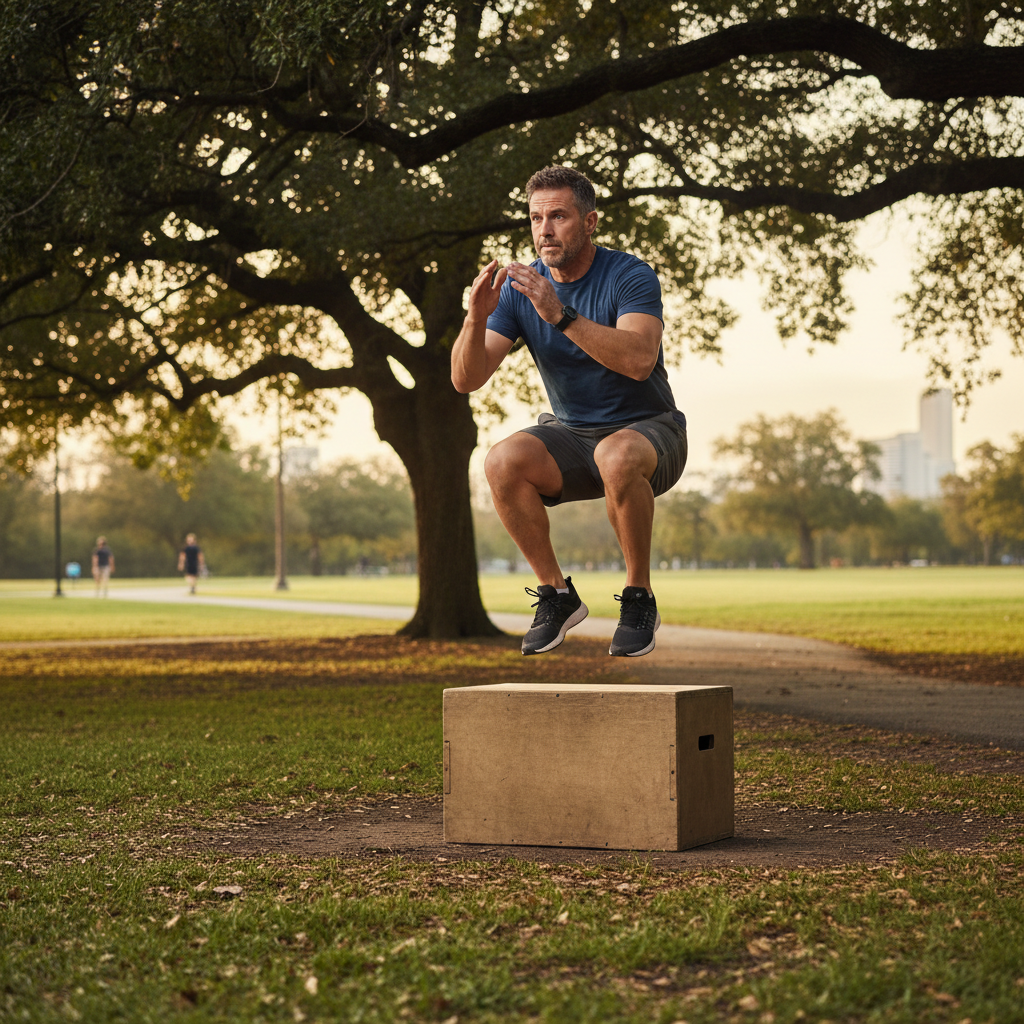
Discover how plyometrics, a high-impact exercise, can be a game-changer for maintaining and improving bone density after the age of 40.
# Boosting Bone Density After 40 with Plyometrics: A UK Guide
As we age, particularly beyond the fourth decade, our bones undergo a natural process of remodelling that often leads to a gradual decline in bone mineral density (BMD). For many, this translates into an increased risk of osteopenia and, eventually, osteoporosis, conditions that significantly elevate the likelihood of fractures and impair quality of life. While calcium and vitamin D are foundational, exercise plays an equally critical, yet often underappreciated, role in preserving and enhancing skeletal strength. Amongst the various forms of physical activity, plyometric training emerges as a powerful, evidence-backed strategy for stimulating bone growth and combating age-related bone loss, especially for individuals over 40.
Bone is a dynamic tissue, constantly being broken down by osteoclasts and rebuilt by osteoblasts. This process is exquisitely sensitive to mechanical loading. When bones are subjected to stress, such as that experienced during impact activities, it signals the osteoblasts to work harder, leading to an increase in bone mass and density. The specific type of loading matters: high-magnitude, rapid-rate impacts are particularly effective. This is where plyometrics shine. Unlike steady-state cardio or even traditional resistance training, plyometrics involve explosive, rapid movements that generate significant ground reaction forces, providing the potent osteogenic stimulus our bones crave.
Understanding the Mechanics of Bone Remodelling and Plyometrics
To appreciate why plyometrics are so effective, it's essential to grasp the 'mechanostat' theory of bone adaptation. This theory postulates that bone adapts its mass and architecture to withstand the customary mechanical loads it experiences. When loads exceed a certain threshold, bone formation is stimulated; when loads fall below this threshold, bone resorption dominates. For adults over 40, who are often less active or engage in lower-impact activities, this threshold is often not met, leading to net bone loss.
Plyometric exercises, by definition, are characterised by a rapid eccentric (muscle lengthening) phase immediately followed by a powerful concentric (muscle shortening) phase. Think of jumping: your muscles lengthen as you prepare to jump (eccentric), then rapidly shorten to propel you upwards (concentric). This stretch-shortening cycle enhances power output and, crucially for bone health, generates high-magnitude forces that are transmitted through the skeletal system. These forces are typically much greater than those experienced during walking, cycling, or even some forms of resistance training.
For instance, a simple jump can generate ground reaction forces equivalent to several times your body weight, albeit for a very brief duration. This transient, high-intensity loading is a potent signal for osteoblasts to deposit new bone matrix. Studies have consistently shown that plyometric training can lead to significant improvements in BMD, particularly in critical sites like the hip and spine, which are common fracture locations in older adults. A systematic review published in *Sports Medicine* highlighted the positive effects of jump training on BMD in various populations, including older adults pubmed.ncbi.nlm.nih.gov/27181050/.
Safely Implementing Plyometrics After 40: Key Considerations
While the benefits are clear, safety is paramount, especially for individuals over 40 who may have pre-existing conditions or lower baseline fitness levels. The goal is to provide an osteogenic stimulus without risking injury. Here are critical considerations:
* **Consult Your GP:** Before embarking on any new exercise programme, particularly one involving high impact, consult your general practitioner. This is especially important if you have a history of osteoporosis, joint issues, cardiovascular disease, or are on medication that might affect bone health or balance. * **Gradual Progression:** This is perhaps the most crucial principle. Do not start with complex, high-impact jumps. Begin with low-impact, low-volume exercises and slowly increase intensity, volume, and complexity over weeks and months. Your body, and especially your bones and joints, need time to adapt. * **Warm-up and Cool-down:** Always begin with a dynamic warm-up (5-10 minutes) to prepare muscles and joints, and end with a static cool-down and stretching to aid recovery. * **Proper Technique:** Poor form dramatically increases injury risk. Focus on landing softly, absorbing impact through the ankles, knees, and hips, rather than locking out your joints. Knees should track over toes, and you should aim for a controlled landing. * **Listen to Your Body:** Pain is a warning sign. If you experience sharp pain, stop immediately. Mild muscle soreness (DOMS) is normal, but joint pain or persistent discomfort is not. * **Appropriate Footwear and Surface:** Wear supportive athletic shoes. Perform plyometrics on forgiving surfaces like grass, an athletic track, or a sprung gym floor, rather than concrete.
Foundational Exercises for Over 40s
For those new to plyometrics or returning to exercise, starting with low-impact, foundational movements is key. These exercises help build strength, coordination, and proprioception, preparing your body for more advanced jumps. Aim for 2-3 sessions per week, with at least 48 hours of rest between sessions.
* **Calf Raises (Double and Single Leg):** Builds strength in the lower leg, important for cushioning landings. Perform 3 sets of 10-15 repetitions. * **Squats (Bodyweight):** Reinforces proper knee and hip flexion for landing mechanics. 3 sets of 10-15 repetitions. * **Lunges (Forward and Reverse):** Improves leg strength and balance. 3 sets of 10-12 repetitions per leg. * **Glute Bridges:** Strengthens the glutes, vital for power generation and impact absorption. 3 sets of 12-15 repetitions. * **Box Steps:** Step up onto a low box (10-20 cm) and step back down. This is a low-impact way to practice controlled leg elevation and lowering. 3 sets of 10-12 repetitions per leg.
Once you’ve built a solid foundation of strength and stability, typically after 4-6 weeks, you can gradually introduce low-level plyometrics. Consider incorporating other longevity-focused activities like Zone 2 cardio and ensuring adequate intake of magnesium glycinate for muscle function and recovery.
Beginner Plyometric Exercises for Bone Density
These exercises introduce controlled impact to stimulate bone growth without excessive stress. Focus on quality of movement over quantity. Start with 1-2 sets of 5-8 repetitions for each exercise, gradually increasing to 3 sets of 10-12 repetitions as you adapt. Remember, adequate rest between sets is crucial for recovery and performance.
* **Ankle Hops (on the spot):** Keep knees slightly bent, just bouncing on the balls of your feet. Focus on quick, light contacts. This is excellent for stimulating the bones of the feet and ankles. Perform for 15-30 seconds, rest, repeat. * **Pogo Jumps:** Similar to ankle hops but with slightly more knee flexion. Imagine you're a pogo stick, aiming for height and quick ground contact. 15-30 seconds. * **Skipping:** A fantastic full-body, low-impact plyometric that improves coordination and cardiovascular health. Start with regular skipping, then progress to higher knee skips. 1-2 minutes. * **Box Jumps (low box):** Start with a very low box (e.g., 15-30 cm). Step up, then jump onto the box, landing softly. Step down. The focus is on the landing phase to absorb impact. As you progress, you can jump off the box (depth jump, see below). * **Squat Jumps:** Perform a regular bodyweight squat, then explode upwards into a jump. Land softly back into a squat position. This trains the major leg muscles and introduces vertical impact.
Intermediate to Advanced Plyometrics (for those with good fitness)
Only progress to these exercises once you've mastered the foundational and beginner movements, have no pain, and feel confident in your balance and strength. These involve higher impact and more complex movements.
* **Broad Jumps:** Jump forward as far as you can, landing softly and absorbing the impact. Then turn around and repeat. Focus on explosive horizontal power. * **Bounding:** An exaggerated running stride with a focus on powerful pushes off the ground and hang time. This is excellent for hip and femur bone density. * **Depth Jumps (from a low box):** Stand on a low box (e.g., 20-40 cm), step off, and immediately upon landing, explode upwards into a vertical jump. The quick transition from eccentric (landing) to concentric (jumping) makes this highly effective. This exercise should be introduced with extreme caution due to the higher impact forces. Consult a coach or physiotherapist if unsure. * **Medicine Ball Slams:** While not strictly lower-body plyometrics, throwing a medicine ball forcefully to the ground (overhead or rotational) engages the core and upper body, creating impact that can benefit the spine and upper limb bones. This also provides an excellent full-body power workout.
For more advanced training, consider integrating these movements with targeted peptides or supplements known to support tissue repair and recovery, always under medical guidance. For instance, BPC-157 is often discussed in contexts of tendon and ligament health, which is crucial for high-impact training.
Optimising Your Environment and Lifestyle for Bone Health
Beyond plyometrics, a holistic approach is vital for robust bone health after 40. This includes nutritional strategies and lifestyle modifications:
* **Nutrition:** Ensure adequate intake of calcium (dairy, leafy greens, fortified foods) and vitamin D (sun exposure, fatty fish, supplements). Vitamin D is crucial for calcium absorption. Consider supplements like Urolithin A for mitochondrial health, which indirectly supports overall cellular function including bone cells, and Taurine for its potential antioxidant and anti-inflammatory effects. * **Protein Intake:** Sufficient protein is essential for bone matrix formation and muscle maintenance. Aim for 1.2-1.6 grams of protein per kilogram of body weight daily. * **Avoid Smoking and Excessive Alcohol:** Both are detrimental to bone health. * **Manage Stress:** Chronic stress can negatively impact bone remodelling through hormonal imbalances. * **Regular Weight-Bearing Activity:** Complement plyometrics with other forms of weight-bearing exercise like brisk walking, jogging, hiking, and resistance training. * **Sleep:** Quality sleep is fundamental for recovery and hormonal regulation, both of which influence bone health. Explore strategies for sleep optimization.
Integrating plyometrics into your routine should be part of a broader commitment to a healthy, active lifestyle. Regularly assessing your progress and adapting your routine, possibly with tools like a longevity score, can keep you on track. Remember, consistency over time yields the best results.
Bottom line
Plyometrics offer a potent, evidence-based pathway to stimulate bone growth and mitigate age-related bone loss in individuals over 40. By generating high-magnitude, rapid-rate forces, these exercises provide the critical mechanical stimulus necessary for robust bone remodelling. However, safe and effective implementation requires a cautious, progressive approach, prioritising proper technique, adequate rest, and a thorough understanding of your body's capabilities. Combined with a comprehensive nutrition and lifestyle strategy, plyometrics can be a cornerstone of your bone health strategy, empowering you to maintain skeletal strength and reduce fracture risk well into later life.
*Disclaimer: Always consult with a healthcare professional before starting any new exercise programme or supplement regimen, especially if you have underlying health conditions or are taking medication. See our full /legal/disclaimer.*