Optimising Protein Intake Per Kg for Longevity:
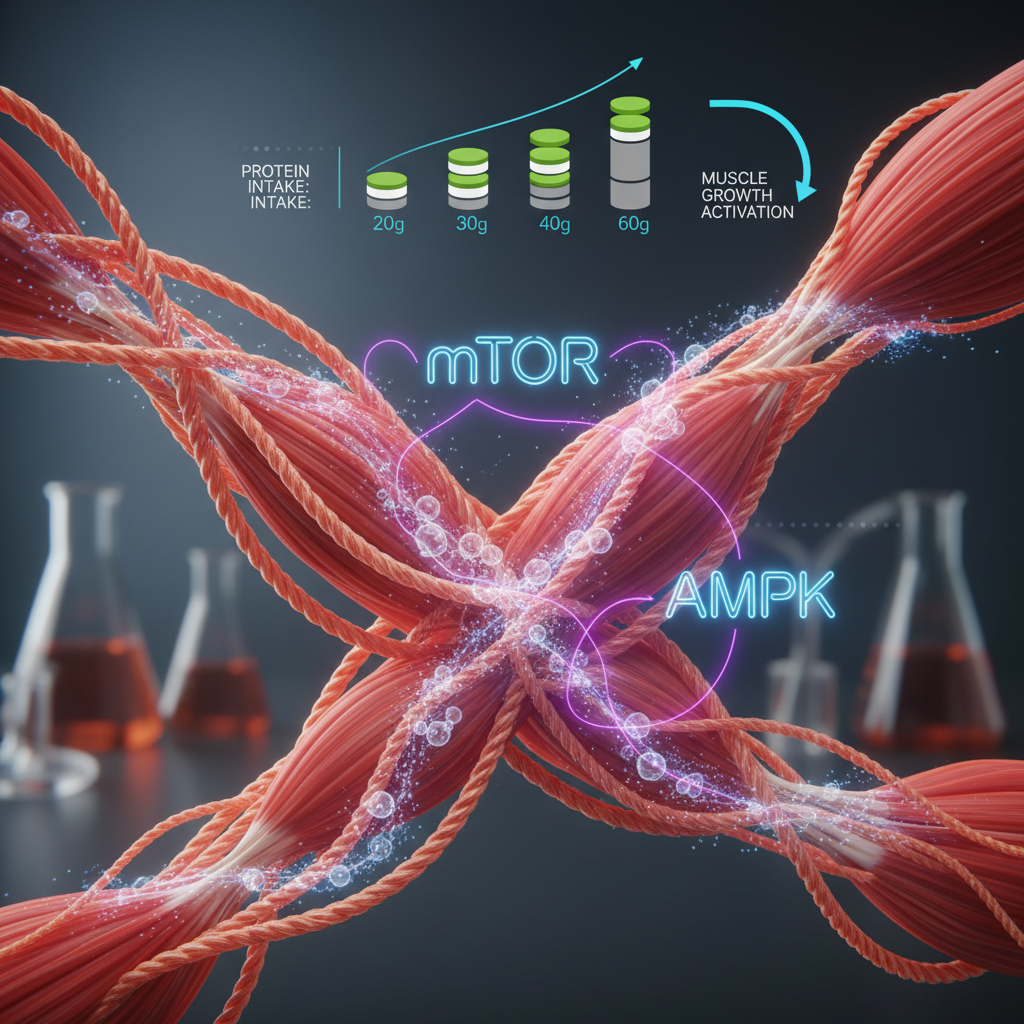
Explore the evidence on optimal protein intake for longevity, balancing muscle health, metabolic signalling, and age-related needs.
Protein is the cornerstone of life. From enzymatic reactions to structural integrity, its role is indispensable. Yet, when it comes to longevity, the precise 'sweet spot' for protein intake – specifically, how many grams per kilogram of body weight – remains a topic of nuanced scientific debate. For decades, the focus has been on preventing deficiency, but modern longevity research compels us to consider how protein quantity and quality impact age-related decline, metabolic health, and overall healthspan. This synthesis will navigate the current evidence, offering insights into optimising protein intake for a longer, healthier life.
The Dual Edge of Protein: Anabolism vs. mTOR
The fundamental challenge in defining optimal protein intake for longevity lies in its dual biological roles. Protein is crucial for muscle protein synthesis (MPS), maintaining lean muscle mass, and supporting tissue repair – all vital for healthy ageing. Higher protein intake is often associated with greater anabolism, which is generally desirable. However, excessive protein, particularly certain amino acids like leucine, can activate the mechanistic Target of Rapamycin (mTOR) pathway. While mTOR is essential for growth and cellular proliferation, chronic overactivation is implicated in accelerating ageing processes and increasing the risk of age-related diseases.
The goal, therefore, is to find a balance: sufficient protein to support muscle and tissue integrity without unduly overstimulating mTOR pathways that may compromise long-term cellular health. This balance often shifts with age and activity levels. For instance, resistance training significantly enhances the anabolic response to protein, allowing for muscle maintenance with potentially lower overall daily intake compared to sedentary individuals.
Early Life vs. Later Life: Shifting Protein Needs
Research suggests that the optimal protein strategy may differ across the lifespan. In early and mid-life, especially for individuals engaged in regular physical activity, a moderate-to-higher protein intake (e.g., 1.2-1.6 g/kg body weight) appears beneficial for building and maintaining muscle mass, supporting metabolic health, and potentially aiding in weight management. This phase is crucial for building a 'protein reserve' and preventing sarcopenia later on. However, some argue that consistently high protein intake in youth might subtly accelerate ageing pathways, a hypothesis predominantly derived from animal models.
As individuals age, particularly beyond 60, the phenomenon of 'anabolic resistance' often sets in. This means older adults require more protein per meal to stimulate MPS effectively compared to younger individuals. Therefore, recommendations often increase for the elderly, moving towards 1.0-1.2 g/kg/day, and sometimes higher (1.2-1.6 g/kg/day) for those who are frail, recovering from illness, or highly active. This higher intake is critical for counteracting sarcopenia, maintaining functional independence, and supporting immune function. [ For specific guidance on resistance training, explore our insights on [/protocols/resistance-training].
Sarcopenia and Muscle Preservation: A Primary Longevity Goal
Sarcopenia, the age-related loss of muscle mass, strength, and function, is a major predictor of frailty, disability, and mortality in older adults. Adequate protein intake is a primary nutritional strategy to combat sarcopenia. Numerous studies highlight that protein intakes at or above the current Recommended Dietary Allowance (RDA) of 0.8 g/kg body weight per day are necessary for preserving muscle mass in older adults. Many expert bodies now recommend 1.0-1.2 g/kg/day for healthy older adults, with even higher levels potentially beneficial for those with acute or chronic diseases.
Distributing protein intake throughout the day is also crucial. Aiming for approximately 25-30g of protein per main meal (breakfast, lunch, dinner) has been shown to more effectively stimulate MPS than consuming most of the daily protein in one large meal. The quality of protein also matters, with sources rich in essential amino acids, particularly leucine, being more effective. For example, whey protein is highly effective due to its rapid digestion and high leucine content. Supplementation with specific amino acids like glycine can also be explored as part of a comprehensive strategy for muscle health.
Metabolic Signalling and Caloric Restriction Mimicry
Beyond muscle, protein intake significantly influences metabolic signalling pathways relevant to longevity. The balance between activating anabolic pathways (like mTOR) and catabolic/autophagic pathways (like AMPK, sirtuins) is key. High protein intake, especially from animal sources, can raise levels of IGF-1 (Insulin-like Growth Factor 1) and activate mTOR, both of which are associated with faster ageing in some contexts. Conversely, lower protein intake has been shown to mimic some aspects of caloric restriction, which is a well-established longevity intervention.
However, the picture is complex. The specific amino acid profile of protein sources matters. For example, methionine restriction, a component of some longevity diets, can occur with lower intake of certain animal proteins. Furthermore, plant-based protein sources, while often lower in specific essential amino acids, tend to be higher in fibre and phytonutrients, offering distinct health benefits. The current understanding suggests that moderate protein intake, prioritising plant-based sources where possible, and strategically timing higher protein meals around activity may be an optimal approach. For a broader look at metabolic interventions, our Metabolic Health section offers further reading.
Practical Recommendations for Longevity-Focused Protein Intake
So, what does this mean in practice for most healthy adults aiming for longevity? The evidence points towards a nuanced, personalised approach:
* **Active Younger/Middle-Aged Adults (18-60 years):** Aim for 1.2-1.6 g/kg body weight per day. This supports muscle maintenance and growth from physical activity (e.g., [/protocols/resistance-training]) without excessive mTOR activation. Distribute intake across 3-4 meals, with 25-40g per meal. Ensure sufficient essential amino acids. * **Older Adults (>60 years):** Increase intake to 1.0-1.2 g/kg body weight per day as a minimum, and potentially up to 1.6 g/kg/day if frail, ill, or highly active, to combat anabolic resistance and sarcopenia. Prioritise protein-rich meals (30-40g protein) at breakfast and lunch to maximise MPS. * **Sedentary Individuals:** Even for those with lower activity levels, the 0.8 g/kg body weight per day RDA may be insufficient for optimal healthspan, especially as we age. Aiming for 1.0 g/kg/day is a safer baseline. * **Source Quality:** Prioritise high-quality protein sources. These include lean meats, poultry, fish, eggs, dairy, legumes, and fortified plant-based alternatives. A balanced diet incorporating both animal and plant proteins is often recommended. For example, creatine supplementation, often paired with adequate protein, is well-regarded for muscle support. * **Timing:** Distribute protein intake throughout the day rather than consuming most of it in one meal. The anabolic window after exercise is also important, making post-workout protein intake beneficial. Many find that incorporating specific supplements can support daily protein goals.
It's important to remember that these are general guidelines. Individual needs vary based on health status, activity level, specific training goals, and dietary preferences. Consulting with a healthcare professional or registered dietitian for personalised advice is always recommended.
The Role of Plant-Based Proteins and Amino Acid Balance
With growing interest in plant-based diets for health and sustainability, understanding plant protein for longevity is crucial. While individual plant proteins may have lower concentrations of certain essential amino acids (e.g., lysine in grains, methionine in legumes), combining different plant sources throughout the day (e.g., rice and beans) can provide a complete amino acid profile. Furthermore, the overall dietary pattern associated with plant-based diets (rich in fibre, antioxidants, lower in saturated fat) may independently contribute to longevity.
Some research suggests that a lower intake of specific branched-chain amino acids (BCAAs), which are abundant in animal protein, might be beneficial for longevity via mTOR modulation. However, this area is still under active investigation, and the practical implications for human diets are not yet fully clear, especially given the importance of BCAAs for muscle maintenance. What is clear is that careful planning is required for plant-based diets to ensure adequate protein intake, especially as we age.
* **External Resource:** For a comprehensive review on protein and healthy ageing, see this publication: https://pubmed.ncbi.nlm.nih.gov/30530188/ * **External Resource:** A recent meta-analysis on protein intake and sarcopenia: https://pubmed.ncbi.nlm.nih.gov/33946285/
Bottom Line
Optimising protein intake for longevity is a dynamic process, evolving with age, activity, and individual health goals. While excessive protein can potentially overstimulate growth pathways, insufficient protein, particularly in older adults, risks sarcopenia and functional decline. The current consensus leans towards a moderate-to-higher protein intake, generally in the range of 1.0-1.6 g/kg body weight per day for most healthy adults, with older adults benefiting from the upper end of this spectrum to counteract anabolic resistance and preserve muscle mass.
Prioritising high-quality protein sources, distributing intake throughout the day, and integrating protein with regular physical activity are key strategies. For personalised dietary advice, always consult a healthcare professional.
*Disclaimer: The information provided is for educational purposes only and does not constitute medical advice. Always consult with a qualified healthcare professional before making any changes to your diet, exercise, or supplement regimen, especially when discussing peptides or drugs. [/legal/disclaimer]*