Thymalin and Thymosin Alpha 1: Countering
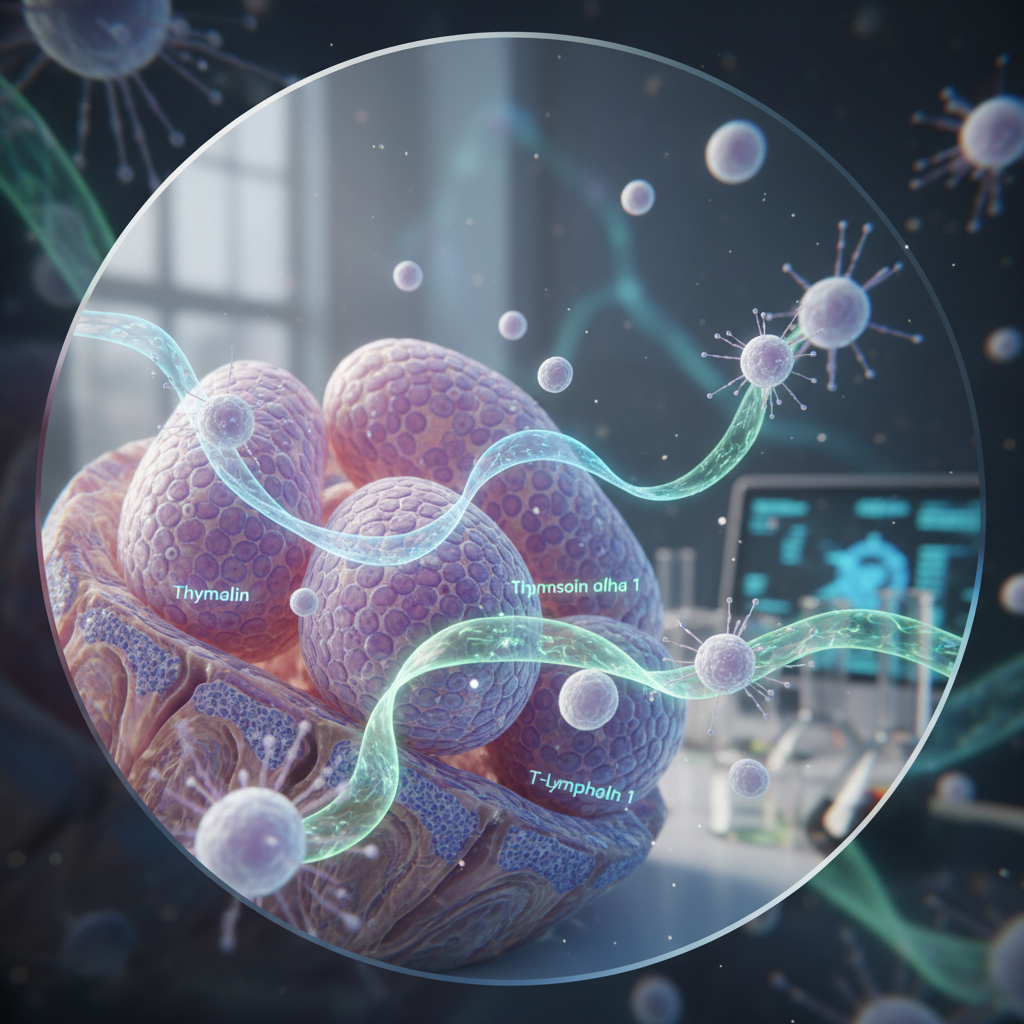
This comprehensive review delves into thymalin and thymosin alpha 1, examining their mechanisms and therapeutic potential in reversing immune ageing.
# Thymalin and Thymosin Alpha 1: Countering Immune Ageing
The intricate dance of our immune system is a marvel of biological engineering, tirelessly defending against pathogens, clearing cellular debris, and even surveilling for cancerous cells. However, with advancing age, this finely tuned system undergoes a process known as immunosenescence – a gradual decline in immune function that renders us more susceptible to infections, autoimmune disorders, and cancer. Within the burgeoning field of longevity science, significant attention is being directed towards interventions that can rejuvenate the ageing immune system. Among the most promising candidates are two naturally occurring peptides: thymalin and thymosin alpha 1. These thymic peptides, derived from the thymus gland, are emerging as key players in the quest to enhance immune resilience and extend healthspan.
The thymus, a lymphoid organ located in the upper chest, is critical for the development and maturation of T-lymphocytes, the principal orchestrators of adaptive immunity. Its activity peaks during childhood and adolescence, after which it undergoes involution – a process where the glandular tissue is replaced by fat, leading to a significant reduction in T-cell output. This thymic involution is a primary driver of immunosenescence. Both thymalin and thymosin alpha 1 are thought to exert their beneficial effects by modulating thymic activity and T-cell function, offering a potential pathway to mitigate the adverse consequences of immune ageing. Understanding their distinct mechanisms and synergistic potential is crucial for appreciating their role in future longevity strategies.
The Thymus and Immunosenescence: A Vicious Cycle
Immunosenescence is not merely a passive decline; it is a complex remodelling of the immune landscape characterised by several key changes. These include a decrease in naive T-cell production, an accumulation of exhausted memory T-cells, reduced vaccine responsiveness, and an increased inflammatory state known as "inflammaging." The thymus plays a central, albeit often overlooked, role in this process. As we age, the thymus shrinks, producing fewer new T-cells. This reduction means the body has a smaller repertoire of T-cells to combat novel pathogens, leading to impaired immune responses and greater susceptibility to illness.
This decline in thymic output is exacerbated by chronic low-grade inflammation and oxidative stress, which further impair thymic epithelial cells – the stromal cells essential for T-cell maturation. The vicious cycle of thymic involution and immune decline accelerates with age, contributing significantly to morbidity and mortality in older adults. Interventions that can support or even partially reverse thymic involution are therefore of immense interest in gerontology and anti-ageing medicine. The potential for peptides like thymalin and thymosin alpha 1 to act as modulators of this fundamental process offers a beacon of hope. They may represent a novel approach to bolstering immune defences, thereby extending not just lifespan but, more importantly, healthspan. For a broader look at peptide research, see our peptides overview.
Thymalin: A Pleiotropic Regulator of Immune Function
Thymalin is a complex polypeptide extract derived from the calf thymus gland, comprising a mixture of thymic peptides. Its primary mechanism of action revolves around its ability to restore the balance of T-cell subsets, particularly the ratio of T-helper (CD4+) to T-suppressor (CD8+) cells, which is often disrupted in ageing and disease. Thymalin has been extensively studied, particularly in Eastern European medical research, for its immunomodulatory and adaptogenic properties. Its effects are far-reaching and involve multiple aspects of the immune response:
- **T-cell Differentiation and Maturation:** Thymalin stimulates the differentiation of T-cell precursors into mature T-lymphocytes, helping to replenish the pool of naive T-cells that are essential for responding to new infections.
- **Cytokine Production:** It modulates the production of various cytokines, restoring the balance between pro-inflammatory and anti-inflammatory mediators. This can help to quell chronic inflammation associated with ageing.
- **Phagocytic Activity:** Research suggests thymalin enhances the phagocytic activity of macrophages and neutrophils, improving the innate immune system's ability to clear pathogens.
- **Antioxidant Effects:** Some studies indicate thymalin possesses antioxidant properties, which can protect immune cells from oxidative damage, a key contributor to immunosenescence. Antioxidants play a critical role in cellular health.
Clinical applications of thymalin have spanned a wide range of conditions, including chronic infections, autoimmune diseases, and oncology, often as an adjunct therapy to improve immune status. Its safety profile has generally been favourable, with few reported adverse effects. The accumulated evidence suggests thymalin's potential as a potent tool for immune system restoration and recalibration, particularly in the context of age-related immune decline. For more on natural immune support, consider spermidine.
Thymosin Alpha 1: A Precise Immunomodulator
Thymosin Alpha 1 (TA1), marketed as Zadaxin, is a synthetic 28-amino acid peptide, originally isolated from fraction 5 of calf thymic extract. Unlike the broader thymalin extract, TA1 is a highly specific peptide with a well-defined molecular structure and targeted mechanisms of action. Its primary role is to enhance T-cell function and bolster both innate and adaptive immune responses. The precise mechanisms of TA1 include:
- **Promoting T-cell Maturation:** TA1 enhances the maturation and differentiation of T-lymphocytes, particularly CD4+ T-helper cells, which are crucial for orchestrating immune responses.
- **Cytokine Induction:** It stimulates the production of various cytokines, including interferons (IFN-γ) and interleukins (IL-2), which are vital for antiviral and anti-tumour immunity. Research highlights its role in boosting IFN-γ production.
- **Dendritic Cell Activation:** TA1 can activate dendritic cells, which are professional antigen-presenting cells that initiate T-cell responses, thereby bridging the innate and adaptive immune systems.
- **Modulation of TLR Signalling:** It influences Toll-like receptor (TLR) signalling pathways, enhancing the immune system's ability to recognise and respond to microbial invaders.
TA1 has gained considerable traction in clinical settings, particularly for conditions requiring immune enhancement. It is approved in many countries for the treatment of hepatitis B and C, as an adjuvant in cancer therapy, and for enhancing vaccine efficacy in immunocompromised individuals. Its targeted action and strong safety profile make it a compelling candidate for addressing specific deficits in immune function, particularly those associated with ageing. While BPC-157 offers regenerative properties, TA1 focuses on immune modulation.
Comparing Thymalin and Thymosin Alpha 1: Synergies and Distinctions
While both thymalin and thymosin alpha 1 originate from the thymus and aim to enhance immune function, they present distinct profiles and potential applications. Thymalin, as a complex extract, offers a broader, more systemic immunomodulatory effect, potentially engaging multiple pathways due to its diverse peptide composition. Its actions might be considered more adaptogenic, helping the immune system return to a balanced state. Research on thymalin, while extensive, is often found in Eastern European literature and may not always meet the rigorous standards of Western double-blind, placebo-controlled trials.
Thymosin Alpha 1, conversely, is a single, well-characterised peptide with highly specific and reproducible effects. Its focused action makes it suitable for precise immune modulation, particularly where T-cell activation and cytokine production are critical. Its clinical evidence base, especially for indications like chronic viral infections, is robust and widely accepted in Western medicine. A review in Nature provides further insights into TA1's potential in immune-related disorders.
The choice between thymalin and thymosin alpha 1 (or even their combined use) might depend on the specific immune challenge and therapeutic goals. For a general rejuvenation of the ageing immune system, the broader effects of thymalin could be beneficial. For targeted enhancement of T-cell function or antiviral responses, TA1 might be preferred. It's also plausible that a synergistic effect could be achieved by using both, leveraging thymalin's broader immunomodulatory capacity alongside TA1's precise T-cell activating properties. This is an area ripe for further peptide research.
The Promise of Immune Rejuvenation for Longevity
Addressing immunosenescence is increasingly recognised as a cornerstone of longevity medicine. A robust immune system is not merely about resisting infection; it's about maintaining cellular surveillance against cancer, managing chronic inflammation, and supporting overall physiological resilience. Peptides like thymalin and thymosin alpha 1 offer a compelling strategy for mitigating the decline of immune function that accompanies ageing.
Rejuvenating the thymus and enhancing T-cell output could lead to several profound benefits for healthspan:
- **Reduced Susceptibility to Infections:** A more functional immune system means better defence against bacterial, viral, and fungal pathogens, reducing the frequency and severity of illnesses.
- **Enhanced Vaccine Efficacy:** Older adults often exhibit diminished responses to vaccines. Immune-boosting peptides could improve vaccine effectiveness, offering better protection against prevalent diseases.
- **Lower Cancer Risk:** A vigilant immune system is crucial for identifying and eliminating nascent cancer cells. Improving immune surveillance could help reduce the incidence of age-related cancers. The role of the immune system in cancer prevention is underscored by NIH research.
- **Mitigation of Inflammaging:** By rebalancing cytokine profiles and reducing chronic low-grade inflammation, these peptides could help combat the systemic inflammation that drives many age-related diseases.
While the prospect of immune rejuvenation is exciting, it is crucial to approach these interventions with scientific rigour and appropriate medical guidance. These are powerful biological modulators, and their use should be considered in the context of individual health status and alongside other foundational longevity strategies, such as resistance training and time-restricted eating.
Safety, Administration, and Future Directions
Both thymalin and thymosin alpha 1 have generally demonstrated good safety profiles in clinical studies. Thymalin, as a natural extract, typically has a low incidence of side effects. Thymosin Alpha 1, being a synthetic peptide, is also well-tolerated, with side effects usually mild and transient, such as redness at the injection site or occasional fatigue. However, as with any potent biological agent, careful consideration of individual health status and potential contraindications is essential. These peptides are typically administered via subcutaneous injection, often in cyclical protocols tailored to the specific immune challenge. The dosages and administration schedules vary depending on the product and intended use, often guided by clinical experience and the advice of a healthcare professional.
The future of thymic peptides in longevity medicine is bright. Ongoing research is exploring novel formulations, delivery methods, and combination therapies. For instance, combining these peptides with other immunomodulatory agents or lifestyle interventions (e.g., specific nutritional protocols) could yield enhanced benefits. Furthermore, advancements in biological age testing and immune profiling will allow for more personalised approaches, identifying individuals who stand to benefit most from thymic support. As our understanding of immunosenescence deepens, the precise roles of thymalin and thymosin alpha 1 in not just arresting, but potentially reversing, aspects of immune ageing will become even clearer. Always consult a healthcare professional before considering any new peptide, drug, or supplement regime. [/legal/disclaimer]
Bottom line
Thymalin and thymosin alpha 1 represent potent and promising interventions in the fight against immune ageing. By enhancing thymic output and T-cell function, these peptides offer a pathway to bolster the immune system, improving resilience against infections, cancer, and chronic inflammation. While thymalin provides a broader immunomodulatory effect as a natural extract, thymosin alpha 1 offers precise T-cell activation, with both demonstrating significant potential to extend healthspan by restoring youthful immune vigour. Their judicious integration into comprehensive longevity strategies, guided by evidence and medical oversight, holds substantial promise for future health.
As research continues to unfold, these thymic peptides are poised to become key components in personalised approaches to maintaining robust immune health throughout life. Their capacity to counteract immunosenescence underscores a fundamental shift in anti-ageing medicine – moving beyond simply treating disease to actively preserving and optimising physiological function for extended health and vitality.