Optimising Your VO2 Max Target by Decade for
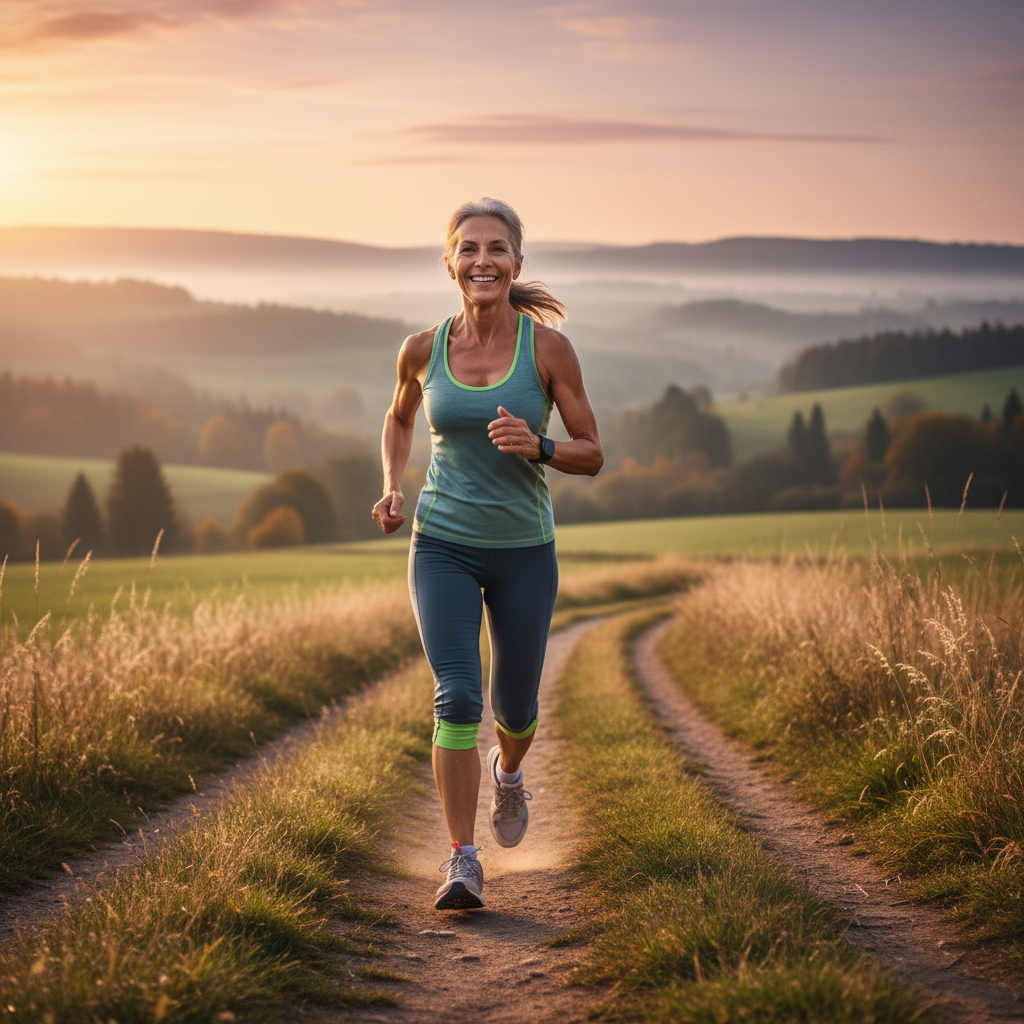
Discover how tailoring your VO2 max targets by decade can significantly enhance healthspan and longevity, backed by cutting-edge physiological research.
# Optimising Your VO2 Max Target by Decade for Longevity
In the relentless pursuit of extending healthspan and promoting longevity, few metrics stand as a more robust and independently predictive biomarker than maximal oxygen uptake, or VO2 max. Defined as the maximum rate of oxygen the body can use during intense exercise, VO2 max is not merely a measure of athletic prowess; it is a profound indicator of cardiovascular health, cellular efficiency, and overall systemic resilience. A higher VO2 max is consistently associated with a reduced risk of all-cause mortality, cardiovascular disease, and even certain cancers. Understanding and actively managing your VO2 max target by decade is, therefore, a cornerstone of any serious longevity strategy.
While we often associate high VO2 max with elite athletes, its implications for the general population are far more critical. For the average individual, improving VO2 max isn't about winning races; it's about adding quality years to life, maintaining functional independence, and mitigating the age-related decline that often accompanies a sedentary lifestyle. This comprehensive guide will delineate optimal VO2 max targets for each decade of adult life, explore the physiological underpinnings of why these targets matter, and provide actionable strategies to achieve and maintain them.
The Longevity Dividend of a High VO2 Max
The link between VO2 max and longevity is not merely correlational; it's causal to a significant degree. Research consistently demonstrates that individuals with higher cardiorespiratory fitness (CRF), as measured by VO2 max, exhibit a lower risk of premature death. A landmark study published in JAMA, for instance, found that high levels of CRF were associated with a lower risk of all-cause mortality with no upper limit of benefit. In fact, extreme fitness was associated with the greatest survival rates, challenging the notion that there's a point of diminishing returns for fitness in longevity applications. This seminal work underscores the profound "longevity dividend" paid by investing in your aerobic capacity.
Physiologically, a robust VO2 max signifies several critical advantages:
* **Enhanced Cardiovascular Efficiency:** Your heart is a muscle, and a higher VO2 max indicates a more efficient pump, capable of delivering oxygen-rich blood to working muscles more effectively. This reduces the strain on the cardiovascular system at rest and during activity, lowering blood pressure and improving endothelial function. * **Improved Mitochondrial Function:** Mitochondria, the powerhouses of our cells, become more numerous and efficient with consistent aerobic training. This leads to better energy production, reduced oxidative stress, and slower cellular ageing. This directly contributes to a higher VO2 max and overall vitality. * **Better Metabolic Health:** High VO2 max is strongly correlated with improved insulin sensitivity, better glucose regulation, and a reduced risk of type 2 diabetes. This metabolic resilience is a key component of healthy ageing. Metabolic health is a recurring theme in longevity, and VO2 max is a powerful lever. * **Stronger Immune System:** Regular, moderate-to-high intensity aerobic exercise can bolster the immune system, making the body more resilient to infections and chronic inflammatory states, which are drivers of age-related diseases.
Understanding these benefits lays the groundwork for appreciating why achieving and maintaining optimal VO2 max targets across the lifespan is a non-negotiable aspect of a serious longevity protocol.
VO2 Max Targets: A Decadal Breakdown
While individual variations exist due to genetics, training history, and lifestyle, general target ranges for VO2 max can be established by decade. These are not rigid thresholds but rather aspirational benchmarks to guide your training. Remember, any improvement from a sedentary baseline yields significant longevity benefits, but striving for the 'excellent' or 'superior' categories within your age group is ideal.
**Age 20-29: The Foundation Decade**
* **Target:** Men: 45-55 ml/kg/min; Women: 40-50 ml/kg/min * **Why it matters:** This decade is crucial for building a strong physiological foundation. Peak VO2 max is often achieved in the mid-20s. Maintaining high levels now provides a buffer against future decline. Individuals who are highly active in their 20s set themselves up for better health outcomes in later life. * **Strategy:** Engage in a variety of aerobic activities. This is the time to explore sports, high-intensity interval training (HIIT), and long-duration steady-state cardio. Focus on pushing perceived exertion levels. Incorporate resistance training to build muscle mass, which further supports metabolic health and overall fitness.
**Age 30-39: Sustaining and Elevating**
* **Target:** Men: 40-50 ml/kg/min; Women: 35-45 ml/kg/min * **Why it matters:** Physiological decline typically begins in the 30s. Counteracting this decline requires consistent effort. Maintaining a high VO2 max now helps offset age-related drops in metabolic rate and muscle mass. * **Strategy:** Structure your training. Incorporate regular Zone 2 cardio sessions (e.g., 3-4 times a week for 45-60 minutes) alongside 1-2 weekly HIIT sessions. Zone 2 training is particularly effective for mitochondrial biogenesis and fat oxidation, crucial for sustained performance and health. Don't neglect strength work.
**Age 40-49: The Critical Maintenance Decade**
* **Target:** Men: 35-45 ml/kg/min; Women: 30-40 ml/kg/min * **Why it matters:** This decade often sees accelerated physiological decline if left unchecked. Cardiovascular disease risk factors begin to accumulate. Maintaining a robust VO2 max significantly reduces these risks. This is a critical period for health interventions. * **Strategy:** Prioritise consistency over extreme intensity. While HIIT is still beneficial, ensuring regular, sustained aerobic effort is key. Consider longer, lower-intensity sessions to build aerobic base. Focus on recovery and listen to your body. Supplements like creatine can support strength and power, indirectly aiding aerobic capacity by improving work output.
**Age 50-59: Battling Decline, Maximising Healthspan**
* **Target:** Men: 30-40 ml/kg/min; Women: 25-35 ml/kg/min * **Why it matters:** The risk of chronic diseases rises sharply. A strong VO2 max at this age is a powerful buffer against cardiovascular events, cognitive decline, and metabolic disorders. It directly impacts quality of life and functional independence. * **Strategy:** Combine moderate-intensity continuous training with carefully periodised high-intensity intervals. Focus on maintaining muscle mass through resistance training as sarcopenia begins to accelerate. Explore activities like cycling, swimming, and brisk walking if high-impact activities become challenging. Consider taurine supplementation, which has shown promise in improving exercise capacity in older adults (pubmed.ncbi.nlm.nih.gov/37286311/).
**Age 60-69: Preserving Independence and Vitality**
* **Target:** Men: 25-35 ml/kg/min; Women: 20-30 ml/kg/min * **Why it matters:** Maintaining functional VO2 max is paramount for daily activities and preventing frailty. It significantly reduces the risk of falls and enhances overall well-being. A VO2 max below 20 ml/kg/min significantly increases mortality risk in this age group. * **Strategy:** Emphasise functional fitness. Activities that mimic daily movements, combined with regular aerobic exercise, are crucial. Walking, hiking, dancing, and water aerobics are excellent choices. Strength training becomes even more vital. Explore [/protocols/cold-exposure] and [/protocols/sauna] for additional benefits in inflammation reduction and cardiovascular health, though direct impact on VO2 max is indirect.
**Age 70+: Maximising Resilience and Quality of Life**
* **Target:** Men: 20-30 ml/kg/min; Women: 18-25 ml/kg/min * **Why it matters:** Every increment of VO2 max improvement in this age group yields substantial benefits in terms of mobility, cognitive function, and reduced hospitalisations. The goal is to maintain a level that supports an active, independent lifestyle. * **Strategy:** Focus on consistency and safety. Even short bursts of activity several times a day are beneficial. Balance training, flexibility, and light resistance work should be integrated with regular low-to-moderate intensity aerobic exercise. Supervised exercise programmes are highly recommended. A study published in Nature showed that even in very old age, individuals can improve their VO2 max with tailored exercise programs (nature.com/articles/s41467-020-18919-6).
Strategies for VO2 Max Improvement
Regardless of your current age or fitness level, improving your VO2 max is achievable with consistent effort and a structured approach. The key lies in understanding the physiological demands of VO2 max training and applying them intelligently.
1. **High-Intensity Interval Training (HIIT):** This is perhaps the most effective method for rapidly improving VO2 max. HIIT involves short, intense bursts of exercise followed by brief recovery periods. Examples include 30 seconds of all-out effort followed by 60-90 seconds of rest, repeated 8-12 times. Perform 2-3 sessions per week. However, be mindful of recovery, especially as you age.
2. **Zone 2 Cardio Training:** While HIIT builds the 'ceiling' of your aerobic capacity, Zone 2 training builds the 'floor' – your aerobic base. This involves exercising at an intensity where you can comfortably hold a conversation but are still breathing heavily (approximately 60-70% of your maximum heart rate). Aim for 3-4 sessions of 45-60 minutes per week. This improves mitochondrial density and efficiency, crucial for sustained energy production and fat utilisation. This strategy is also discussed in depth within our protocols section.
3. **Threshold Training:** This involves sustained efforts at an intensity just below your lactate threshold, typically 80-90% of your maximum heart rate. These sessions can last 20-40 minutes and teach your body to clear lactate more efficiently, pushing your endurance capabilities. Incorporate 1-2 sessions per week.
4. **Long-Duration Steady State Cardio:** While perhaps not as efficient as HIIT for direct VO2 max gains, longer, moderate-intensity sessions (e.g., 60-90 minutes at 70-80% of max heart rate) build endurance, mental fortitude, and cardiovascular resilience. This is particularly beneficial for active recovery and metabolic flexibility.
5. **Resistance Training:** While primarily focused on muscle strength and hypertrophy, resistance training indirectly supports VO2 max by improving muscular efficiency, power output, and metabolic health. Stronger muscles can sustain higher workloads during aerobic activity. Our article on resistance training provides a detailed guide.
6. **Optimise Recovery:** Training is only half the equation. Adequate sleep, nutrition, and stress management are critical for adaptation and preventing overtraining. Consider tools like wearables to monitor recovery metrics and guide your training intensity. Supplements like magnesium glycinate and glycine can support sleep quality.
Measuring and Monitoring Your Progress
Knowing your VO2 max is the first step. The gold standard for measurement is a laboratory-based cardiopulmonary exercise test (CPET) with gas exchange analysis, often performed on a treadmill or stationary bike. This provides the most accurate and reliable data.
However, if a lab test isn't accessible, various field tests and estimations can provide a reasonable approximation:
* **2.4 km Run Test (Cooper Test variation):** Run 2.4 km as fast as possible. Formulae exist to estimate VO2 max based on time and body weight. * **12-Minute Run/Walk Test (Cooper Test):** Cover as much distance as possible in 12 minutes. This is a common and relatively easy-to-administer test. * **Wearable Devices:** Many modern smartwatches and fitness trackers can estimate VO2 max based on heart rate, GPS data, and personal information. While not as precise as lab tests, they can provide useful trends over time. Regular monitoring helps you stay accountable and adjust your training plan as needed.
Regardless of the method, consistency in measurement is key. Retest every 3-6 months to track your progress and ensure your training is effective. The American College of Sports Medicine (ACSM) provides detailed protocols for these tests and their interpretation.
Nutritional Support for Peak Performance
While exercise is the primary driver of VO2 max improvement, nutrition plays a crucial supportive role. Adequate fuelling, hydration, and targeted supplementation can enhance training adaptations and accelerate recovery.
* **Carbohydrates:** Essential for high-intensity exercise. Ensure sufficient complex carbohydrate intake to replenish glycogen stores. * **Protein:** Critical for muscle repair and adaptation. Aim for 1.6-2.2 grams of protein per kilogram of body weight daily. * **Healthy Fats:** Provide sustained energy and support hormonal balance. * **Hydration:** Dehydration severely impairs performance. Drink plenty of water throughout the day, increasing intake around exercise. * **Supplements:** Certain supplements can provide an edge (always consult a healthcare professional before starting any new supplement regimen and refer to our [/legal/disclaimer] for general information). * **Creatine:** Shown to improve high-intensity exercise performance, which can translate to better VO2 max gains. See our guide on creatine. * **Beta-Alanine:** Can buffer lactic acid, extending time to exhaustion in high-intensity efforts. * **Nitrate (e.g., from beetroot juice):** Improves oxygen utilisation efficiency, particularly during moderate-to-high intensity exercise. * **Omega-3 Fatty Acids:** Reduce inflammation and support cardiovascular health, aiding recovery. See our guide on omega-3. * **Iron:** Essential for oxygen transport. Deficiencies can impair VO2 max. Consider testing levels if fatigue is an issue.
By combining a well-structured training plan with optimal nutrition and smart supplementation, you create an environment conducive to maximising your VO2 max and, by extension, your healthspan.
Bottom Line
Optimising your VO2 max by decade is not merely an athletic pursuit; it is a foundational strategy for extending your healthspan and living a more vibrant, independent life. The evidence is unequivocal: a higher cardiorespiratory fitness level is one of the most powerful predictors of longevity and resilience against chronic disease. By understanding age-appropriate targets and consistently engaging in a varied exercise regimen that includes both high-intensity intervals and steady-state Zone 2 training, you can significantly mitigate age-related decline.
Start now, measure your progress, and adjust your approach as you age. The investment in your aerobic capacity today will pay substantial dividends in the quality and length of your life for decades to come. Your future self will thank you for prioritising this critical longevity biomarker. Always consult with a healthcare professional before making significant changes to your exercise or diet regimen.