Thymalin, Thymosin Alpha-1, and Immune Ageing:
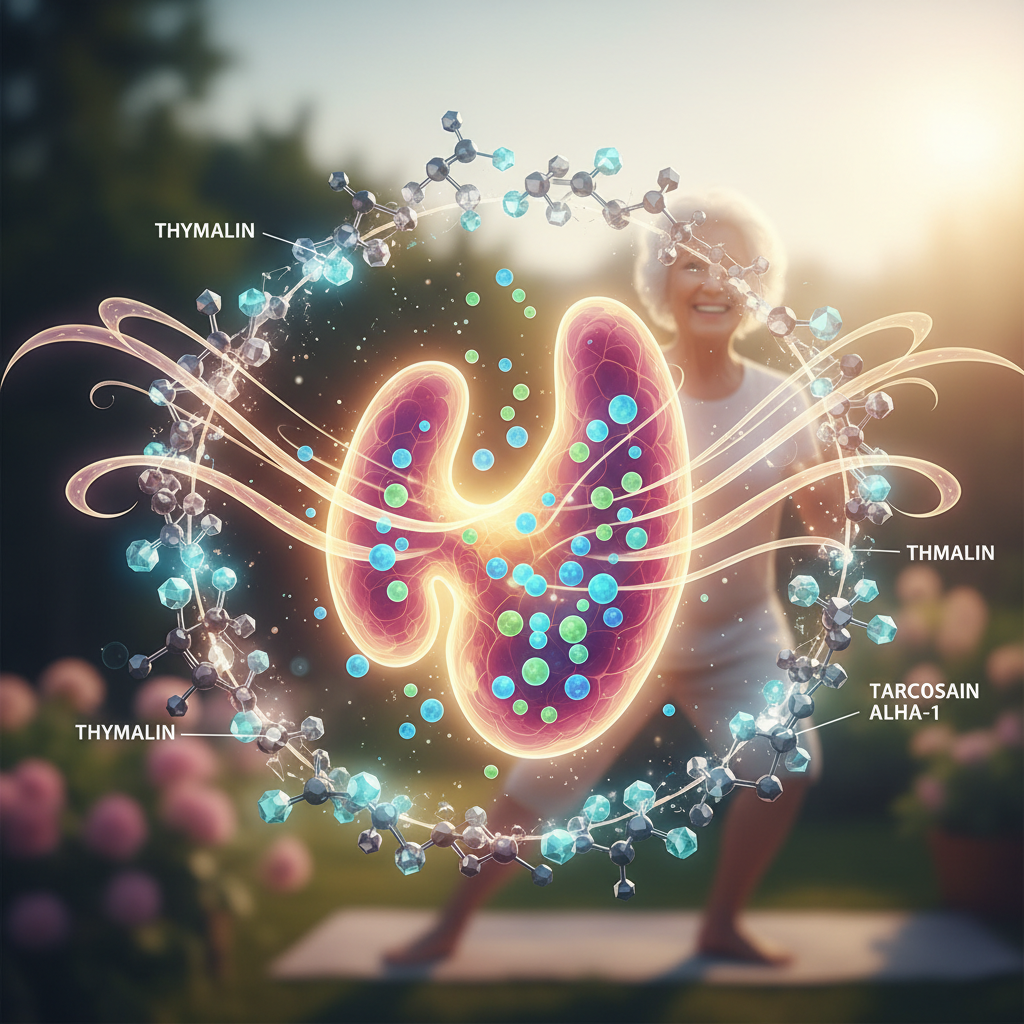
This extensive review delves into the roles of Thymalin and Thymosin Alpha-1 in mitigating immune ageing, examining their mechanisms and clinical evidence.
# Thymalin, Thymosin Alpha-1, and Immune Ageing: A Deep Dive into Restoration
As we age, our immune system undergoes a gradual, yet profound, decline known as immunosenescence. This insidious process compromises our ability to fight off infections, respond effectively to vaccinations, and surveillance against cancerous cells. The thymus, a vital organ situated behind the sternum, plays a central role in immune development, particularly in the maturation of T-lymphocytes. Unfortunately, the thymus begins to atrophy from puberty, leading to reduced T-cell output and a less robust immune response. This age-related immune impairment is a significant contributor to morbidity and mortality in older populations, prompting intense research into interventions that can mitigate or even reverse its effects. Among the most promising candidates are thymic peptides, specifically Thymalin and Thymosin Alpha-1.
These two peptides, though distinct in their origin and precise molecular structures, share a common goal: to rejuvenate the ageing immune system. Thymalin, a Russian-developed peptide complex, and Thymosin Alpha-1 (TA1), a synthetic peptide originally isolated from bovine thymus, have both demonstrated a capacity to modulate immune function, particularly T-cell mediated immunity. This comprehensive exploration will delve into the scientific rationale behind their use, dissect the available research, and evaluate their potential as tools in the fight against immune ageing, providing a nuanced perspective on their efficacy and future prospects.
The Ageing Immune System: A Growing Challenge
Immunosenescence is characterised by several key changes within the immune system. One of the most critical is the involution of the thymus, which leads to a decrease in the production of naive T-cells – the immune system's frontline defenders. Without a constant supply of new, diverse T-cells, the body's ability to recognise and eliminate novel pathogens diminishes. Concurrently, there is an accumulation of senescent T-cells, which are less functional and contribute to chronic low-grade inflammation, often referred to as 'inflammaging'. This state of chronic inflammation is implicated in numerous age-related diseases, including cardiovascular disease, neurodegeneration, and cancer.
Other hallmarks of immune ageing include impaired B-cell function, reduced natural killer (NK) cell activity, and a general dysregulation of cytokine production. The cumulative effect is a heightened susceptibility to infections, a diminished response to vaccines, and an increased risk of autoimmune disorders and malignancies. The COVID-19 pandemic starkly highlighted the vulnerability of older individuals due to immunosenescence, underscoring the urgent need for strategies to bolster immune resilience in later life. While general healthy lifestyle choices like a balanced diet, regular resistance training, and adequate sleep optimisation can support immune function, specific interventions may be necessary to address the deeper structural and functional changes occurring with age.
Thymic Peptides: Nature's Immunomodulators
Thymic peptides are naturally occurring compounds, primarily produced by the thymus gland, that play crucial roles in the development and regulation of the immune system. The thymus acts as a 'school' for T-cells, educating them to recognise foreign invaders while tolerating the body's own tissues. As we age and the thymus shrinks, its production of these vital signalling molecules declines. Supplementing with exogenous thymic peptides aims to compensate for this deficit, potentially restoring some degree of youthful immune function.
Thymalin, a polypeptide complex originally derived from bovine thymus, is widely used in Eastern Europe for its purported immunomodulatory effects. It is thought to act on various immune cells, promoting T-cell maturation and differentiation, enhancing phagocytic activity, and normalising the balance of T-helper (Th) and T-suppressor (Ts) cells. Its broad-spectrum effects make it an appealing target for counteracting the multifaceted decline seen in immunosenescence. Meanwhile, Thymosin Alpha-1, a single, precisely defined peptide, has gained significant international attention. Unlike the complex mixture of Thymalin, TA1 is a synthetic 28-amino acid peptide that acts as a potent immunomodulator. It has been extensively studied for its ability to stimulate T-cell maturation, enhance cytokine production, and bolster both innate and adaptive immune responses. The precision of TA1's structure allows for more targeted research and understanding of its mechanisms, though both peptides offer unique avenues for immune restoration.
Thymosin Alpha-1: Mechanisms and Clinical Evidence
Thymosin Alpha-1 (TA1), also known by its brand name Zadaxin, has been the subject of extensive research, particularly in the context of viral infections, cancer, and immune deficiencies. Its primary mechanism of action involves binding to specific receptors on immune cells, initiating a cascade of intracellular signalling events that promote T-cell maturation and differentiation. TA1 is known to:
- **Promote T-cell differentiation and maturation**: TA1 helps naive T-cells develop into mature T-cells, including cytotoxic T-lymphocytes (CTLs) and helper T-cells, which are critical for effective immune responses.
- **Enhance cytokine production**: It stimulates the production of various cytokines, such as interferon-gamma (IFN-γ) and interleukin-2 (IL-2), which are essential for coordinating immune responses and activating other immune cells.
- **Increase natural killer (NK) cell activity**: TA1 can boost the activity of NK cells, which are crucial for early defence against viral infections and cancer cells.
- **Modulate regulatory T-cells**: It can help to balance the immune response, preventing over-activation while ensuring effective pathogen clearance.
Clinical studies have explored TA1's utility in various conditions. For instance, in chronic hepatitis B and C infections, TA1 has been shown to improve treatment response rates when used in conjunction with antiviral therapies. A meta-analysis published in *PLOS One* explored the efficacy of TA1 in chronic hepatitis B, suggesting a beneficial role in immune restoration https://pubmed.ncbi.nlm.nih.gov/24714652/. In oncology, TA1 has been investigated as an adjunct to chemotherapy and radiotherapy, with some studies indicating improved immune parameters and reduced side effects. The peptide's potential to enhance vaccine efficacy in older adults, who often exhibit a blunted response to immunisations, is also a significant area of ongoing research. While the evidence is promising, particularly in specific disease contexts, its direct application for general immune ageing in healthy individuals requires further large-scale, placebo-controlled trials. This is a crucial distinction, as the mechanisms that aid compromised immunity might not translate identically to prophylactic use in healthy ageing. For individuals exploring peptide-based interventions, it is critical to consult with a healthcare professional to understand the appropriate use and potential risks, as highlighted in our peptides overview.
Thymalin: An Eastern European Perspective on Immune Rejuvenation
Thymalin, a less globally recognised but extensively studied peptide complex, particularly within the former Soviet Union and Eastern European countries, offers another compelling approach to immune system modulation. Derived from the thymus of young cattle, Thymalin is a mixture of various peptides, and its exact mechanism of action is thought to be more pleiotropic than that of the singular Thymosin Alpha-1. Research indicates that Thymalin:
- **Normalises T-cell subsets**: It helps restore the balance between different T-cell populations, particularly the CD4+/CD8+ ratio, which often becomes skewed with age.
- **Enhances cellular immunity**: Thymalin boosts the activity of various immune cells, including T-lymphocytes, B-lymphocytes, and phagocytes, leading to a more robust cellular immune response.
- **Stimulates lymphopoiesis**: It can promote the production of new immune cells, helping to replenish the pool of naive T-cells that diminishes with thymic involution.
- **Reduces inflammatory cytokines**: By rebalancing the immune system, Thymalin may help to reduce the chronic low-grade inflammation associated with 'inflammaging'.
Numerous studies, many published in Russian and Eastern European journals, have demonstrated Thymalin's efficacy in treating various immune-deficiency states, chronic inflammatory diseases, and in supporting recovery post-surgery or radiation therapy. For instance, research has shown its benefit in individuals with recurrent infections, often reducing the frequency and severity of illness. A review on thymic peptides, including Thymalin, in *Ageing Research Reviews* highlighted their role in modulating immune function and potentially extending healthy lifespan https://pubmed.ncbi.nlm.nih.gov/25132210/. While the rigorous, double-blind, placebo-controlled studies common in Western medicine are less prevalent for Thymalin, the extensive clinical experience and observed benefits within its regions of use are noteworthy. Individuals considering Thymalin should be aware of the differences in regulatory oversight and availability compared to more widely recognised peptides. Further investigation into its specific peptide components and their individual contributions to overall immunomodulatory effects is warranted to fully integrate it into global longevity strategies.
Comparing Thymalin and Thymosin Alpha-1: Synergies and Differences
While both Thymalin and Thymosin Alpha-1 aim to combat immunosenescence, their characteristics and application contexts present both similarities and differences. Thymosin Alpha-1, as a single, well-defined synthetic peptide, offers precision and consistency in its administration and expected effects. Its mechanisms are relatively well-understood, and it has garnered significant attention in Western research for specific indications like viral infections and cancer. The ability to produce it synthetically ensures purity and avoids potential issues related to animal-derived products.
Thymalin, being a complex extract, presents a more holistic, though perhaps less precise, approach. Its blend of various peptides may offer synergistic effects that a single peptide cannot replicate. The long history of clinical use in Eastern Europe suggests a broad spectrum of benefits, even if the precise molecular pathways of all its components are not fully elucidated by Western standards. One could view TA1 as a targeted 'sharp-shooter' aiming at specific immune pathways, while Thymalin is more of a 'broad-spectrum' agent, stimulating overall thymic activity and immune balance.
From a longevity perspective, both peptides offer intriguing possibilities for mitigating immune ageing. The ideal scenario might even involve a combined approach or sequential use, leveraging the strengths of each. For example, TA1 could be used for targeted boosts during acute challenges or vaccination, while Thymalin could serve as a broader, longer-term support for general immune resilience. However, robust comparative studies directly pitting Thymalin against Thymosin Alpha-1, or investigating their combined effects specifically in the context of healthy ageing, are largely absent. Navigating the world of peptides requires careful consideration and, importantly, professional medical guidance, particularly when discussing dosages or off-label uses. The use of peptides like BPC-157 or GHK-Cu for other health aspects similarly underscores the need for informed decision-making.
Safety, Administration, and Future Directions
Both Thymalin and Thymosin Alpha-1 are generally considered to have favourable safety profiles based on existing clinical data. Side effects, when reported, are typically mild and transient, such as injection site reactions for injectable formulations. However, as with any bioactive compound, individual responses can vary, and careful monitoring is always advised. Administration routes typically involve subcutaneous or intramuscular injection, though some formulations of Thymalin may exist as oral or sublingual options. The optimal dosing strategies, particularly for healthy individuals aiming to combat immune ageing, are still subjects of ongoing research and clinical experience rather than established medical guidelines.
Future research will likely focus on several key areas:
- **Biomarkers of immunosenescence**: Identifying reliable biomarkers that can predict an individual's immune age and track the efficacy of thymic peptide interventions will be crucial. Our AI tools for biomarker insights offer a glimpse into the future of personalised health monitoring.
- **Long-term efficacy and safety**: Large-scale, long-term studies are needed to confirm the sustained benefits and safety of these peptides in healthy ageing populations.
- **Synergistic approaches**: Investigating combinations of thymic peptides with other longevity interventions, such as specific supplements (e.g., spermidine, urolithin A, NMN) or lifestyle protocols (e.g., cold exposure), could yield enhanced results.
- **Personalised medicine**: Genetic factors and individual immune profiles may dictate who responds best to these interventions, paving the way for personalised immune-rejuvenation strategies.
The growing interest in peptides like retatrutide and tirzepatide for metabolic health also highlights the broader potential of peptide-based therapeutics in longevity medicine, suggesting a future where targeted peptide interventions are commonplace for a range of age-related declines.
Bottom line
Thymalin and Thymosin Alpha-1 represent compelling avenues for addressing immunosenescence, a critical hallmark of ageing. Both peptides demonstrate robust immunomodulatory properties, primarily by enhancing T-cell function and restoring immune balance. While Thymosin Alpha-1 is a well-characterised synthetic peptide with global research presence, particularly in specific disease contexts, Thymalin offers a broader, complex-based approach with a long history of clinical use in Eastern Europe. The promise of these peptides lies in their potential to bolster immune resilience, reduce susceptibility to infections, and mitigate chronic inflammation, thereby contributing to a healthier, longer healthspan.
As research continues to unfold, particularly with a focus on healthy ageing populations, these thymic peptides may become integral components of future longevity strategies. Individuals interested in exploring these or any other peptides should engage with qualified healthcare professionals to ensure safe and appropriate use. Always consult with a medical professional before starting any new peptide, drug, or supplement regimen. See our /legal/disclaimer for more information.