ApoB vs LDL-C: Which Predicts Cardiovascular
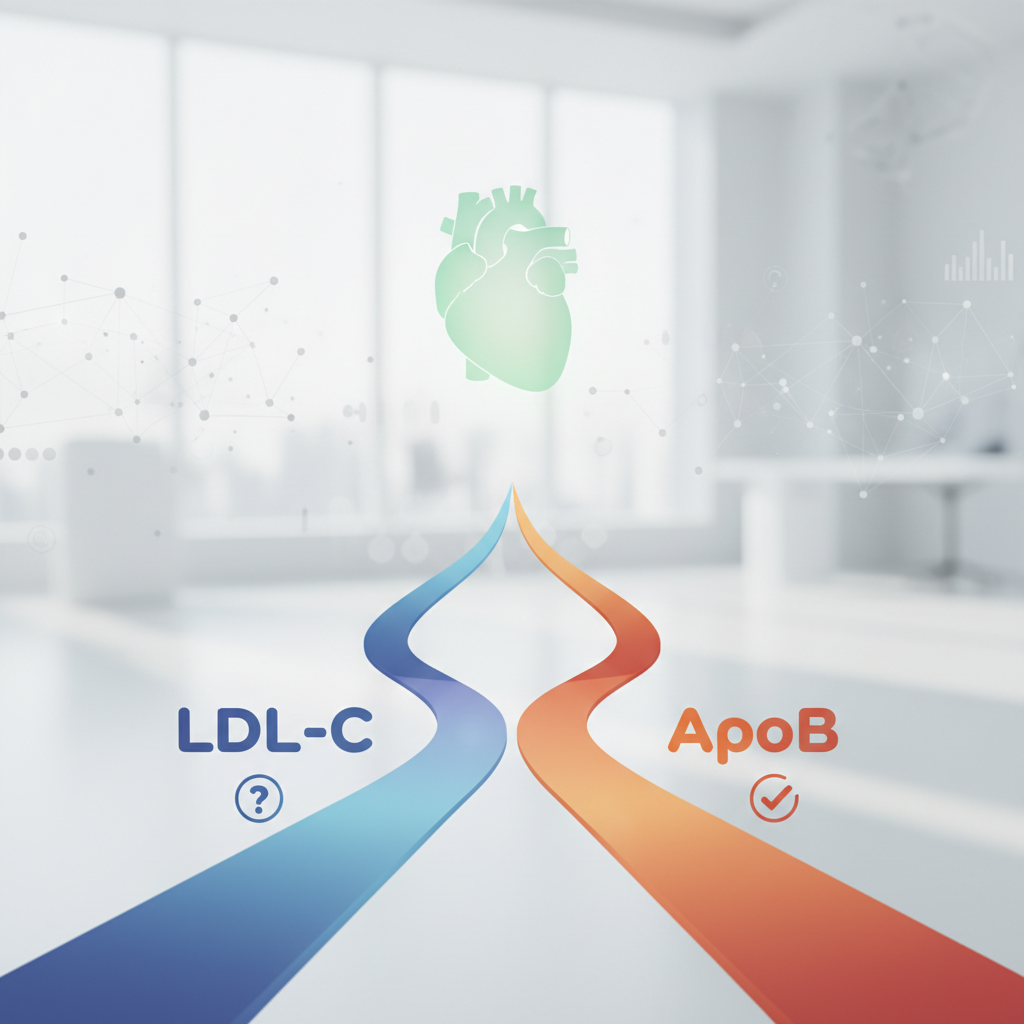
ApoB is emerging as a more precise biomarker for cardiovascular risk than LDL-C, offering a clearer picture of atherosclerotic particle burden.
# ApoB vs LDL-C: Which Predicts Cardiovascular Risk Best?
Cardiovascular disease (CVD) remains the leading cause of mortality globally, making accurate risk assessment a cornerstone of preventive medicine. For decades, low-density lipoprotein cholesterol (LDL-C) has been the primary lipid target in managing atherosclerotic risk. However, a growing body of evidence suggests that apolipoprotein B (ApoB) might be a more precise and reliable indicator of cardiovascular risk. As longevity science advances, understanding the nuances between these markers becomes critical for optimising healthspan. This article delves into the science behind ApoB and LDL-C, comparing their predictive power and exploring why ApoB is gaining prominence in the fight against heart disease.
The Role of LDL-C in Cardiovascular Disease
LDL-C, often dubbed "bad cholesterol," refers to the amount of cholesterol carried within low-density lipoprotein (LDL) particles. These particles are responsible for transporting cholesterol from the liver to cells throughout the body. While cholesterol is essential for cell membrane integrity and hormone production, an excess of LDL particles can lead to its deposition in the arterial walls, forming plaques. This process, known as atherosclerosis, is the underlying cause of most heart attacks and strokes.
Traditional lipid panels routinely measure total cholesterol, LDL-C, high-density lipoprotein cholesterol (HDL-C), and triglycerides. Clinical guidelines have historically focused on lowering LDL-C levels, with statins being the most commonly prescribed drugs to achieve this. The rationale is straightforward: reduce the amount of cholesterol being delivered to the arteries, and you reduce plaque formation.
However, LDL-C measurement has inherent limitations. It measures the *amount of cholesterol* within LDL particles, not the *number of particles* themselves. Crucially, not all LDL particles carry the same amount of cholesterol. Some particles are cholesterol-rich, while others are relatively cholesterol-poor. Furthermore, LDL-C levels can be influenced by diet, fasting status, and triglyceride levels, making it a somewhat indirect measure of actual atherogenic particle burden.
Understanding ApoB: The Direct Measure of Atherogenic Particles
Apolipoprotein B (ApoB) is a protein component found on the surface of all atherogenic lipoproteins. Specifically, one molecule of ApoB is present on each LDL particle, very-low-density lipoprotein (VLDL) particle, intermediate-density lipoprotein (IDL) particle, and lipoprotein(a) [Lp(a)] particle. This is its key distinction from LDL-C: ApoB directly quantifies the *number* of these potentially harmful particles in circulation.
Think of it this way: LDL-C is like measuring the total passenger weight in all cars on a motorway. ApoB, on the other hand, is like counting the *number of cars* on that motorway. It's the number of cars, not just the total weight of passengers, that better indicates traffic congestion and the potential for collisions.
Because each atherogenic lipoprotein particle contains precisely one ApoB molecule, an ApoB measurement directly reflects the total concentration of these particles. This makes ApoB a more robust and direct marker of the atherogenic particle burden. Elevated ApoB levels indicate a higher number of these particles, which translates to a greater likelihood of them infiltrating the arterial wall and initiating or progressing atherosclerotic plaque formation.
Why ApoB Might Be Superior to LDL-C
Multiple lines of evidence suggest that ApoB provides a more accurate assessment of cardiovascular risk than LDL-C, particularly in certain populations. Here's a breakdown of the key reasons:
* **Direct Particle Count:** As discussed, ApoB counts particles, while LDL-C measures cholesterol mass. Research consistently shows that the *number* of atherogenic particles is a stronger determinant of plaque formation than the *amount of cholesterol* they carry. This is especially true when LDL particles are small and dense, a phenotype often associated with metabolic dysfunction and high triglycerides, where LDL-C can underestimate risk. * **Consistency Across Metabolic States:** ApoB levels are less influenced by triglyceride levels and dietary changes compared to LDL-C. In individuals with high triglycerides, LDL-C can sometimes appear deceptively low, even when the number of atherogenic particles (and thus ApoB) is high. This discordance can lead to under-recognition of risk based on LDL-C alone. * **Inclusion of Other Atherogenic Lipoproteins:** ApoB accounts for all ApoB-containing lipoproteins, including VLDL, IDL, and Lp(a). These particles are also highly atherogenic, and their contribution to overall risk is captured by ApoB but not fully reflected by LDL-C alone. For instance, Lp(a) is an independent and genetically determined risk factor for CVD, and its ApoB content contributes to the total ApoB measurement, offering a more comprehensive risk picture. * **Stronger Association with CVD Events:** Numerous large-scale epidemiological studies and Mendelian randomisation studies have demonstrated a stronger statistical association between ApoB levels and the risk of CVD events (e.g., heart attack, stroke) compared to LDL-C levels. This has been observed across various populations and clinical settings, including those with diabetes, metabolic syndrome, and established CVD.
Clinical Implications and Practical Use
Given the compelling evidence, many experts advocate for the routine inclusion of ApoB in lipid panels, especially for individuals at intermediate or high risk for CVD, or when there is a discordance between traditional lipid markers and clinical presentation. The European Atherosclerosis Society (EAS) and other professional bodies have acknowledged the superior predictive value of ApoB, with some recommending it as the primary target for lipid-lowering therapy.
For clinicians, incorporating ApoB into risk assessment can lead to more precise therapeutic decisions. If a patient has a seemingly acceptable LDL-C but an elevated ApoB, it may indicate a higher burden of small, dense LDL particles or significant Lp(a) contribution, warranting more aggressive intervention. Conversely, a low LDL-C alongside a low ApoB provides stronger reassurance of reduced atherogenic risk.
Measuring ApoB is a straightforward blood test, similar to a standard lipid panel. It can be performed in both fasting and non-fasting states, although fasting is generally preferred for consistency and to also allow for triglyceride measurement. While not yet universally adopted as a primary metric in all healthcare systems, its increasing recognition suggests it will become a more integral part of cardiovascular risk assessment in the coming years.
The Broader Context of Longevity and Metabolic Health
At Longevity Stack, our focus is on evidence-first approaches to extending healthspan. Understanding and optimising metabolic health is paramount, and lipid management plays a critical role. Beyond LDL-C and ApoB, a holistic approach to cardiovascular longevity includes optimising other biomarkers, maintaining a healthy weight, regular physical activity, and a nutrient-dense diet. While we often discuss advanced interventions like peptides and various supplements, foundational health markers like ApoB remain central.
For example, interventions aimed at improving metabolic health, such as time-restricted eating or supplementation with compounds like berberine or omega-3 fatty acids, can positively impact both LDL-C and ApoB levels. Regular resistance training and zone 2 cardio also contribute significantly to a favourable lipid profile and overall cardiovascular resilience.
Utilising tools for biological age assessment and tracking biomarker insights can help individuals monitor their progress and make informed decisions about their longevity strategy. The move towards ApoB as a preferred marker reflects a broader trend in longevity science: seeking more precise, mechanistic, and predictive markers to guide personalised health interventions. Measuring ApoB provides a more accurate lens through which to view atherosclerotic risk, enabling earlier and more targeted interventions, ultimately contributing to a longer, healthier life.
Safety Considerations and Disclaimer
While discussing various health markers and interventions, it is crucial to remember that personal health decisions should always be made in consultation with a qualified healthcare professional. Information provided here is for educational purposes and should not be considered medical advice. Always consult your doctor before making changes to your diet, exercise, or supplement regimen. This includes any discussions around supplements or peptides. [/legal/disclaimer]
Bottom Line
The debate between ApoB and LDL-C for cardiovascular risk prediction is increasingly leaning towards ApoB. While LDL-C has served as a valuable marker for decades, ApoB offers a more direct and accurate measure of the total number of atherogenic lipoprotein particles, which is a stronger determinant of atherosclerotic plaque formation and subsequent cardiovascular events. Incorporating ApoB into routine lipid assessment, especially for individuals at elevated risk, can enhance the precision of risk stratification and guide more effective lipid-lowering strategies.
For those committed to optimising their healthspan and mitigating cardiovascular disease risk, monitoring ApoB provides a powerful, evidence-backed tool. As our understanding of metabolic health deepens, embracing advanced biomarkers like ApoB ensures that we are making the most informed decisions on our journey towards a longer, healthier life.