BPC-157 Oral vs. Injectable: Optimising Tendon
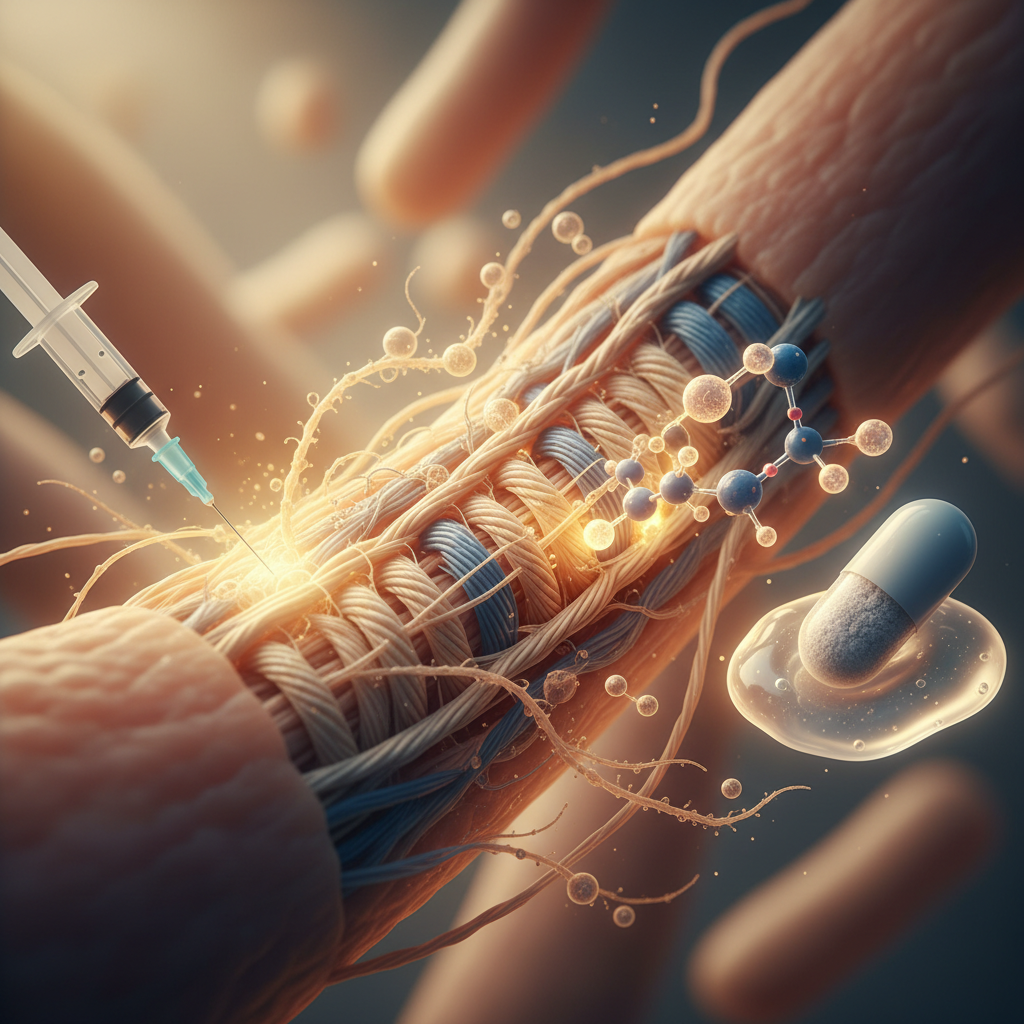
Delve into the mechanisms and practical considerations of BPC-157 administration, comparing oral and injectable forms for superior tendon healing and tissue regeneration.
# BPC-157 Oral vs. Injectable: Optimising Tendon Healing Pathways
Tendon injuries, from acute ruptures to chronic tendinopathies, represent a significant challenge in sports medicine and general health. These injuries are often slow to heal, characterised by poor vascularisation and a complex extracellular matrix, frequently leading to prolonged recovery times and a high risk of recurrence. Traditional treatments, while varied, often struggle to accelerate the intrinsic healing processes effectively. This is where novel therapeutic agents, such as BPC-157, garner considerable interest within the longevity and healthspan communities.
BPC-157, or Body Protection Compound-157, is a synthetic peptide comprising 15 amino acids, derived from a naturally occurring gastric protein. Its remarkable regenerative properties have been extensively studied, particularly concerning its ability to accelerate wound healing, reduce inflammation, and promote tissue regeneration across various tissue types, including muscle, bone, and critically, tendons. However, a recurring question for individuals and clinicians exploring BPC-157 involves its mode of administration: is oral or injectable delivery superior for tendon healing?
Understanding the pharmacokinetics, bioavailability, and targeted effects of each administration route is crucial for making informed decisions. This comprehensive analysis will dissect the current scientific understanding of BPC-157, comparing the efficacy of oral versus injectable forms specifically in the context of tendon repair and regeneration. We will explore the mechanisms of action, the evidence base, and practical considerations to help navigate this complex, yet promising, therapeutic landscape.
The Multifaceted Mechanism of BPC-157 in Tendon Repair
BPC-157’s therapeutic prowess stems from its diverse array of biological activities. Its ability to accelerate healing is not confined to a single pathway but rather a synergistic interplay of several mechanisms. At its core, BPC-157 significantly influences angiogenesis, the formation of new blood vessels. Tendons, notoriously avascular, benefit immensely from enhanced blood supply, which delivers essential nutrients and removes metabolic waste products, both critical for repair. Research has demonstrated that BPC-157 can upregulate growth factors like Vascular Endothelial Growth Factor (VEGF) and basic Fibroblast Growth Factor (bFGF), key players in this process.
Beyond angiogenesis, BPC-157 plays a pivotal role in collagen synthesis and organisation, the very building blocks of tendons. It has been shown to promote the proliferation and migration of fibroblasts, the primary cells responsible for producing collagen and other extracellular matrix components. Crucially, BPC-157 also aids in the proper alignment and maturation of collagen fibres, leading to a stronger, more functional tendon repair. Disorganised collagen is characteristic of chronic tendinopathies, and BPC-157's capacity to facilitate organised remodelling is a significant advantage.
Furthermore, BPC-157 exhibits potent anti-inflammatory effects. Inflammation is a necessary initial step in healing but prolonged or excessive inflammation can impede repair and contribute to chronic pain. BPC-157 helps modulate inflammatory responses, reducing pro-inflammatory cytokines while potentially promoting anti-inflammatory mediators. This dual action creates a more favourable environment for healing. Its gastroprotective properties, from which it derives its 'Body Protection Compound' name, also hint at its ability to modulate various physiological systems, including those involved in stress response and tissue integrity. This broad spectrum of action underscores why BPC-157 is a peptide of considerable interest in regenerative medicine.
Injectable BPC-157: Precision and Localised Potency
Injectable administration of BPC-157 typically involves subcutaneous (under the skin) or intramuscular (into the muscle) injections, often in close proximity to the site of injury. The primary advantage of this route is its direct delivery to the target tissue. When BPC-157 is injected locally near a damaged tendon, it bypasses the digestive system, ensuring a higher concentration of the peptide reaches the injured site quickly and with minimal degradation. This direct targeting is particularly appealing for localised injuries where high tissue concentrations are desired for maximal therapeutic effect.
Studies utilising injectable BPC-157 for tendon and ligament repair have shown promising results. For instance, research published in the *Journal of Orthopaedic Research* demonstrated that local administration of BPC-157 significantly accelerated the healing of Achilles tendon injuries in rats, improving biomechanical strength and histological appearance compared to controls. Another study indicated its efficacy in healing transected quadriceps tendons, again with direct injection yielding superior outcomes. The rationale is clear: by directly introducing the peptide where it is most needed, the local repair mechanisms are robustly supported.
This method of administration ensures nearly 100% bioavailability at the site of injection, leading to a rapid onset of action and potentially more pronounced local effects. The systemic absorption from a subcutaneous injection is also good, meaning that even local injections can contribute to broader systemic benefits, though the primary therapeutic action is intended to be regional. For those seeking targeted relief and accelerated repair of a specific tendon injury, the injectable route often appears to be the most logical choice due to its directness and maximised local concentration. Other peptides like TB-500 are also often administered via injection for similar reasons, targeting connective tissue repair.
Oral BPC-157: Systemic Benefits and Convenience
While injectable BPC-157 offers localised precision, the oral route presents distinct advantages, primarily convenience and systemic distribution. Oral BPC-157 is typically consumed as a solution or capsule. Its robust stability in gastric acid – a key characteristic differentiating it from many other peptides – allows it to survive the harsh environment of the stomach and be absorbed into the bloodstream via the gastrointestinal tract. This gastric stability is fundamental to its potential as an orally bioavailable therapeutic.
Upon absorption, oral BPC-157 is distributed systemically throughout the body, meaning it can exert its healing and protective effects across multiple organ systems. This systemic action is particularly beneficial for conditions that are not localised to a single site or for general health maintenance. For instance, its well-documented gastroprotective effects, its ability to mitigate NSAID-induced damage, and its potential neuroprotective properties are primarily observed with oral administration. While the systemic distribution might dilute its concentration at a specific tendon injury site compared to a direct injection, it still contributes to an overall pro-healing internal environment.
For tendon healing specifically, the mechanism of action for oral BPC-157 is thought to involve indirect pathways. By enhancing overall healing capacity, reducing systemic inflammation, and improving gut integrity (which has downstream effects on inflammation and nutrient absorption), oral BPC-157 can still support tendon repair, albeit perhaps not as acutely or intensely as a direct injection. Some animal studies have shown that oral BPC-157 can still accelerate the healing of various injuries, including muscle and tendon damage, suggesting its systemic presence is sufficient to elicit therapeutic responses. The appeal of oral BPC-157 lies in its ease of use, which significantly improves adherence, especially for long-term protocols or in situations where injections are impractical or undesirable. This is often the case with supplements and peptides like spermidine or NMN, where long-term, consistent dosing is key.
Bioavailability and Efficacy: Weighing the Evidence
Comparing the bioavailability and efficacy of oral versus injectable BPC-157 for tendon healing requires careful consideration of the available evidence, much of which is currently derived from animal models. Generally, injectable forms (subcutaneous or intramuscular) boast superior bioavailability directly at the site of injury. The peptide largely bypasses first-pass metabolism, leading to a higher concentration gradient exactly where it's needed most for tendon repair.
For example, a study examining the efficacy of BPC-157 in a rat model of rotator cuff injury found that local injection significantly improved tendon-to-bone healing and tendon quality. While oral BPC-157 also demonstrated some beneficial effects, the local injection often produced more robust and faster improvements. This pattern is consistent across numerous preclinical studies where direct application of the peptide to the injured tissue leads to pronounced local healing effects.
However, this does not render oral BPC-157 ineffective. Its remarkable stability in the digestive tract allows for systemic absorption, albeit with a potentially lower peak concentration at a specific injury site compared to a direct injection. The systemic availability of oral BPC-157 means it can contribute to a pro-healing environment throughout the body. For chronic, widespread tendinopathies, or for general connective tissue support, the systemic benefits of oral administration may be a valuable component of a broader therapeutic strategy. It may also synergise with other systemic longevity supplements like magnesium glycinate or omega-3 fatty acids, which contribute to overall tissue health and reduced inflammation.
The choice between oral and injectable ultimately hinges on the specific clinical context. For acute, severe, or highly localised tendon injuries requiring rapid and intensive intervention, local injection may be preferred for its targeted efficacy. For more chronic conditions, preventative measures, or when systemic healing and convenience are prioritised, oral administration presents a viable and attractive alternative. It’s also plausible that a combination approach – an initial course of local injections followed by ongoing oral administration – could offer the best of both worlds, initiating rapid repair and then maintaining a healing environment.
Practical Considerations and Safety Profile
Beyond efficacy, practical considerations weigh heavily in the choice of administration route. Injectable BPC-157, while highly effective locally, requires proper sterile injection techniques. This can be a barrier for some individuals and carries a small risk of injection-site pain, bruising, or infection if not performed correctly. Sourcing high-quality, pure BPC-157 is also paramount, as unregulated products can pose significant risks. For these reasons, injectable peptides are often administered under medical supervision or after thorough training.
Oral BPC-157, in contrast, offers unparalleled convenience. No needles, no specific technique, just swallowing a capsule or solution. This ease of use significantly enhances patient adherence, which is a critical factor for any therapeutic protocol. However, the caveat with oral administration is the current lack of standardised dosing and the potential variability in absorption between individuals. While BPC-157 is generally considered very stable, factors such as gut health and stomach acid levels could theoretically influence its systemic bioavailability.
Regarding the safety profile, BPC-157, both oral and injectable, has been extensively studied in animal models and demonstrates a remarkably low toxicity profile. Preclinical research indicates that it is well-tolerated with few reported side effects. Human trials, though fewer in number and scope, have largely echoed these findings. However, it is crucial to note that BPC-157 is not yet an FDA-approved drug for human use in many jurisdictions, including the UK, and is primarily available for research purposes. Therefore, its use should be approached with caution and ideally under the guidance of a healthcare professional experienced in regenerative medicine.
It is important to remember that like many emerging longevity compounds, BPC-157 is still subject to ongoing research. While its potential for tendon healing is exciting, rigorous clinical trials are needed to fully establish optimal dosages, administration routes, and long-term safety in humans. Always source BPC-157 from reputable suppliers to ensure purity and avoid contaminants.
_Please note: BPC-157 is a research peptide and is not approved for human use in many countries. This article is for informational purposes only and does not constitute medical advice. Consult with a qualified healthcare professional before considering any new treatments or supplements. For more information, please see our /legal/disclaimer._
Future Directions and Synergistic Approaches
The landscape of regenerative medicine is continuously evolving, and the understanding of BPC-157 is no exception. Future research will likely delve deeper into optimising administration routes, potentially exploring novel delivery systems that combine the benefits of both oral and injectable forms. For example, targeted drug delivery systems could enhance local concentrations without the invasiveness of injections. Furthermore, combination therapies, where BPC-157 is used alongside other regenerative strategies, hold significant promise.
Consider the potential synergy of BPC-157 with resistance training, which is fundamental for tendon health and recovery. BPC-157 could accelerate the repair process, allowing individuals to progress more quickly and safely through rehabilitation protocols. Similarly, pairing BPC-157 with specific nutritional interventions or other peptides could amplify its effects. For example, GHK-Cu is another peptide known for its wound healing and regenerative properties, and exploring its co-administration with BPC-157 could yield enhanced outcomes. The emerging field of biological age assessment and biomarker insights could also help tailor BPC-157 protocols to individual needs and track their efficacy more precisely.
Moreover, a deeper understanding of the molecular pathways BPC-157 influences could lead to the development of even more targeted therapies. For instance, identifying specific genetic or epigenetic markers that predict response to BPC-157 could personalise treatment approaches. The ability to monitor treatment efficacy through advanced imaging techniques or circulating biomarkers would also be a significant step forward. As the scientific community continues to explore the full therapeutic potential of BPC-157, it is clear that this peptide will remain a focal point in discussions about tissue repair, regeneration, and longevity.
Bottom Line
The choice between oral and injectable BPC-157 for tendon healing is nuanced and depends on several factors, including the nature and severity of the injury, desired speed of recovery, and individual preferences for administration. Injectable BPC-157 offers precise, high-concentration delivery to the injury site, making it a strong contender for acute or highly localised tendon damage where rapid, targeted repair is paramount. Oral BPC-157, conversely, provides systemic benefits and unparalleled convenience, potentially supporting overall healing, reducing widespread inflammation, and offering a practical solution for chronic conditions or long-term maintenance.
Ultimately, both routes have demonstrated efficacy in preclinical models for promoting tendon regeneration, angiogenesis, and collagen organisation. The decision should be made in consultation with a knowledgeable healthcare professional, weighing the benefits of localised potency against systemic support and ease of use. A combined approach – perhaps initiating with injections and transitioning to oral BPC-157 – might offer a comprehensive strategy for optimising tendon healing and recovery in the journey towards enhanced healthspan and longevity.