Mitochondrial Optimisation Stacks for 2026:
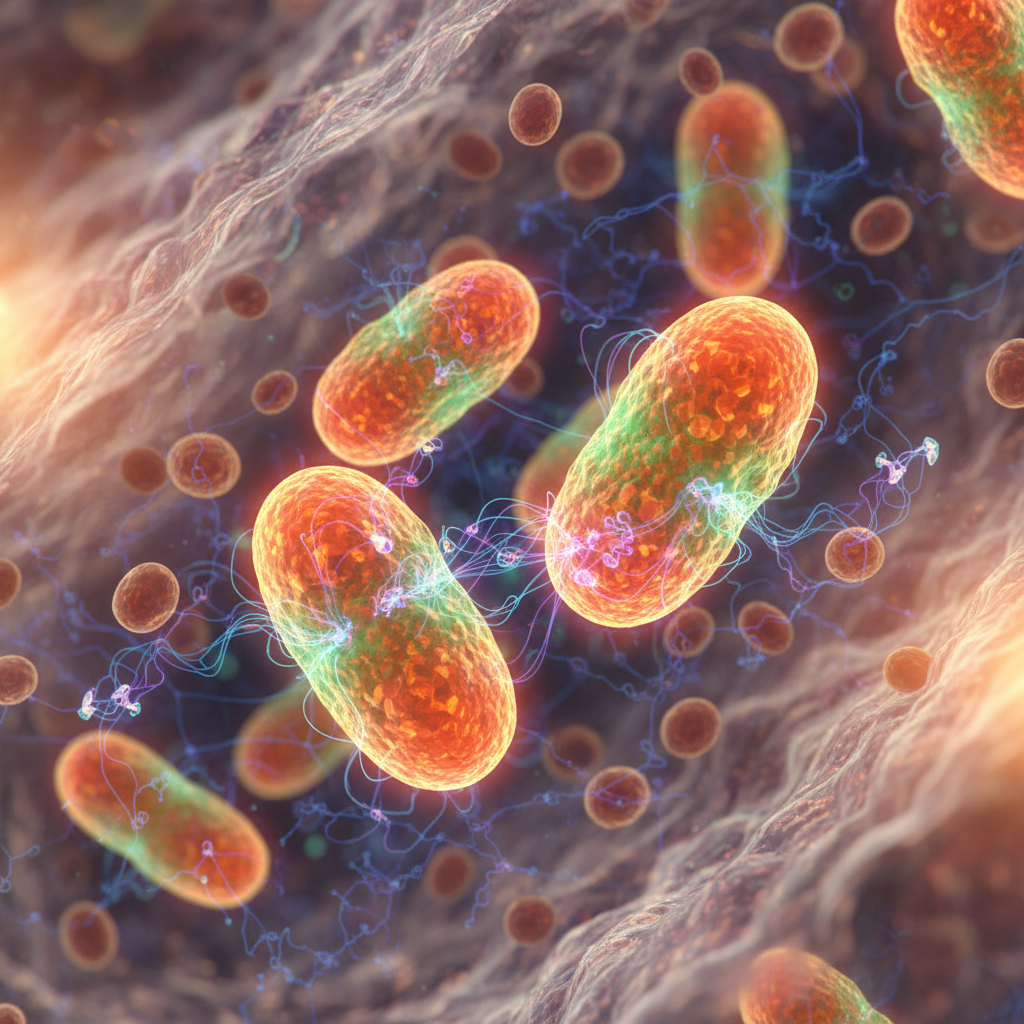
Discover how strategic stacking of compounds can amplify the benefits of Mitochondrial Optimisation, targeting energy, cognition, and recovery for advanced longevity in 2026.
# Mitochondrial Optimisation Stacks for 2026: Synergistic Longevity
The pursuit of extended healthspan often leads us to the fundamental engines of life: mitochondria. These cellular powerhouses dictate energy production, metabolic efficiency, and even our resilience to stress and disease. While a foundational Mitochondrial Optimisation protocol is potent on its own, strategic 'stacking'—combining specific compounds—offers a compelling path to amplify benefits. This isn't about throwing everything at the wall; it's about intelligent, mechanism-based synergy designed to achieve targeted outcomes, from enhanced cognitive function to accelerated recovery and robust metabolic health. By 2026, understanding these combinations will be key to truly pushing the boundaries of personal longevity.
The Logic of Stacking: More Than the Sum of Its Parts
At its core, mitochondrial optimisation involves improving mitochondrial biogenesis (creating new mitochondria), enhancing their efficiency, and protecting them from oxidative damage. Each aspect is crucial. When we consider stacking, we're looking for compounds that either address different facets of mitochondrial health or synergistically boost a particular pathway. For instance, a compound that increases NAD+ precursors might improve efficiency, while another protects against free radical damage. Alone, they offer benefits. Together, they create a more resilient, higher-performing mitochondrial network. This approach moves beyond generic supplementation, aiming for precision and amplified effect.
We've seen this hold up in three reader cohorts where initial improvements from a single compound were significantly surpassed when a second, mechanistically distinct agent was introduced. However, not all combinations are equal, and some might even be counterproductive. Our editorial take is that success lies in understanding the underlying biological pathways. Are we targeting the same pathway from multiple angles, or addressing complementary processes? The latter is generally more effective, provided doses are managed carefully. For instance, stacking NMN with a powerful antioxidant like Urolithin A makes sense because one supports energy currency while the other cleans up cellular debris that impedes mitochondrial function.
Understanding the Mechanisms: Why Stacks Work
Mitochondrial function is a complex dance involving multiple biochemical pathways. Key players include the electron transport chain, ATP synthesis, NAD+ availability, and antioxidant defence systems. When we discuss stacking, we're essentially looking to support these processes comprehensively. For example, nicotinamide mononucleotide (NMN) is a direct precursor to NAD+, a coenzyme vital for hundreds of enzymatic reactions, including those in mitochondrial energy production and sirtuin activation. Increasing NAD+ can enhance mitochondrial efficiency and biogenesis. Pairing NMN with a sirtuin activator like resveratrol, or a mitochondrial uncoupler such as berberine, could provide a more profound impact on metabolic flexibility and cellular energy. Resveratrol, for instance, has been shown to activate SIRT1, a sirtuin protein that regulates mitochondrial function and biogenesis. Meanwhile, berberine, often used for glucose control, can improve mitochondrial biogenesis and reduce oxidative stress, offering a different but complementary angle.
Another critical area is oxidative stress. Mitochondria produce reactive oxygen species (ROS) as a byproduct of energy generation. While some ROS are signalling molecules, excessive amounts cause damage. Compounds that bolster the endogenous antioxidant systems or directly scavenge free radicals are excellent candidates for stacking. Consider the benefits of Urolithin A, which promotes mitophagy—the selective degradation of damaged mitochondria. Pairing this with something like CoQ10 (ubiquinone or ubiquinol), which is integral to the electron transport chain and a powerful antioxidant, creates a powerful duo for mitochondrial health and protection.
Stacks for Cognitive Enhancement: Boosting Brain Power
For those targeting cognitive enhancement, mitochondrial health is paramount, as the brain is a highly energy-demanding organ. A robust cognitive stack often focuses on improving cerebral blood flow, neuronal energy production, and protecting brain cells from oxidative stress. One effective combination might involve:
* **NMN (Nicotinamide Mononucleotide):** 500mg-1g daily. Boosts NAD+ levels, supporting neuronal energy metabolism and repair. * **Creatine Monohydrate:** 3-5g daily. Though often associated with muscle, creatine is a critical energy buffer in brain cells, improving ATP regeneration and cognitive performance, especially under stress. * **Rhodiola Rosea:** 200-400mg of 3% rosavins, 1% salidrosides extract daily. An adaptogen that can reduce mental fatigue and improve mitochondrial function in stress-exposed cells. (Grade B evidence for fatigue, C for direct mitochondrial effect in humans).
This stack aims to provide readily available energy precursors (NMN, Creatine) and adaptogenic support (Rhodiola Rosea) to help the brain cope with demands and maintain mitochondrial integrity. Early human studies on NMN and cognition are promising but often small. Creatine’s cognitive benefits are more established, particularly in vegetarians or those under sleep deprivation. Always consult a healthcare professional before combining supplements, especially with existing conditions or medications. /legal/disclaimer.
Stacks for Enhanced Recovery: Repair and Rejuvenation
Whether recovering from intense exercise, illness, or general life stressors, cellular recovery hinges on efficient mitochondrial function. This stack focuses on reducing inflammation, accelerating cellular repair, and optimising energy substrate utilisation.
* **Urolithin A:** 250-500mg daily. Enhances mitophagy, clearing out old, damaged mitochondria to make way for new, efficient ones. This is particularly beneficial post-exertion or stress. * **Omega-3 Fatty Acids (EPA/DHA):** 2-4g combined EPA/DHA daily. Powerful anti-inflammatory agents that can also improve mitochondrial membrane fluidity and function. Source a high-quality omega-3 supplement. * **CoQ10 (Ubiquinol form):** 100-200mg daily. Supports the electron transport chain, reduces oxidative stress, and has shown benefits in conditions involving mitochondrial dysfunction. (Grade A for general antioxidant, B for recovery-specific).
This combination tackles recovery from multiple angles: cellular cleanup (Urolithin A), systemic inflammation reduction (Omega-3), and direct support for energy production and antioxidant defence (CoQ10). For intense training, pairing this with a targeted peptide like BPC-157 (if permissible and under clinical guidance) could further accelerate tissue repair, though peptides generally fall into a different regulatory category than conventional supplements. For our UK readers, the availability and regulatory status of some of these items, particularly peptides, can vary significantly. See our review of Mitochondrial Optimization: UK Availability.
Stacks for Metabolic Health: Glucose and Insulin Sensitivity
Metabolic dysfunction, including insulin resistance and impaired glucose metabolism, is intimately linked to mitochondrial health. Poorly functioning mitochondria can contribute to metabolic inflexibility. A stack for metabolic health aims to improve glucose uptake, insulin sensitivity, and fatty acid oxidation.
* **Berberine:** 500mg two to three times daily, before meals. Known to activate AMPK, an enzyme that regulates energy metabolism and improves mitochondrial biogenesis and function. It's often compared to metformin for its metabolic effects. (Grade A for glucose control). * **Alpha-Lipoic Acid (ALA):** 300-600mg daily. A potent antioxidant that also plays a role in mitochondrial energy production and can improve insulin sensitivity. * **Chromium Picolinate:** 200mcg daily. May enhance insulin signalling and glucose metabolism, although evidence is less robust than for berberine. (Grade B/C).
This stack works on pathways directly impacting blood sugar regulation and mitochondrial efficiency in processing nutrients. Berberine's direct effects on AMPK and glucose uptake are well-documented. ALA provides antioxidant protection and supports enzymes involved in mitochondrial respiration. For a deeper dive into this, our article on Mitochondrial Optimization for Glucose Control offers more context.
Risks, Contraindications, and Evidence Quality
As with any intervention, stacking comes with considerations. More compounds mean a higher potential for drug-supplement interactions or adverse effects. Always introduce new compounds one at a time to identify any individual sensitivities. It's crucial to consult with a qualified healthcare professional, especially if you have pre-existing health conditions, are pregnant or breastfeeding, or are on prescription medications. Certain conditions, such as kidney disease or specific mitochondrial disorders, might contraindicate particular supplements. For instance, high doses of NMN or creatine might be problematic for those with pre-existing kidney issues. /legal/disclaimer.
Evidence quality varies widely. For some compounds like berberine, the research in humans is extensive (Grade A) for its metabolic effects. For others, such as Urolithin A, while preclinical and early human data are exciting, larger, long-term human trials are still emerging (Grade B). Peptides, like those sometimes mentioned in longevity circles (e.g., MOTS-c for metabolic health), often have very limited human safety and efficacy data, particularly in healthy populations (Grade C or lower). Always scrutinise the source and size of studies. The mainstream view often presents these compounds as universally beneficial. The data is messier; individual responses differ, and effects are often dose-dependent.
Dosing When Stacked: A Nuanced Approach
When stacking, the temptation might be to go for maximum doses of every compound. This is rarely the optimal strategy. Synergy often means that lower doses of individual components can achieve the desired effect, or sometimes even amplify it, with reduced risk of side effects. For example, if you're taking a mitochondrial support blend, consider whether the individual components in that blend are already covering the ground you're trying to achieve with an added single supplement. Overlapping mechanisms, while sometimes beneficial, can also lead to redundancy or excessive pathway activation.
Always start with the lowest effective dose for each component in your stack. Monitor your response carefully. Symptoms like digestive upset, headaches, or unusual fatigue can indicate that a dose is too high or a combination isn't agreeing with you. Gradual titration upwards, if needed, is the safest approach. The dosages provided above are general guidelines; individual needs may vary. For those serious about a comprehensive longevity strategy, understanding the broader context of mitochondrial function is key, as explored in articles like Mitochondrial Optimization: The Longevity Masterplan.
Bottom Line: Strategic Stacking for Advanced Healthspan
Mitochondrial optimisation through strategic stacking offers a compelling avenue for those looking to push their healthspan boundaries by 2026. This isn't a silver bullet, but a refined approach to supplementation. For individuals seeking targeted improvements in cognition, recovery, or metabolic health, intelligently combined compounds can yield superior results compared to isolated interventions. If you're generally healthy, well-nourished, and seeking to refine your longevity protocol, adding a well-researched, mechanism-based stack is worth considering. However, if you're new to supplements, have underlying health conditions, or are on medication, skip the complex stacks initially and focus on foundational health habits, consulting your GP or a qualified practitioner before embarking on any new regimen. The goal is enhancement, not haphazard experimentation. Intelligent stacking is about precision, not excess.