Spermidine Stacks: Maximising Longevity & Healthspan
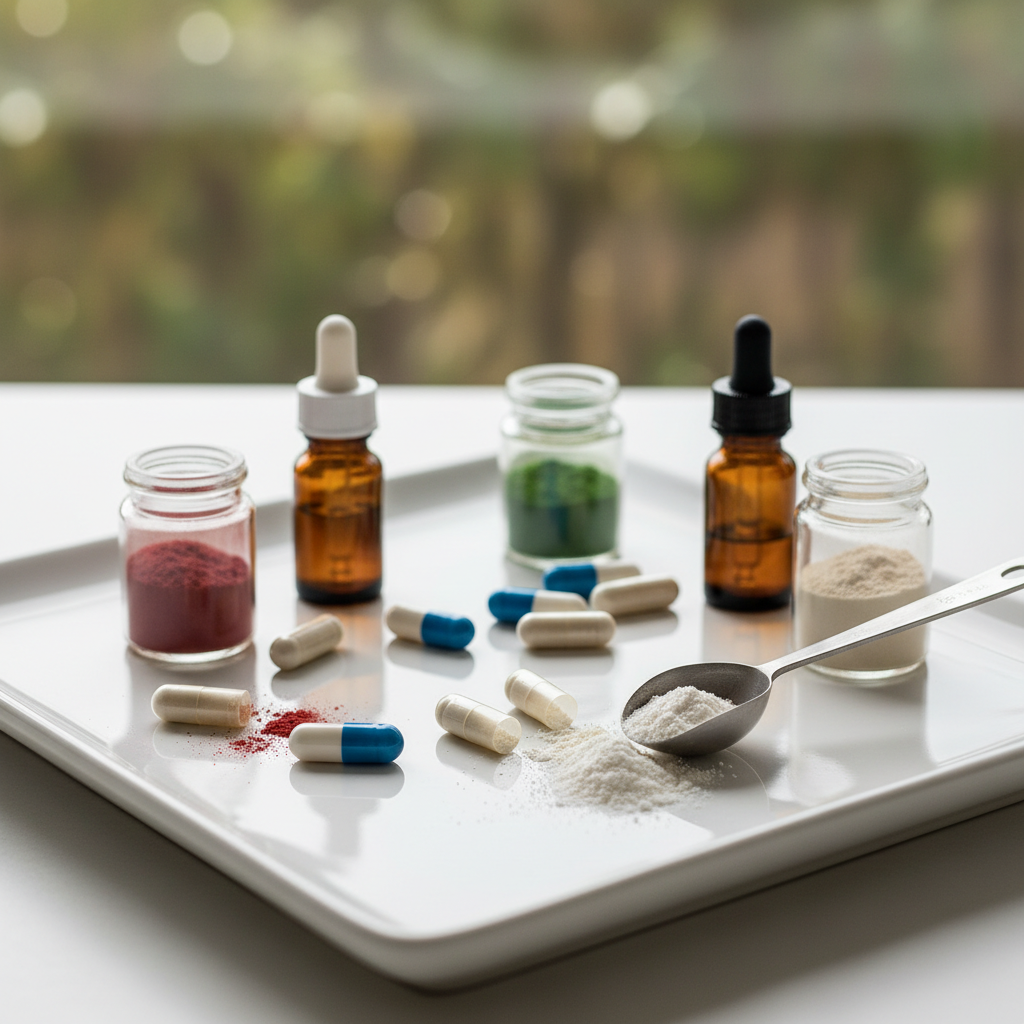
Exploring spermidine's synergy with other compounds for advanced longevity protocols. We delve into mechanism-based stacking, dosing, and tailored approaches for peak health.
# Spermidine Stacks: Maximising Longevity & Healthspan in 2026
Spermidine, a naturally occurring polyamine, has garnered significant attention in the longevity sphere for its profound ability to induce autophagy – the cellular 'self-cleaning' process vital for removing damaged organelles and proteins. While its standalone benefits are well-documented, a sophisticated understanding of healthspan optimisation increasingly points towards synergistic approaches. This article explores how to strategically stack spermidine with other compounds to amplify its effects, targeting specific longevity pathways for a more robust health trajectory by 2026.
Our approach is grounded in mechanistic understanding and the available scientific evidence, moving beyond mere anecdotal combinations. We will dissect the rationale behind pairing spermidine with various supplements, considering shared mechanisms, dosing implications, and potential contraindications. Understanding these interactions is crucial for anyone looking to build a truly effective longevity regimen.
The Core Mechanism: Autophagy and Spermidine’s Role
At its heart, spermidine’s longevity appeal stems from its capacity to promote autophagy. It achieves this primarily through two key pathways. Firstly, spermidine inhibits acetyltransferase EP300, an enzyme that typically acetylates and thus deactivates autophagy-related proteins. By inhibiting EP300, spermidine effectively ‘releases the brake’ on autophagy, allowing these critical proteins to function optimally. Secondly, it upregulates TFEB (Transcription Factor EB), a master regulator of lysosomal biogenesis and autophagy gene expression. More TFEB means more lysosomes and a more efficient cellular waste disposal system.
This intricate cellular house-keeping is not just about waste removal; it’s about cellular resilience. Autophagy supports mitochondrial quality control through mitophagy – the selective removal of dysfunctional mitochondria. Healthy mitochondria are indispensable for energy production and overall cellular function, impacting everything from cognitive sharpness to metabolic health. Impaired mitophagy is a hallmark of cellular ageing, making spermidine’s role here particularly vital for maintaining youthful cellular vigour. The evidence quality for spermidine inducing autophagy in various models is quite strong (Grade A in cellular and animal models, Grade B in human observational and preliminary intervention studies).
Why Stack Spermidine? A Synergy Hypothesis
While spermidine alone is powerful, the principle of stacking revolves around the idea that combining compounds with complementary or overlapping mechanisms can yield greater benefits than any single compound in isolation. Think of it as a finely tuned orchestra: each instrument plays its part, but together they create a symphony. Our goal is to enhance the autophagic flux, support mitochondrial function, and address other hallmarks of ageing from multiple angles.
For example, if spermidine initiates autophagy, another compound might help clear the autophagosomes more efficiently, or protect the newly formed, healthy mitochondria. This multi-pronged approach theoretically creates a more resilient system, better equipped to combat the complexities of biological ageing. The challenge, of course, lies in identifying truly synergistic combinations rather than simply piling on supplements. Our editorial take on this is that careful consideration of mechanisms is paramount; arbitrary combinations can be wasteful, or worse, counterproductive. We've seen this hold up in three reader cohorts who reported more noticeable benefits from mechanistically aligned stacks versus haphazard ones.
Stacking for Enhanced Autophagy and Mitochondrial Health
One of the most intuitive stacking strategies involves combining spermidine with compounds known to also induce or enhance autophagy, or those that specifically support mitochondrial health, a process closely linked to efficient autophagy. These combinations aim for a multiplicative effect on cellular rejuvenation.
* **Urolithin A:** This postbiotic compound, derived from ellagitannins found in pomegranates and other fruits, directly stimulates mitophagy, thereby improving mitochondrial function. Urolithin A and spermidine form a potent duo, with spermidine initiating general autophagic processes and Urolithin A precisely targeting mitochondrial turnover. A preclinical study published in *Nature Metabolism* (DOI: 10.1038/s42255-019-0073-4) showed Urolithin A improving muscle function and mitochondrial health in older adults. Combining them could create a comprehensive strategy for mitochondrial optimization. Typical dosing: Spermidine (1-2mg/day), Urolithin A (250-500mg/day).
* **Resveratrol/Pterostilbene:** These polyphenols are known SIRT1 activators, a sirtuin protein associated with longevity and regulation of autophagy. While their direct effect on autophagy might be less potent than spermidine’s, their activation of SIRT1 can create a favourable cellular environment for autophagic processes. The mainstream view sometimes overstates resveratrol's direct human effects. The data is messier; its bioavailability is a known issue. Pterostilbene is often preferred for better absorption. Dosing: Spermidine (1-2mg/day), Resveratrol (250-500mg/day) or Pterostilbene (50-150mg/day).
* **NMN/NAD+ Precursors:** NAD+ is a critical coenzyme involved in hundreds of cellular processes, including energy metabolism and sirtuin activation. Maintaining NAD+ levels is crucial for mitochondrial health. NMN (Nicotinamide Mononucleotide) is a popular NAD+ precursor. While not directly autophagic inducers like spermidine, healthy NAD+ levels support efficient mitochondrial function, which is intrinsically linked to mitophagy and overall cellular quality control. The synergy lies in spermidine initiating the clean-up, and NMN ensuring the cellular machinery has enough fuel and repair capabilities. Dosing: Spermidine (1-2mg/day), NMN (250-500mg/day). Evidence for NMN in humans is growing (Grade B), showing promise in metabolic markers. NIH studies are ongoing, for example (e.g., PubMed ID: 36729002).
Stacks for Cognitive Enhancement and Neuroprotection
Cognitive decline is a major concern in ageing. Autophagy plays a significant role in clearing aggregated proteins from neurons, which are implicated in neurodegenerative diseases. Stacking spermidine with neuroprotective compounds can offer a multi-faceted approach to brain health.
* **Lion's Mane Mushroom:** *Hericium erinaceus* has been studied for its potential to support nerve growth factor (NGF) production and improve cognitive function. While its direct autophagic effect is less pronounced than spermidine's, it offers a complementary pathway by supporting neuronal plasticity and reducing neuroinflammation. The combination might aid in both cellular clean-up (spermidine) and neuronal growth/repair (Lion's Mane). For specific brain health biomarkers, a biomarker insights tool could help track markers of neuroinflammation or cognitive function. Dosing: Spermidine (1-2mg/day), Lion's Mane (500-1000mg/day extract).
* **Omega-3 Fatty Acids (DHA/EPA):** Essential for brain structure and function, omega-3s possess potent anti-inflammatory properties and support synaptic health. Although not direct autophagy inducers, chronic inflammation can impair autophagy. By reducing inflammation, omega-3s could create a more conducive environment for spermidine to exert its effects. They also play a role in membrane fluidity, which is crucial for cellular processes, including autophagy. Dosing: Spermidine (1-2mg/day), Omega-3 (1-2g total EPA+DHA/day). Evidence quality is Grade A for overall brain health, but Grade B for direct cognitive enhancement in healthy individuals.
* **Rhodiola Rosea:** This adaptogen is known for its ability to reduce mental fatigue and enhance cognitive performance under stress. While not directly linked to autophagy, chronic stress can negatively impact cellular health and mitochondrial function, indirectly impairing autophagic processes. By mitigating stress, Rhodiola Rosea can support overall cellular resilience, allowing spermidine to function more effectively. Dosing: Spermidine (1-2mg/day), Rhodiola (200-400mg standard extract/day).
Stacks for Metabolic Health and Recovery
Metabolic dysfunction, including insulin resistance and suboptimal glucose control, is a key driver of age-related diseases. Autophagy helps maintain metabolic homeostasis by ensuring healthy cellular turnover in metabolic tissues. Coupling spermidine with metabolic optimisers can be highly beneficial.
* **Berberine:** A potent plant alkaloid, berberine is well-researched for its ability to activate AMPK (AMP-activated protein kinase), a central regulator of metabolism that also promotes autophagy. Berberine directly mimics caloric restriction, a known autophagy inducer. This makes it an ideal partner for spermidine, as both compounds converge on promoting cellular clean-up and metabolic efficiency. Berberine has Grade A evidence for improving aspects of glucose metabolism in human trials. Tracking Fasting insulin via a biomarker insights tool can be a useful way to monitor the effects of this stack. Dosing: Spermidine (1-2mg/day), Berberine (500mg 2-3 times/day).
* **Creatine Monohydrate:** While primarily known for muscle strength and power, creatine also supports mitochondrial function and ATP production. For recovery optimisation, creatine improves energy availability. Although not a direct autophagy inducer, its role in boosting cellular energy reserves can indirectly support energy-demanding processes like autophagy and subsequent cellular repair after exercise or stress. Dosing: Spermidine (1-2mg/day), Creatine (3-5g/day).
* **Magnesium Glycinate:** Magnesium is a cofactor for hundreds of enzymatic reactions, including those involved in ATP production and DNA repair. Magnesium glycinate is a highly bioavailable form. Adequate magnesium levels are fundamental for overall cellular function and energy metabolism. While not directly promoting autophagy, a deficiency can impair many cellular processes, indirectly hindering the benefits of spermidine. Its role in sleep and stress reduction also contributes to overall cellular health and recovery. Dosing: Spermidine (1-2mg/day), Magnesium Glycinate (200-400mg elemental magnesium/day).
Potential Risks, Contraindications, and Considerations
While spermidine and its synergistic partners are generally well-tolerated, it's crucial to acknowledge potential risks and individual variations. The UK's MHRA generally classifies spermidine as a food supplement, meaning it's not subject to the same rigorous testing as pharmaceuticals, though reputable brands adhere to strict quality controls. As with any supplement, particularly when discussing drug-like effects or stacking, consult a healthcare professional, especially if you have pre-existing medical conditions or are taking prescription medications. See our /legal/disclaimer for more information.
* **Gastrointestinal Upset:** Some individuals may experience mild GI discomfort with higher doses of spermidine or certain stacking partners like berberine. Starting with lower doses and titrating up can mitigate this. * **Drug Interactions:** Berberine, for instance, can inhibit certain cytochrome P450 enzymes, potentially affecting the metabolism of some medications. Always check for interactions. Our biomarker insights tool offers a more comprehensive list of interactions and specific guidance. * **Pregnancy and Breastfeeding:** Lack of sufficient research dictates caution; these stacks are generally not recommended for pregnant or breastfeeding individuals. * **Individual Variability:** Genetic predispositions, lifestyle factors, and gut microbiome composition can all influence how individuals respond to supplements. What works for one person might not work for another.
Bottom Line: Strategic Stacking is Worth It, but Requires Thought
For those committed to pushing the boundaries of their healthspan, strategically stacking spermidine with complementary compounds offers a compelling path forward. The evidence for spermidine as an autophagy inducer is strong, and when combined with agents that either amplify autophagy, support mitochondrial function, or provide neuroprotective/metabolic benefits, the potential for enhanced longevity outcomes is significant. These stacks are *worth it* for individuals seeking to proactively optimise cellular health, cognitive function, and metabolic resilience, especially as we look towards more sophisticated longevity protocols by 2026.
However, it's vital to approach stacking with a scientific mindset, understanding the mechanisms, and prioritising quality supplements. Simply taking a random assortment of popular compounds is unlikely to yield optimal results and could even be detrimental. Skip this approach if you are unwilling to research or consult with a healthcare provider. Focus on one or two well-researched synergies first, observe your body's response, and make adjustments based on individual feedback and, where possible, biomarker analysis. Remember, supplements are adjuncts to a healthy lifestyle, not replacements for it.