Optimising Your Time-Restricted Eating Window:
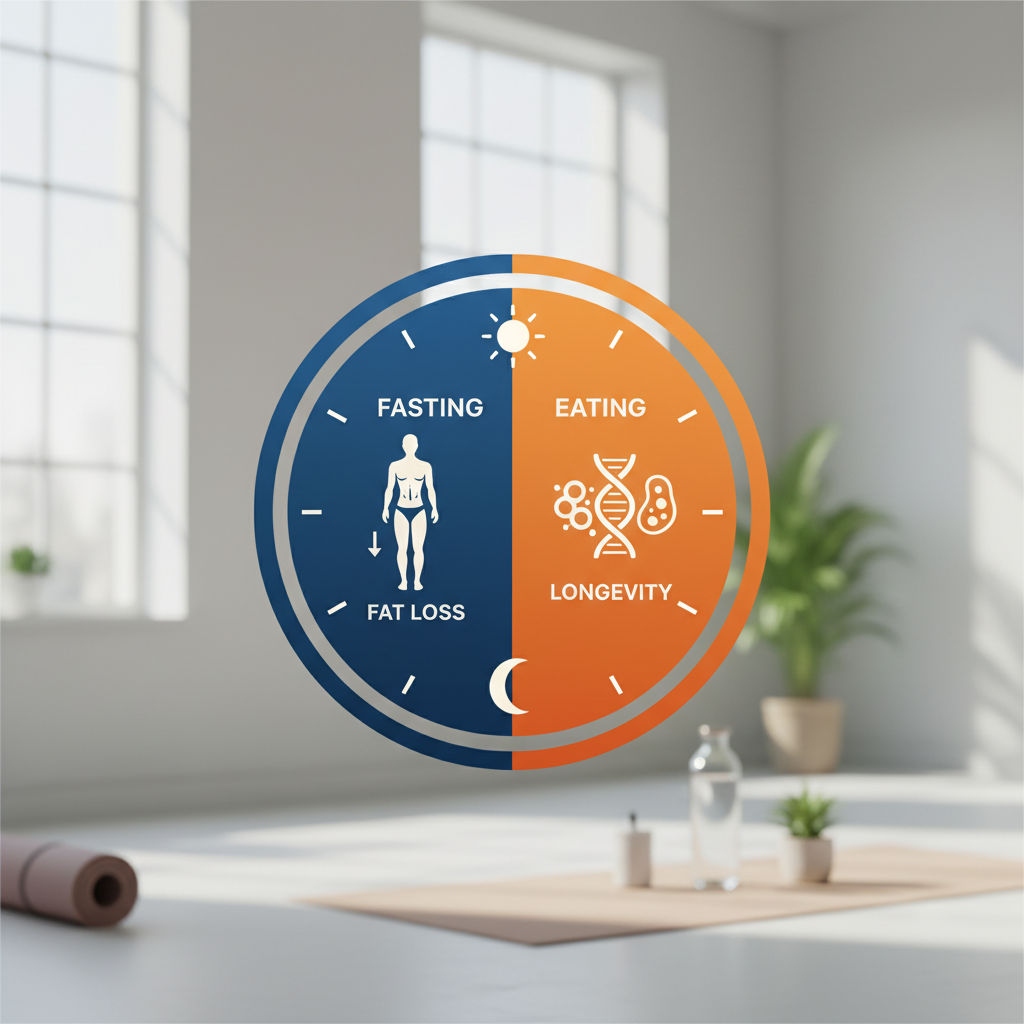
Understand the nuanced differences in time-restricted eating windows for achieving fat loss versus maximising longevity, and how to apply them.
# Optimising Your Time-Restricted Eating Window: Fat Loss vs. Longevity Goals
Time-restricted eating (TRE), often interchangeably referred to as intermittent fasting, has emerged as a cornerstone strategy in the pursuit of enhanced metabolic health, sustainable fat loss, and extended healthspan. While the fundamental premise – confining daily caloric intake to a specific window – remains constant, the *optimal* duration and timing of that window can vary significantly depending on one's primary objectives. Are you aiming to shed stubborn body fat, or is your focus squarely on cellular rejuvenation and an extended lifespan? Understanding these distinctions is crucial for tailoring an effective protocol that delivers tangible results.
At Longevity Stack, we delve into the evidence-based science behind these approaches. While both fat loss and longevity are desirable outcomes, the biological mechanisms they leverage, and thus the most effective TRE parameters, are not always perfectly aligned. This guide will explore the scientific nuances, helping you navigate the choices for your specific health ambitions, drawing from the latest research to provide actionable insights for your time-restricted eating journey.
The Core Principles of Time-Restricted Eating
TRE is a dietary strategy that involves consuming all daily calories within a defined period, typically 8-12 hours, followed by a fasting period of 12-16 hours or more. Unlike traditional caloric restriction, TRE doesn't necessarily dictate *what* you eat, but rather *when*. This distinction is vital, as it allows for greater flexibility and adherence compared to more restrictive diets.
The primary physiological benefits of TRE stem from two key mechanisms:
* **Metabolic Switch:** During the fasting period, the body depletes its glycogen stores and switches from burning glucose for energy to burning fat, producing ketones. This metabolic flexibility is highly beneficial for overall metabolic health and can contribute significantly to fat loss. * **Cellular Repair Processes:** Fasting triggers adaptive cellular responses, most notably autophagy, a process where cells clear out damaged components and regenerate new ones. Autophagy is a critical anti-ageing pathway, promoting cellular resilience and reducing the accumulation of cellular debris linked to age-related diseases.
These fundamental processes underpin the advantages of TRE for both fat loss and longevity, yet their optimal activation often requires different fasting durations and timing. For instance, while a shorter fast might be sufficient to initiate a metabolic switch, deeper autophagy might necessitate a longer fasting period.
Time-Restricted Eating for Fat Loss: The Optimal Window
When the primary goal is fat loss, the focus shifts towards consistently creating a caloric deficit and enhancing the body's ability to utilise fat stores for energy. For most individuals, an eating window of **8-10 hours** seems to strike the right balance between effectiveness and sustainability.
* **Typical Schedule:** An 8-hour eating window often translates to something like 12 PM to 8 PM, or 10 AM to 6 PM, followed by a 16-hour fast. Some might extend this to a 10-hour window (e.g., 9 AM to 7 PM) with a 14-hour fast, which can still be highly effective. * **Mechanism:** The 14-16 hour fasting period is generally sufficient to deplete hepatic glycogen stores, prompting the body to switch to fat oxidation. This sustained period of fat burning, coupled with a typically reduced overall caloric intake (due to fewer opportunities to eat), drives weight loss. Furthermore, improved insulin sensitivity, a common outcome of TRE, helps the body better manage glucose and reduces fat storage. * **Practical Considerations:** This window is often easier to adhere to than longer fasts, as it allows for two to three satisfying meals without feeling overly deprived. It also aligns well with social eating patterns for many individuals, making it a more sustainable lifestyle change rather than a temporary diet. Consistent adherence is paramount for fat loss, and a manageable schedule significantly increases the likelihood of success. It's also important to ensure adequate protein intake during the eating window to preserve lean muscle mass while losing fat.
Research supports the efficacy of these shorter fasting windows for weight management. Studies have shown that simply restricting food intake to an 8-10 hour window, even without strictly counting calories, can lead to significant reductions in body weight and visceral fat. For more on optimising metabolic health, exploring supplements like berberine or nmn alongside TRE can be beneficial, but always consult with a healthcare professional.
Time-Restricted Eating for Longevity: Deeper Mechanisms
While fat loss can contribute to longevity by reducing the risk of obesity-related diseases, the direct longevity benefits of TRE often stem from deeper cellular and molecular adaptations. For maximising these anti-ageing pathways, such as enhanced autophagy and improved mitochondrial function, a **shorter eating window of 4-6 hours**, leading to longer fasting periods (18-20 hours), is often discussed in research circles.
* **Typical Schedule:** This might look like eating only between 1 PM and 7 PM (6-hour window) or even 2 PM and 6 PM (4-hour window), resulting in 18-20 hour fasts. This is often referred to as OMAD (One Meal A Day) or a very restricted eating window. * **Mechanism:** Longer fasting periods are thought to provide a more robust activation of cellular repair mechanisms like autophagy, which require a more prolonged absence of nutrients to be fully engaged. This deep cellular clean-up is crucial for removing senescent cells and damaged organelles, processes strongly linked to slowing down ageing and preventing age-related diseases. Longer fasts also lead to higher ketone levels, which are not just an alternative fuel source but also signalling molecules that can influence gene expression related to stress resistance and longevity. Furthermore, a longer fast can lead to more pronounced drops in insulin and IGF-1, hormones implicated in ageing pathways. These hormonal shifts are critical for stimulating cellular repair and regeneration. * **Challenges & Considerations:** While potentially more potent for longevity, these shorter eating windows are considerably more challenging to sustain. They require careful meal planning to ensure adequate nutrient intake within a limited timeframe. It's also important to consider the potential for nutrient deficiencies if not managed properly. Furthermore, excessive or prolonged fasting could potentially lead to muscle loss if protein intake is insufficient, a concern for long-term healthspan. Regular resistance training becomes even more critical in this context to preserve muscle mass.
Research in animal models suggests that longer fasting durations can significantly extend lifespan and healthspan by upregulating autophagy and improving cellular resilience. Translating this directly to humans requires careful consideration of individual health status and lifestyle. For example, some individuals might find a 16:8 protocol sustainable for life, yielding consistent benefits, while others might cycle into longer fasts periodically. (Learn more about the science behind fasting).
Integrating Exercise and Other Longevity Strategies
Regardless of whether your primary goal is fat loss or longevity, integrating TRE with a comprehensive healthy lifestyle is crucial. Exercise, particularly a combination of zone 2 cardio and strength training, synergises beautifully with TRE. Exercise, especially high-intensity interval training (HIIT) and resistance training, can independently stimulate autophagy and enhance metabolic flexibility, amplifying the benefits of TRE. For instance, exercising in a fasted state can further boost fat oxidation and mitochondrial biogenesis.
Beyond exercise, consider other proven longevity interventions:
* **High-Quality Sleep:** Prioritise sleep, as poor sleep can negate many benefits of TRE, affecting hormone balance and metabolic regulation. (Optimise your sleep for longevity) * **Stress Management:** Chronic stress elevates cortisol, which can impair metabolic function and counteract fasting benefits. * **Nutrient Density:** During your eating window, focus on whole, unprocessed foods rich in micronutrients, healthy fats, and adequate protein. Consider supplements like omega-3 and vitamin D if dietary intake is insufficient. * **Cold Exposure:** Incorporating practices like cold exposure can activate brown adipose tissue and enhance metabolic health. * **Peptides:** For advanced longevity enthusiasts, certain peptides like epitalon or thymalin are being researched for their anti-ageing properties, though these are typically for research use only.
It's important to remember that consistency outperforms intensity in the long run. Finding a TRE schedule that you can adhere to sustainably is more valuable than periodically attempting extreme fasting protocols that are ultimately unsustainable.
Customising Your Approach: Hybrid Models and Cycling
For many, a rigid, lifelong adherence to a single TRE window might not be practical or even optimal. This is where hybrid models and cycling strategies come into play. You might adopt a **16:8 schedule (16-hour fast, 8-hour eating window)** for several weeks to kickstart fat loss, and once you achieve your target, transition to a less restrictive 14:10 or even 12:12 window for maintenance and general metabolic health.
Alternatively, for longevity benefits, you could implement a **cyclical approach**. For example, adhering to a 16:8 window for 5-6 days a week, and then extending your fast to 18-20 hours once or twice a week to deliberately trigger deeper autophagy. Some individuals even incorporate longer, multi-day fasts (24-72 hours) a few times a year, though these should only be undertaken with medical supervision, especially if you have underlying health conditions. This allows for the deeper cellular repair associated with longer fasts without the daily rigour.
*Please note: When considering any significant dietary changes, supplements or peptides, consult with a qualified healthcare professional, especially if you have pre-existing health conditions or are on medication. This information is for educational purposes only.* [/legal/disclaimer]
Listening to your body is paramount. Pay attention to energy levels, mood, sleep quality, and any signs of nutrient deficiency. Wearable tech can help monitor metrics like heart rate variability and sleep patterns, providing valuable feedback on how your body is adapting to your chosen TRE protocol. This personalised data can help you fine-tune your eating window for optimal results. (Explore wearables for health tracking)
Bottom Line
The choice of your time-restricted eating window for fat loss versus longevity is not a one-size-fits-all decision. For **fat loss**, a moderately restricted window of 8-10 hours, promoting a 14-16 hour fast, is often highly effective and sustainable, focusing on consistent caloric deficit and enhanced fat oxidation.
For maximising **longevity**, the evidence points towards pushing to a shorter eating window of 4-6 hours, resulting in 18-20 hour fasts, to more profoundly activate cellular repair mechanisms like autophagy. However, this demands greater discipline and careful nutrient planning. A hybrid or cyclical approach, combining elements of both, may offer the best of both worlds, allowing for sustained fat management while periodically tapping into deeper anti-ageing benefits. Ultimately, the most effective window is the one you can consistently adhere to, supporting your specific health goals within a holistic approach to wellbeing.