Optimising Your Time-Restricted Eating Window
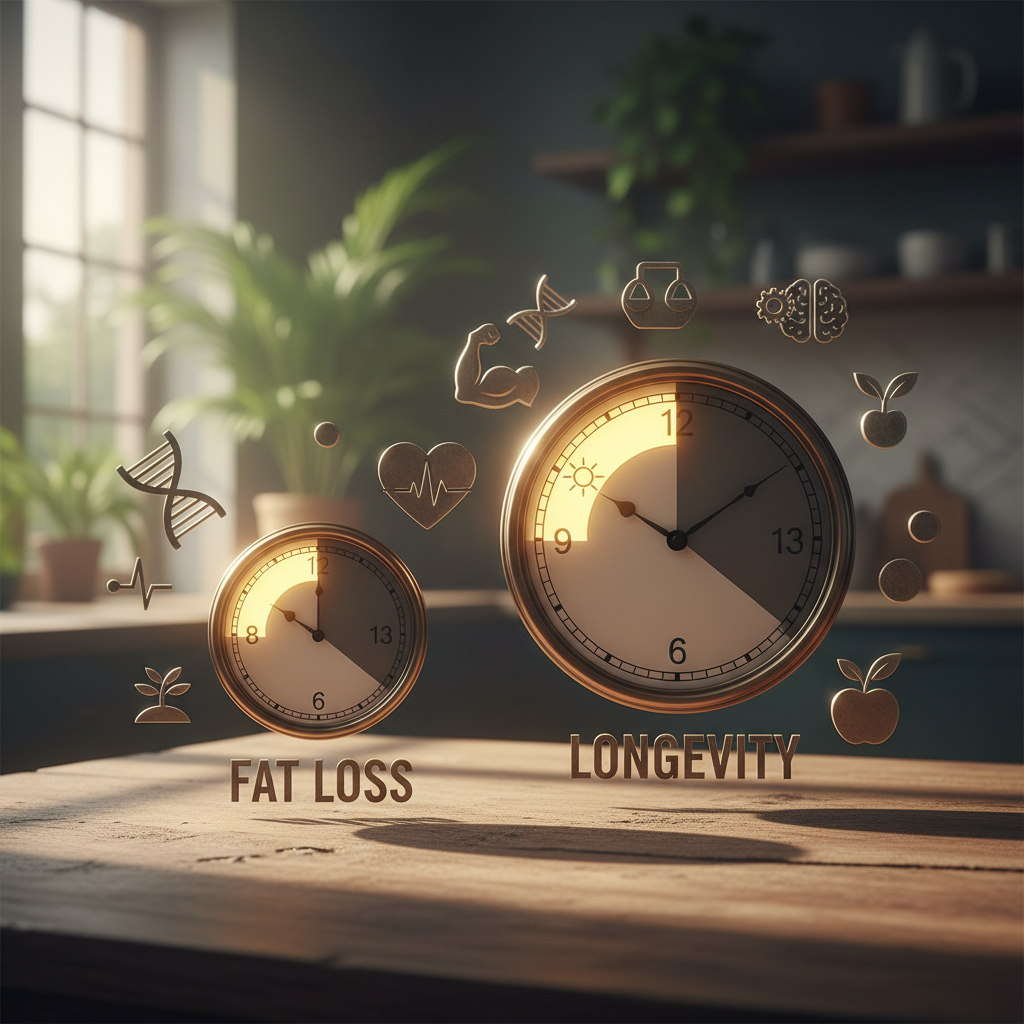
Explore the distinct goals and mechanisms of Time-Restricted Eating for fat loss versus longevity. Learn to tailor your eating window for optimal results.
# Optimising Your Time-Restricted Eating Window for Fat Loss vs. Longevity
Time-Restricted Eating (TRE) has surged in popularity, lauded for its potential to improve metabolic health, facilitate weight management, and even extend lifespan. However, beneath the broad umbrella of "intermittent fasting," lies a critical distinction: the optimal eating window and strategy can vary significantly depending on whether your primary goal is rapid fat loss or long-term longevity. As senior editors for Longevity Stack, we delve into the evidence to help you understand these nuances and tailor your approach effectively.
TRE, a form of intermittent fasting, involves consuming all daily calories within a specific, consistent window, typically 8-12 hours, followed by a fasting period. Unlike traditional calorie restriction, TRE focuses on *when* you eat, rather than *what* or *how much*, though the latter two remain crucial for overall health. The physiological mechanisms underpinning TRE are diverse, ranging from improved insulin sensitivity and circadian rhythm alignment to enhanced cellular repair processes like autophagy. Understanding these mechanisms is key to harnessing TRE for your specific health goals.
The Core Principles of Time-Restricted Eating
At its heart, TRE leverages our evolutionary biology. Our ancestors were not afforded the luxury of 24/7 access to food; periods of scarcity were common. This ebb and flow of fed and fasted states allowed the body to cycle between growth and repair. When we eat constantly, particularly processed foods, our bodies remain in a perpetual fed state, potentially hindering crucial restorative processes.
The benefits of TRE largely stem from metabolic switching. After several hours of fasting, the body depletes its glycogen stores and begins to burn fat for fuel, producing ketones. This shift is associated with numerous health advantages. Beyond this, TRE helps to entrain our circadian rhythms, the 24-hour cycles that regulate various physiological functions. Eating within a consistent, earlier window aligns food intake with our natural metabolic rhythms, where insulin sensitivity is typically higher and digestive processes are more efficient. Disruptions to this rhythm, such as late-night eating, are linked to adverse metabolic outcomes.
Tailoring TRE for Fat Loss: The Aggressive Approach
For those primarily focused on fat loss, the emphasis often shifts towards creating a more substantial caloric deficit and maximising the time spent in a fat-burning state. This typically involves a shorter eating window and, often, a slightly reduced overall caloric intake, even if unintended. While TRE isn't strictly about calorie restriction, the compressed eating window naturally makes it harder to overeat, leading to an unconscious reduction in caloric intake.
Here’s how to optimise TRE for fat loss:
* **Shorter Eating Window:** Common approaches include 16:8 (16 hours fasting, 8 hours eating) or even 18:6. Some individuals may experiment with 20:4 or OMAD (One Meal A Day) for more aggressive fat loss, though these can be harder to sustain long-term and may not be ideal for longevity. * **Strategic Meal Timing:** Consuming your meals earlier in the day, such as a 12 PM - 8 PM window or even 10 AM - 6 PM, can be beneficial. This allows for a longer overnight fast, which is critical for tapping into fat stores and aligning with optimal circadian rhythms. Research suggests that front-loading calories earlier in the day may offer metabolic advantages for weight loss compared to later eating. * **Nutrient-Dense Foods:** While TRE doesn't dictate *what* you eat, for effective fat loss, prioritising protein, fibre, and healthy fats during your eating window is paramount. This promotes satiety, preserves muscle mass, and stabilises blood sugar, preventing cravings that could derail your efforts. Avoiding highly processed foods and excessive sugar is crucial. * **Exercise Timing:** Performing fasted exercise (e.g., in the morning before your first meal) can potentially enhance fat oxidation. However, for intense resistance training, some find it beneficial to consume protein before or after the workout within their eating window to optimise muscle protein synthesis.
It's important to note that while aggressive windows may accelerate fat loss, they also carry a higher risk of muscle loss if protein intake is insufficient. Regular resistance training is therefore essential to preserve lean mass during periods of caloric deficit.
TRE for Longevity: The Sustainable, Health-Focused Path
When the goal is longevity and healthspan extension, the approach to TRE becomes less about extreme caloric deficits and more about metabolic flexibility, cellular repair, and long-term sustainability. The key is to find an eating pattern that your body can comfortably maintain indefinitely, fostering consistent metabolic advantages without undue stress.
Here’s how to optimise TRE for longevity:
* **Moderate Eating Window:** A 12-hour eating window (e.g., 8 AM to 8 PM) or a 10-hour window (e.g., 9 AM to 7 PM) is often recommended. This still provides a substantial fasting period (12-14 hours) to trigger metabolic switching and autophagy but is less restrictive than shorter windows, making it easier to adhere to long-term. Some studies even suggest benefits from a 12-hour fast, demonstrating that even modest adjustments can have an impact. * **Prioritise Early Eating:** The scientific consensus is increasingly favouring an earlier eating window. Consuming your last meal well before bedtime (e.g., finishing by 6 PM or 7 PM) is strongly associated with improved metabolic health, better sleep quality, and reduced risk factors for chronic diseases. This aligns food intake with your peak metabolic efficiency and supports circadian rhythm synchronisation. For deeper insights, exploring how time-restricted eating impacts overall health is highly recommended. * **Nutrient Quality is King:** For longevity, the *quality* of food consumed within your window is arguably more important than the precise length of the window itself. Focus on whole, unprocessed foods: abundant vegetables, fruits, lean proteins, healthy fats, and complex carbohydrates. Minimise refined sugars, trans fats, and ultra-processed items. Consider supplementing with key micronutrients like magnesium glycinate or omega-3 if dietary intake is insufficient. * **Flexibility and Sustainability:** Longevity is a marathon, not a sprint. The most effective longevity strategy is one you can stick with for decades. Allow for occasional flexibility, such as extending your eating window for social events, without feeling guilt or abandoning the practice entirely. Consistency over perfection is the goal. * **Synergistic Strategies:** TRE for longevity often complements other health-promoting practices. Regular physical activity, adequate sleep (which you can optimise with AI tools for sleep optimization), and stress management amplify its benefits. Incorporating specific supplements like spermidine or urolithin A may also enhance cellular renewal pathways that align with TRE's benefits.
The Role of Autophagy and Cellular Repair
One of the most touted benefits of fasting, particularly for longevity, is the induction of autophagy. This cellular clean-up process removes damaged cells and cellular components, recycling them into new, healthy parts. While shorter fasting periods (12-14 hours) can initiate autophagy, longer fasts (16+ hours) are generally believed to elicit a more profound autophagic response. However, the exact duration for optimal autophagy in humans is still an active area of research.
For fat loss, the primary mechanism is often the caloric deficit and improved insulin sensitivity. For longevity, while these are important, the enhancement of cellular repair pathways like autophagy and the improved mitochondrial function become central. This is why a sustainable, moderate approach to TRE, coupled with a nutrient-dense diet, is often preferred for long-term healthspan extension rather than aggressive, short-term fasting protocols.
Consider linking your TRE approach with other protocols like sauna and cold exposure, which also independently promote cellular resilience and metabolic adaptation. Furthermore, explore powerful compounds like berberine or nmn that are being researched for their impact on metabolic health and longevity pathways, often synergistically with TRE. (Please consult a healthcare professional before starting any new supplement regimen.)
Potential Pitfalls and Considerations
While generally safe for most healthy adults, TRE is not without its considerations. For both fat loss and longevity, consistency is key, but some individuals may experience side effects such as headaches, fatigue, or irritability during the initial adaptation phase. These often subside as the body adapts to burning fat for fuel.
For women, particularly those of reproductive age, overly aggressive or prolonged fasting can sometimes lead to hormonal imbalances. It's crucial to listen to your body and adjust the fasting window if adverse symptoms arise. Pregnant or breastfeeding women, individuals with a history of eating disorders, and those with underlying medical conditions (e.g., diabetes, kidney disease) should consult a healthcare professional before attempting any form of fasting. Learn more about the latest research in this area.
Always ensure adequate hydration during your fasting window. Water, black coffee, and plain tea are generally permitted. Electrolyte balance is also important, particularly if you're extending your fasts. For specific cases, or if you're exploring more advanced metabolic optimisations like using peptides, always seek professional medical advice. For more detailed guidance, consider using AI tools for a supplement stack or even a fasting planner to help tailor your approach.
Bottom Line
The optimal time-restricted eating window is not a one-size-fits-all prescription. For *fat loss*, a shorter, more aggressive eating window (e.g., 16:8 or 18:6), perhaps with an earlier final meal, combined with a focus on caloric deficit and nutrient density, tends to yield quicker results. For *longevity*, the emphasis shifts to sustainability, metabolic flexibility, and cellular repair, making a moderate 12-14 hour fasting window (e.g., 10-12 hour eating window) with an earlier last meal, coupled with impeccable food quality, the more robust strategy.
Ultimately, the most effective approach is the one you can consistently adhere to, aligning with your individual health goals and lifestyle. Listen to your body, prioritise nutrient-dense foods, and remember that TRE is a powerful tool to complement, not replace, a holistic approach to health and well-being. Always consult with a healthcare professional before making significant dietary changes, especially when considering supplements or specific protocols like BPC-157. /legal/disclaimer